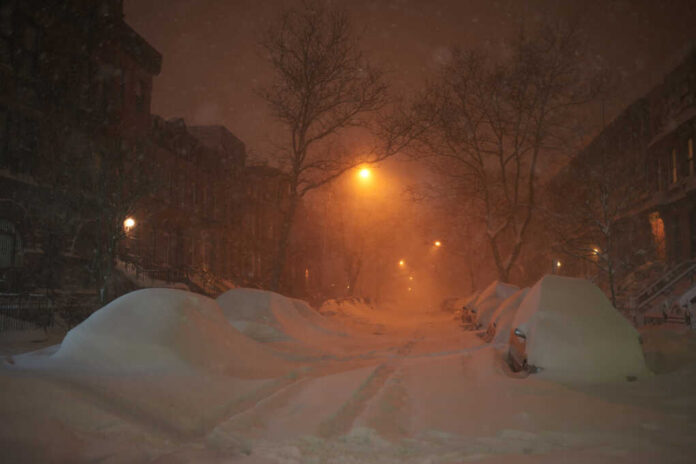
A massive “dangerous” winter storm endangering 50 million Americans exposes the fragility of our power grids and infrastructure.
Story Snapshot
- The National Weather Service issues life-threatening blizzard warnings across 10 states, with wind chills to -40°F plunging millions into peril.
- Over 150,000 are already without power in the Midwest; potential for 1 million outages recalls Biden-era disasters like Texas 2021 freeze killing 246.
- Travel chaos: 1,000+ flights canceled, major highways like I-80 shut down, stranding families during peak winter season.
- First fatalities reported from hypothermia; vulnerable elderly and homeless at highest risk in cities like Chicago and NYC.
Storm’s Ferocious Path and Warnings
The National Weather Service labeled this winter storm “dangerous” as it barreled from the Rockies to the Northeast, threatening 50 million people. Blizzard warnings expanded across the Midwest and Northeast by January 23, 2026. Arctic air plunged wind chills to -40°F in parts of the Plains and Great Lakes. Heavy snow forecasts reached 12-24 inches, combined with high winds fueling ice accumulation. The storm formed from a disrupted polar vortex, pulling frigid Canadian air southward after a sudden stratospheric warming event destabilized the Arctic ring in early January.
Immediate Impacts Grip the Nation
As of January 24, 2026, the storm center hovered over Wisconsin and Illinois, intensifying rapidly. Over 1,000 flights canceled at Chicago’s O’Hare and New York’s JFK airports disrupted holiday aftermath travel. Power outages surpassed 150,000 in the Midwest, with risks of widespread blackouts echoing the 2021 Texas Uri storm that cost $195 billion and killed hundreds. Interstate 80 closed from Nebraska to Illinois, halting truckers and commuters. Chicago schools shut amid -25°F wind chills, isolating communities.
Watch:
Government Response and Stakeholder Actions
FEMA and DHS coordinate federal response, while states like Illinois activated 5,000 National Guard troops under Governor JB Pritzker. New York Governor Kathy Hochul declared a state of emergency, opening shelters. NWS Director Ken Graham escalated warnings, calling conditions “life-threatening.” DOT Secretary Pete Buttigieg urged avoiding travel amid Amtrak disruptions. Utility firms like ConEd prepare for snow-loaded lines, hardened somewhat post-2021 but still vulnerable to extreme loads. First two hypothermia deaths reported in Kansas on January 23.
Historical Echoes and Economic Toll
This storm mirrors the 2019 polar vortex with -50°F Midwest temps causing 21 deaths and massive damages, but adds heavier snow threatening roofs and trees. The 2022 Christmas bomb cyclone hit all 50 states with over 50 deaths. Economic estimates project $5-10 billion in losses from flight cuts costing airlines $500 million daily, supply chain breaks, and Midwest agriculture hits. Gas demand spikes 20 percent strain energy sectors, where renewables face tests amid surging needs for reliable power sources long neglected by overregulation.
Expert Warnings and Broader Concerns
AccuWeather’s Tom Moore highlighted rare bombogenesis this far east, warning urban heat islands won’t fully prevent outages. Atmospheric G2’s Judah Cohen noted the strongest vortex split since 2018. Skeptics at Heartland Institute attribute it to normal variability, rejecting climate alarmism overreach that diverts funds from practical grid hardening. Short-term risks include 10-50 deaths from exposure and accidents; long-term, infrastructure strains push insurance hikes and upgrades. With President Trump now leading, focus shifts to resilient policies rejecting wasteful green mandates.
Sources:
Reuters: ‘Dangerous’ winter storm puts millions on alert across US (Jan 23, 2026)
NWS Storm Summary (Jan 23, 2026)
NOAA Climate.gov (historical analogs)
NASA Earth Observatory (vortex dynamics, Jan 2026 update)
Washington Post precedents analysis (Jan 23, 2026)
FEMA situational updates
Politico stakeholder map (Jan 24, 2026)
CNN live updates (Jan 24, 2026)
FlightAware disruptions
AccuWeather economic forecast (Jan 23, 2026)
NY Fed stress analysis
Weather Channel: Cohen interview (Jan 23)