Vladimir Putin’s latest move regarding nuclear testing has raised concern among global security observers about the stability of existing arms control frameworks.
Story Overview
- Putin orders nuclear test proposals following a deadly drone strike in Ukraine.
- Russia’s aggressive military actions escalate tensions with the West.
- The U.S. expresses willingness to resume nuclear testing under specific conditions.
- Concerns grow over the erosion of nuclear non-proliferation norms.
Putin’s Nuclear Ambitions Signal Escalation
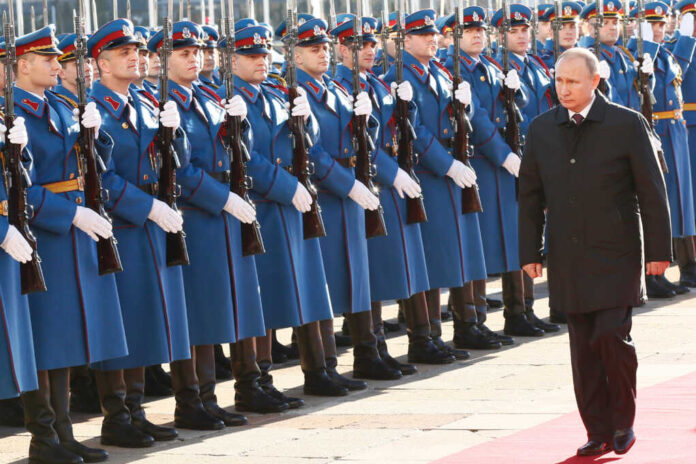
On November 6, 2025, Russian President Vladimir Putin instructed his government to prepare proposals for resuming nuclear weapons testing, according to a public directive published by the Kremlin. The announcement followed a drone strike in Ukraine that killed seven people, according to Reuters and the Associated Press. Analysts say the directive signals a possible policy shift that could test the limits of global non-proliferation agreements and reintroduce Cold War–era dynamics into modern geopolitics.
Putin’s statement comes amid heightened military tensions with Western nations. While Russia maintains that any future nuclear testing would remain within its national security interests, Western leaders and non-proliferation experts have voiced concern that such actions could undermine decades of restraint under the Comprehensive Nuclear-Test-Ban Treaty (CTBT).
Implications for Global Security
Russia’s renewed nuclear policy stance presents both immediate and long-term implications for global security, according to the Stockholm International Peace Research Institute (SIPRI). In the short term, analysts warn that open discussion of nuclear testing could spur competitive developments in weapons modernization among other major powers. Over the long term, experts caution that weakening adherence to non-proliferation norms may destabilize the existing global arms control framework.
In response, the United States has indicated through the Department of Energy and the National Nuclear Security Administration that it could consider limited testing “on a reciprocal basis” if other nations proceed. This statement, first reported by Politico, underscores how both Washington and Moscow are reassessing nuclear deterrence strategies in light of shifting geopolitical realities.
Potential Fallout and Global Reactions
The broader consequences of Russia’s proposal extend beyond immediate defense considerations. Economically, renewed sanctions could affect global markets, especially in energy and defense sectors, according to Bloomberg analysts. Politically, the prospect of resumed testing may strain diplomatic relations among treaty signatories and complicate existing disarmament efforts.
Experts from the Carnegie Endowment for International Peace note that any return to nuclear testing would undermine the credibility of arms control regimes developed since the 1990s. However, some defense analysts suggest that Moscow’s rhetoric may serve as a deterrent signal rather than a concrete plan to conduct tests. The coming months will be critical as both the U.S. and Russia face international pressure to reaffirm commitments to the CTBT and related accords.
TIME TO NEUTRALISE THE RUSSIAN THREAT
Ukraine-Russia war latest: Moscow says nuclear test proposals being prepared after Putin’s drones kill seven – The Independent https://t.co/6U134qXUzM— elaine simpson (@angryf1) November 8, 2025
Sources:
Analysis on U.S. and Russia Nuclear Testing