President Trump’s latest executive order aims to curb state overreach in AI regulation, signaling a decisive federal push against a patchwork of state laws that threaten national coherence.
Story Highlights
- The executive order creates an AI Litigation Task Force to challenge state AI laws.
- Trump’s move is framed as a defense against state-level regulatory chaos.
- Concerns over ‘woke AI’ and ideological bias are central to federal actions.
- The dormant commerce clause is a key legal tool in this federal strategy.
Trump’s Executive Order Targets State AI Laws
President Trump recently issued an executive order establishing an AI Litigation Task Force within the Department of Justice. This task force aims to challenge state AI regulations that are seen as unconstitutional burdens on interstate commerce. By invoking the dormant commerce clause, the order seeks to prevent a fragmented regulatory landscape that could hinder AI innovation and deployment across the nation. This move aligns with conservative values of limited government and national unity.
Trump’s executive order is a response to the rapid proliferation of state-level AI regulations, which have created a patchwork of rules that businesses must navigate. These state laws address issues such as algorithmic bias and transparency, but critics argue they lead to increased costs and legal uncertainty. The federal government’s intervention is seen as necessary to maintain a cohesive national framework for AI governance, ensuring innovation and economic growth are not stifled by state boundaries.
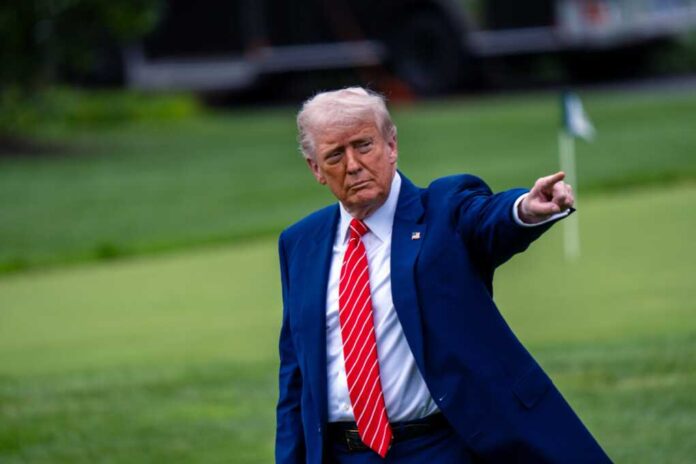
President Donald J. Trump signs an Executive Order to protect American AI innovation from an inconsistent and costly compliance regime resulting from varying state laws.
"We have to be unified. China is unified…" pic.twitter.com/II9gz5yDx7
— Rapid Response 47 (@RapidResponse47) December 11, 2025
Federalism and Civil Rights at the Forefront
The executive order has been framed as a pro-federalism and pro-civil rights measure. Legal scholar Kevin Frazier argues that state AI laws could lead to unequal protection for citizens, depending on their location. By challenging these laws, the executive order aims to preserve a uniform standard of civil rights protection across the country. This federal action highlights the importance of a balanced approach to AI regulation, one that respects both state autonomy and national coherence.
Frazier’s analysis emphasizes the potential economic benefits of a unified regulatory environment. By reducing the compliance burden on businesses, the order could accelerate AI deployment and foster innovation, contributing to a thriving technology sector. This aligns with President Trump’s broader economic agenda, which positions the U.S. as a leader in AI technology and innovation.
Implications and Industry Reactions
The establishment of the AI Litigation Task Force is likely to have significant implications for state governments and the technology industry. Some states may choose to revise their AI laws to avoid litigation, while others may prepare to defend their regulations in court. For technology companies, the prospect of reduced regulatory complexity is welcome news, as it could lower compliance costs and encourage faster deployment of AI solutions.
However, the politicization of AI governance is a potential concern. The framing of the executive order as a response to ‘woke AI’ introduces ideological dimensions to the debate, which could complicate bipartisan support for comprehensive AI legislation. Nonetheless, the executive order marks a significant step in shaping the future of AI regulation in the United States.
Sources:
Kevin Frazier: Trump AI Executive Order Protects Americans From Tower Of Babel Approach
Trump AI Executive Order Analysis
OMB Releases Guidance on Trump’s ‘Woke AI’ Executive Order
Opinion: Trump AI Executive Order Protects Americans From Tower Of Babel Approach