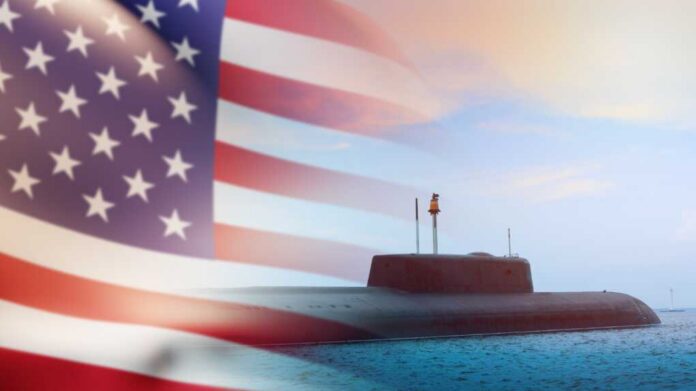
The Navy’s most secretive submarine is being sold to the public with a flashy $3.5 billion price tag—yet the real story is what the government won’t (and can’t) say about what it was built to do.
Quick Take
- USS Jimmy Carter (SSN-23) is widely described as the Navy’s only dedicated nuclear “spy” submarine still operating, but key details remain classified.
- The popular $3.5 billion cost claim is not publicly verified; open sources say the exact price and modification costs are unconfirmed.
- Jimmy Carter received a major 2004–2005 modification, including a roughly 100-foot hull extension to carry specialized equipment.
- The sub operates with Submarine Development Squadron 5 in Bangor, Washington, supporting covert missions, special operations, and undersea tech testing.
What Makes USS Jimmy Carter Different From a Typical Attack Sub
USS Jimmy Carter began life as the third Seawolf-class attack submarine, laid down in 1998 and commissioned in 2001. Open reporting describes it as the Navy’s most specialized undersea platform because it was later modified for intelligence and special missions rather than standard strike and anti-submarine warfare. The center of the public narrative is simple: it is a nuclear-powered boat built to work in places Americans are not meant to see.
The most concrete, publicly repeatable detail is the 2004–2005 shipyard work that reportedly extended the submarine by about 100 feet at Naval Submarine Base Bangor. That added section is tied in multiple accounts to special equipment and unique mission payloads, which is why the sub is associated with deep-sea recovery, tapping or accessing undersea infrastructure, and other tasks that can’t be done by a typical fleet attack submarine. The Navy itself releases few specifics, by design.
The $3.5 Billion Claim: What’s Known and What’s Not
Headlines often repeat that Jimmy Carter “cost $3.5 billion,” but the research summary is clear that the figure is not confirmed in publicly available budgeting details. The submarine’s exact procurement and modification costs remain classified, and the sources reviewed do not verify a single, clean number that can be audited from open documents. What can be said responsibly is that Seawolf-class boats were expensive, and specialized modifications likely increased costs.
That uncertainty matters because it shows how easily attention gets pulled toward a dramatic price tag rather than the strategic rationale. For taxpayers who lived through years of Washington spending sprees and bureaucratic evasions, the key point is not whether the number is exactly right, but why the number cannot be checked. Classification is sometimes necessary, but it also prevents the normal accountability Americans expect for multi-billion-dollar decisions.
Cold War Roots: How Spy Subs Became a Quiet American Advantage
Jimmy Carter did not appear out of nowhere. U.S. undersea spying and deep-ocean recovery grew out of Cold War competition, building on the shift from diesel submarines to nuclear power and the endurance that nuclear propulsion enabled. Public history resources describe how the U.S. Navy’s nuclear era began in the 1950s, creating the ability to remain submerged for long periods—exactly the prerequisite for persistent, covert intelligence collection.
Declassified-era narratives about earlier platforms describe a progression from specialized missions to specialized boats. Accounts of operations like cable-tapping and deep recovery contributed to a line of modified submarines that culminated in uniquely outfitted vessels. By the late Cold War, boats such as USS Parche became closely associated with these missions, and Parche’s eventual retirement left open-source analysts pointing to Jimmy Carter as the modern heir to that highly tailored role.
Why SUBDEVGRU 5 and Undersea Drones Matter in the 2020s
Open reporting places Jimmy Carter in Submarine Development Squadron 5 (SUBDEVGRU 5) at Bangor, Washington, a home for undersea development work tied to special operations and emerging capabilities. That context is important because it links the spy-sub concept to today’s priorities: unmanned underwater vehicles, sensors, and techniques for operating in contested waters. The research notes that Jimmy Carter’s current missions are not publicly described in detail, consistent with its classified profile.
At the same time, the Navy is planning beyond Seawolf and Virginia class life cycles, with SSN(X) timelines stretching into the 2030s for procurement and the 2040s for operational availability in open-source reporting. That long runway suggests the Navy expects the undersea competition to persist for decades. From a practical standpoint, it also means the fleet will lean heavily on upgrading existing platforms while the next-generation program matures.
What Conservatives Should Take Away: Capability Is Real, Transparency Is Limited
Jimmy Carter’s story highlights a tension many Americans recognize: national defense requires secrecy, but secrecy can also shield costs, timelines, and performance from public scrutiny. The research is careful on the central claim—Jimmy Carter fits the profile of a dedicated nuclear “spy” submarine, yet the “only one” framing can be debated because other attack submarines may perform intelligence missions as part of broader multi-role tasking. The dedicated modifications appear to be the differentiator.
The U.S. Navy’s Only Nuclear Spy Submarine Cost $3.5 Billion and Might Be Best Sub Ever Builthttps://t.co/sgf67YfFer
— 19FortyFive (@19_forty_five) February 14, 2026
For voters who wanted a hard pivot away from bureaucratic gamesmanship, the bigger lesson is to separate confirmed facts from viral framing. Jimmy Carter was built, modified, and assigned in ways consistent with a rare, specialized mission set; that is well supported in the open record. The $3.5 billion number and “best sub ever built” talk, however, are not verifiable as objective truth from the available public documents, and readers should treat them as marketing more than measurement.
Sources:
Fleet Ballistic Missile Submarines (U.S. Naval History and Heritage Command)
Virginia-class submarine (Wikipedia)
Submarine Development: A Short History (U.S. Naval History and Heritage Command)
The Long History of U.S. Navy Spy Submarines (19FortyFive)
U.S. Navy: How Many Spy Subs? (USNI Proceedings)
The Navy Has One Nuclear Spy Submarine So Secret We Know… (The National Interest)
Nuclear Weapons at Sea (Federation of American Scientists)