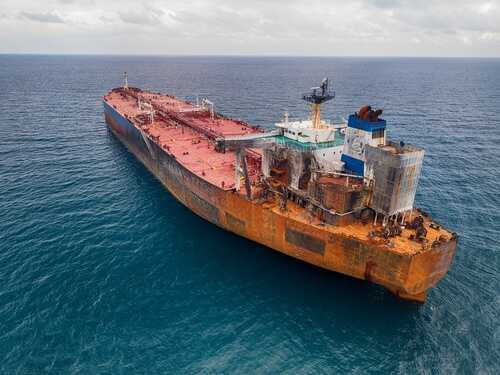
A foreign tanker captain tied to Iran’s oil network just pled guilty after a weeks-long Coast Guard chase, and the Biden-era “ghost fleet” mess is finally landing in President Trump’s lap to clean up.
Story Snapshot
- A ghost-fleet tanker captain admitted in federal court he refused Coast Guard orders during a multi-week pursuit from the Caribbean into the North Atlantic.
- The Department of Justice says his ship moved 1.8 million barrels of Iranian oil that helped U.S. enemies, including terrorist-linked actors.[1]
- The Treasury Department has already blocked 10 companies and 17 tankers tied to Iranian petroleum shipments in this wider ghost-fleet network.[4]
- Some experts warn the loose “ghost fleet” label can blur the line between clear crimes and murkier trade, raising rule-of-law questions.[2]
DOJ Warns Ghost Fleet: ‘You Will Not Escape’
The Department of Justice says 47‑year‑old Avtandil Kalandadze, a citizen of the Republic of Georgia, pleaded guilty in federal court in Washington, D.C., after refusing Coast Guard orders during a weeks‑long pursuit at sea.[1] Prosecutors say he was the former master of the tanker Bella 1, described as part of a “ghost fleet” that historically carried Iranian and Venezuelan oil to benefit U.S. adversaries.[1] The chase stretched from the Caribbean Sea into the North Atlantic Ocean.[1]
According to the plea deal, Kalandadze admitted he failed to “heave to” when ordered by a United States Coast Guard cutter, a crime that can bring up to five years in prison.[1] The judge set sentencing for August and ordered that he will be deported after serving his term.[1] Justice Department officials say his actions put American sailors and Coast Guard members at risk while trying to move “illicit oil” tied to sanctioned regimes.[1]
How the Ghost Fleet Moves Oil for America’s Enemies
The Bella 1 is just one piece of a wider network of tankers accused of hiding the flow of sanctioned oil around the world.[1] The Department of Justice says that under Kalandadze’s command, the ship moved about 1.8 million barrels of Iranian oil to Asia during the fall of 2025, in support of hostile foreign actors.[1] Officials describe these ships as dangerous and poorly maintained, warning that they not only fund terror sponsors but also threaten the seas with spills and accidents.[1]
The United States Treasury Department has already moved to choke off this network’s money and access to the financial system.[4] In late 2024, Treasury announced sanctions on 10 companies and 17 tankers for moving Iranian petroleum, labeling their assets as blocked property under United States law.[4] These operators are accused of using shell companies and deceptive routes to move oil in violation of sanctions, including ship‑to‑ship transfers and flag changes that make tracking difficult.[3]
Loose ‘Ghost Fleet’ Label Raises Rule‑of‑Law Concerns
While the Kalandadze case gives the Department of Justice a concrete guilty plea on disobeying the Coast Guard, some independent analysts caution that the broader “ghost fleet” label is not a clear legal category.[2] One detailed critique notes there is “not a well-defined definition” of ghost or shadow fleets in law, and that the term is often used for ships that hide their movements, even when a specific crime has not yet been proven in court.[2]
That same analysis points out that in some cases it “is not alleged” that particular oil trades themselves broke a law, even when the vessels used tactics like turning off transponders or using shell owners.[2] This creates a tension: real bad actors are clearly using tricks to dodge sanctions, but broad language can lump together illegal evasion with trade that sits in gray zones. For conservatives who care about equal justice, that raises due‑process and overreach questions.
Trump’s Challenge: Hit Enemies Hard, Protect Liberty at Home
Assistant Attorney General John A. Eisenberg used the Kalandadze plea to send a tough message, saying it “should serve as a warning to ghost fleet owners and operators and all those who man or otherwise support these dangerous, decrepit vessels.”[1] He pledged that the Department of Justice and partner agencies will pursue the ghost fleet “from the Caribbean Sea to the North Atlantic, to the Indian and Pacific Oceans, the Persian Gulf, and anywhere in between. You will not escape.”[1]
'You Will Not Escape': DOJ Warns Ghost Fleet Operators After Tanker Captain's Guilty Plea https://t.co/AfYpD5Om9B
— 🌺🌿kam🌿🌺 (@pjkate) June 14, 2026
For Trump‑era conservatives, this case sits at the crossroads of two core concerns: national security and government power. On one hand, Americans want tough action against regimes like Iran and Venezuela that threaten our troops, our allies, and our energy security. On the other hand, vague labels and sweeping rhetoric can damage trust if they are used to blur legal lines, pressure private companies, or chill open debate about sanctions policy and international trade.[2]
Sources:
[1] Web – ‘You Will Not Escape’: DOJ Warns Ghost Fleet Operators After Tanker …
[2] Web – Master of Ghost Fleet Tanker Pleads Guilty in D.C. for Evading U.S. …
[3] Web – Four Questions About the So-Called ‘Shadow’ Fleet – Liquid Time
[4] Web – US imposes sanctions to Iran’s ‘ghost fleet’ of oil tankers