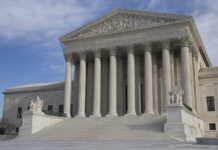
A major birthright citizenship fight is heading toward the Supreme Court, and the stakes reach far beyond one executive order.
Quick Take
- The Supreme Court has already narrowed broad injunctions in related birthright citizenship litigation.[1]
- The Trump administration’s order still faces a direct constitutional fight over the Fourteenth Amendment.[3][4]
- Supporters of birthright citizenship say the Constitution and long-standing precedent remain clear.[3][6]
- Backers of the order argue that “subject to the jurisdiction thereof” leaves room for limits.[5][6]
The Court Fight Behind the Order
The legal battle centers on President Trump’s executive order that tries to limit automatic citizenship for some children born on United States soil. Court filings and public statements say the administration wants a narrower reading of the Citizenship Clause, while challengers say the order cannot override the Constitution.[3][4][5] The dispute now sits at the center of a larger clash over immigration, constitutional text, and the power of the executive branch.
That tension matters because the Fourteenth Amendment says, “All persons born or naturalized in the United States, and subject to the jurisdiction thereof, are citizens of the United States.” The National Constitution Center says the Supreme Court’s 1898 decision in United States v. Wong Kim Ark read that language to protect children born in the United States to parents permanently located here.[6] Harvard Law School also says a president has no authority to change citizenship rules on his own.
Why Supporters Call It a Constitutional Test
Supporters of the order argue that the phrase “subject to the jurisdiction thereof” is not meaningless. A Supreme Court oral argument recording in the record shows that this view was pressed directly, with speakers arguing that children of temporary visa holders or unlawful immigrants fall outside the clause’s reach.[5][7] That argument tries to turn the case into a text-and-history dispute, not a broad rejection of citizenship for everyone born in the country.
The challengers say that framing still runs into hard constitutional limits. The American Civil Liberties Union says birthright citizenship has been protected for more than a century by the Constitution, Supreme Court precedent, and congressional enactment.[2][4] The State Department’s Foreign Affairs Manual likewise describes the Fourteenth Amendment as covering people born in the United States, subject only to narrow exceptions.[3] For many conservatives, the deeper issue is whether a president can use a directive to reshape a rule that belongs in the Constitution itself.
What the Current Court Posture Means
The procedural side of the case matters as much as the legal theory. According to the sources in the record, courts have blocked the administration from enforcing the order while the case moves forward, and the Supreme Court has already dealt with the scope of nationwide injunctions in related litigation.[1][4][5] That means the justices can affect how fast the government can act, even before they fully answer the citizenship question.
For readers worried about constitutional erosion, this case is bigger than immigration policy. If the Court accepts a broad executive power to narrow citizenship by interpretation, future presidents could push even harder against settled limits. If the Court rejects the order, it will reinforce the idea that citizenship rules come from the Constitution, not from a White House memo. Either way, the decision will shape the next phase of the immigration fight and the fight over executive power.
Sources:
[1] YouTube – Birthright citizenship decision looms as Trump court cases mount
[2] Web – Supreme Court to Review Constitutionality of Birthright Citizenship …
[3] Web – Supreme Court Arguments Wrap in Landmark Challenge to Trump …
[4] Web – 8 FAM 102.3 SUPREME COURT DECISIONS – Foreign Affairs Manual
[5] Web – What Is Birthright Citizenship and Could the Supreme Court End It?
[6] YouTube – Oral Argument on birthright citizenship: Trump v. Barbara
[7] Web – United States v. Wong Kim Ark – The National Constitution Center