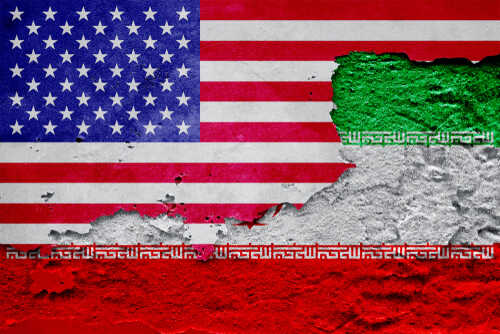
Clickbait claims that Iran’s “secret underground arsenal is finished” are colliding with a far messier reality: U.S. intelligence can only confirm a fraction of Iran’s missiles are actually gone.
Quick Take
- U.S. and Israeli strikes have sharply reduced Iran’s missile and drone attacks, but publicly available reporting does not support claims that Iran’s underground arsenal is “finished.”
- Leaked assessments reported by multiple outlets say the U.S. can confirm roughly one-third of Iran’s missile stockpile was destroyed, while a significant share remains uncertain because it’s stored underground.
- Underground “missile city” tunnels complicate battle-damage assessment, making exact counts difficult even for U.S. officials.
- Even partial degradation can shift the regional balance, but exaggeration risks eroding public trust when later evidence doesn’t match viral headlines.
What U.S. intelligence reportedly confirms—and what it can’t
Reporting citing U.S. intelligence sources says American officials can confirm about one-third of Iran’s missile arsenal has been destroyed since the U.S.-Israel war began in late February 2026. The same reporting indicates another portion of missiles may be damaged or buried after strikes on storage and production infrastructure. The remaining share is believed to still be intact or accessible, but underground sites make hard verification difficult.
The fog around underground facilities is not a minor footnote—it’s central to the story. Iran built extensive tunnel networks to keep missiles and launch systems survivable against airstrikes, and those hardened sites make “confirmed destroyed” a narrower category than “likely degraded.” A senior U.S. official, as described in reporting, pointed to the practical limits of counting what is concealed, buried, moved, or reconstituted during active combat operations.
Why “underground missile cities” frustrate simple victory narratives
Analysts following Iran’s program have long argued that tunnels and hardened storage are designed to survive initial strikes, preserve retaliation capability, and create uncertainty about what remains. In recent reporting, outside experts questioned whether key underground facilities actually collapsed, noting that continued Iranian launches can suggest survivability. That does not negate the reported damage; it highlights that striking entrances, production sites, and launchers is different from eliminating stored inventory.
Israeli estimates and U.S. reporting also emphasize that launch capacity matters as much as missile counts. Strikes reportedly hit hundreds of launchers, with officials indicating a large share was neutralized, while the “last” portion of capability is harder to reach. That dynamic tracks with how hardened targets work: early gains can be dramatic, but the remaining capabilities tend to be buried deeper, dispersed wider, and protected better—making final outcomes slower and less definitive.
Military results can be real even when headlines are exaggerated
Multiple reports describe a steep reduction in Iranian missile and drone attacks, paired with strikes on production and support infrastructure. If accurate, that represents meaningful operational success: fewer launches reduces immediate danger to U.S. forces, partners, and regional shipping. At the same time, the reporting also signals that Iran retains some ability to fire back, and that underground stockpiles could be recovered or rebuilt after the most intense phase of conflict ends.
The political risk: overpromising erodes trust at home
Americans across the political spectrum are exhausted by institutions that feel like they spin narratives rather than tell hard truths. In that climate, viral claims of “irreplaceable” destruction can backfire if official assessments later show partial success and unresolved uncertainties. Conservatives who value accountability and clear missions should demand precision: what was confirmed destroyed, what is assessed as likely damaged, and what remains unknown due to the limits of intelligence in underground warfare.
U.S. Just Destroyed Something IRREPLACEABLE! Iran's Secret Underground Arsenal Is FINISHED!!! https://t.co/G5uTKVU7eC
— Kelly M Peterson (@Kelly7018) May 12, 2026
The bottom line from the available sourcing is straightforward: the strikes appear to have degraded Iran’s missile and drone threat substantially, but the evidence provided in mainstream reporting does not support the sweeping claim that Iran’s underground arsenal is “finished.” With Congress under GOP control and the Trump administration running war policy, pressure will remain high to communicate wins clearly—without slipping into hype that undermines credibility when the facts are inevitably more complicated.
Sources:
US-Iran war missile and drone stockpiles
US can only confirm third of Iran’s missile arsenal destroyed
US can only confirm about a third of Iran’s missile arsenal destroyed, sources say
2025 United States strikes on Iranian nuclear sites