After 40 days of bombing, Washington is betting that a naval blockade—not another missile—will finally force Tehran to choose between its regime ambitions and economic survival.
Quick Take
- The Trump administration is treating a U.S.-led naval blockade of Iranian ports as the main leverage point after the Feb. 28–Apr. 7 war and Pakistan-brokered ceasefire.
- Iran’s oil export dependence on China is central to the strategy, with proponents arguing Beijing now holds the key pressure point.
- Analysts disagree on whether the U.S. has “checkmated” Iran or stepped into a costly stalemate shaped by Iran’s underground defenses and Hormuz leverage.
- With indirect talks failing and threats continuing, global energy markets remain exposed to any renewed Hormuz disruption.
Why the Blockade Became the Centerpiece After the Ceasefire
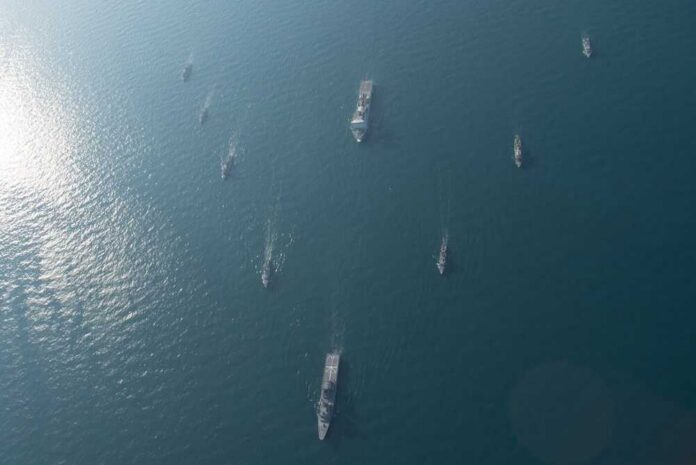
U.S. and Israeli strikes ran for roughly 40 days from Feb. 28 to Apr. 7, 2026, ending in a Pakistan-brokered ceasefire that hinged on keeping the Strait of Hormuz open. Reporting and analysis describe heavy damage to Iranian conventional forces, but not a clean strategic finish. In the aftermath, the Trump administration shifted emphasis to a naval blockade of Iranian ports—aiming to choke off export revenue and force negotiations on nuclear dismantlement and proxy warfare.
Supporters of the blockade approach argue it exploits a simple dependency: Iran’s ability to earn hard currency depends on selling oil, and China is described as the overwhelming buyer. By blocking shipments at the waterline, the administration can apply pressure without immediately expanding the air campaign. That is the logic behind the “checkmate” framing that has circulated in U.S. commentary—economic isolation becomes the move that limits Tehran’s options, even if the shooting has paused.
What Iran Still Controls: Hormuz Risk and Underground Resilience
Energy-focused analysis stresses why “checkmate” is contested: Iran reportedly prepared for decades with decentralized military districts and underground missile and drone production. That kind of resiliency matters in a pressure campaign because it can preserve coercive tools even when visible assets are destroyed. The same analysis also emphasizes that Iran retained meaningful leverage around the Strait of Hormuz, a chokepoint tied to a large share of global oil and LNG flows.
That leverage helps explain why markets and allies stay nervous even during a ceasefire. Gulf states have to plan for the possibility of retaliation against energy infrastructure if Tehran feels cornered by the blockade. Iran’s threats against shipping and regional energy sites, described in the research summary, reinforce that risk profile. For American voters already exhausted by years of inflation and high energy costs, the immediate question is whether this approach can deter escalation while keeping global oil supplies stable.
China as the Pressure Valve—and the Test of “Checkmate” Logic
The core strategic bet is that Beijing will not want to underwrite Tehran’s standoff if the blockade makes Iranian oil exports unreliable or impossible. Proponents say that once Iran cannot move barrels, its storage fills, fields shut down, and domestic economic pain accelerates—creating incentives to negotiate. Critics counter that coercion may not translate into fast concessions when the regime’s priority is survival and when it can lean on asymmetric tools, including threats in and around Hormuz.
This is where the dispute becomes less about slogans and more about timelines and verification. Even sympathetic commentary acknowledges that sanctions relief or de-escalation, if it comes, would likely depend on credible steps tied to nuclear dismantlement and an end to proxy conflict. If negotiations remain indirect and fragile, the blockade may function as a holding action rather than a decisive endgame—especially if U.S. stockpiles and munitions replenishment pace become a limiting factor for renewed combat operations.
What to Watch Next: Talks, Munitions, and Energy Volatility
As of May 2026, the research summary describes indirect talks that fail to bring the parties into the same room, alongside continued warnings that strikes could resume. That dynamic keeps escalation risk alive: Iran signals defiance, the U.S. signals readiness, and the blockade persists as the main instrument of pressure. The practical question for Americans is whether the policy produces measurable movement—verified steps on nuclear infrastructure and proxy activity—rather than open-ended brinkmanship.
BREAKING MILITARY NEWS:
CHECKMATE IN IRAN? THE "BLOCKADE PLUS" STRATEGY REVEALED….
The endgame for "Operation Epic Fury" is coming into focus. Senator Lindsey Graham just laid out the "Blockade Plus" strategy: a combination of total naval dominance in the Strait of Hormuz and… pic.twitter.com/ekg2RMdRdA
— Todd S. Regelski (@ToddRegelski) May 6, 2026
The broader political lesson cuts across partisan lines. A strategy that relies on long-duration enforcement, high operational tempo, and careful crisis management tests public confidence in institutions that many voters already view as self-interested and ineffective. If the blockade yields a negotiated rollback without a wider regional war, the administration will call it disciplined leverage. If it drags on and spikes energy costs, critics will label it another costly stalemate with global consequences.
Sources:
Checkmate: How Trump’s Iran Strategy Forces China’s Hand
The US and Iran: Between Stalemate and Checkmate
US blockade was a ‘checkmate’ on Iran