An American naval ‘armada’ heads toward Iran, raising concerns over potential military escalation.
Story Highlights
- President Trump announces deployment of naval forces toward Iran.
- USS Abraham Lincoln and destroyers are part of the fleet.
- Deployment follows recent US strikes on Iranian nuclear sites.
- Trump hopes force will not be needed but warns Iran.
US Naval Deployment Toward Iran
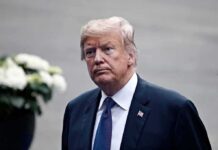
President Trump recently announced the deployment of a US naval “armada,” including the aircraft carrier USS Abraham Lincoln, toward Iran amid escalating tensions. This move comes as a part of the administration’s strategy to deter Iran from resuming nuclear activities and cracking down on protesters. Trump, speaking from Air Force One after the World Economic Forum in Davos, emphasized that this deployment expands the US’s strategic options, although he expressed hope that military force would not be necessary.
The decision to move these naval forces comes on the heels of recent US strikes on Iranian nuclear sites, a move that has further strained relations. The strategic deployment underscores the administration’s commitment to closely monitor Iran’s actions and signals a readiness to respond if Iran continues its nuclear pursuits or executions connected to the ongoing protests. These protests, fueled by economic hardship, have drawn significant international attention.
Watch:
International Reactions and Stakeholders
The international community is watching closely as the situation develops. Iranian President Masoud Pezeshkian has attributed the protests in Iran to foreign interference, pledging to investigate and compensate those affected. Meanwhile, Turkish President Recep Tayyip Erdogan has voiced opposition to foreign intervention in Iran, advocating for regional stability without external interference. In Israel, Prime Minister Benjamin Netanyahu and Defense Minister Israel Katz have been involved in security discussions concerning Iran and the Gaza region.
The power dynamics in the region are complex, with the US leveraging military deployments to deter Iran while allies like Israel support this stance. On the other hand, Turkey’s calls for diplomacy highlight the varied approaches to handling the tensions in Iran. These developments are closely tied to historical US-Iran tensions, primarily driven by nuclear disputes and Iran’s enrichment activities, which remain a significant concern for global security.
Potential Impacts and Future Implications
The short-term implications of this deployment include an increased risk of miscalculation or escalation, with the US forces ready to protect its bases in the region. Long-term effects could further strain the oversight responsibilities of the International Atomic Energy Agency (IAEA) if Iran decides to resume its nuclear activities. The protests and government crackdowns in Iran, coupled with internet outages, have already resulted in thousands of deaths, according to various sources.
Trump says US 'armada' headed toward Gulf https://t.co/7i3Wn7UybB pic.twitter.com/0cvbI3By7N
— Insider Paper (@TheInsiderPaper) January 23, 2026
Economically, the security of the Gulf region impacts oil and maritime activities, while socially, the unrest and communication blackouts exacerbate grievances within Iran. Politically, the US’s actions bolster its deterrence narrative, applying pressure on Iran amid its internal challenges. The defense and military logistics sector, energy markets, and nuclear oversight will feel the ripple effects of how this situation unfolds.
Sources:
Trump says naval ‘armada’ heading toward Iran, as US ‘closely …
Historical Trump remarks from whitehouse.gov archives