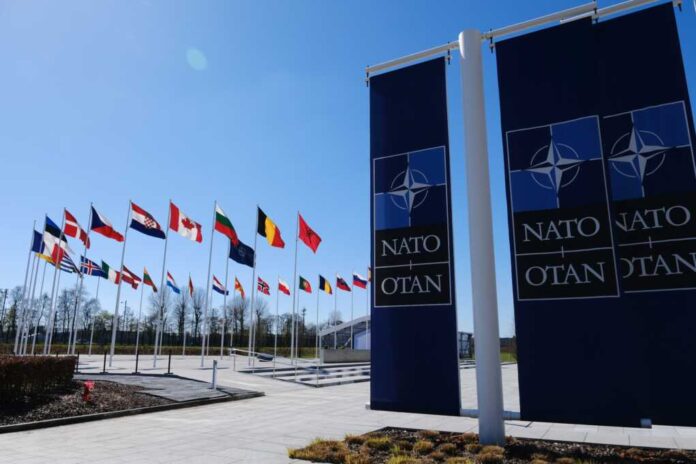
NATO’s new Arctic strategy, driven by the U.S.-Trump framework, raises concerns about increasing military presence in the region.
Story Highlights
- NATO plans to boost Arctic security as part of a Trump-led strategy.
- Rising tensions involve U.S., Greenland, and Denmark negotiations.
- Military readiness awaits political direction for Arctic operations.
- Nordic countries play a critical role in the new strategy.
NATO’s Arctic Strategy Under Trump’s Influence
NATO Secretary General Mark Rutte announced a significant shift in Arctic security strategy, aligning with President Trump’s framework deal. This move emphasizes increased military spending and operations in the Arctic, a region gaining strategic importance due to climate change and geopolitical tensions. The framework directly links to ongoing talks involving the U.S., Greenland, and Denmark, underlining the urgency in countering Russian and Chinese activities.
The decision to fortify Arctic defenses follows NATO ambassadors’ collective agreement in September 2025. With Finland and Sweden joining NATO, the alliance now includes seven of the eight Arctic-bordering countries, excluding Russia. This expansion aims to bolster military capabilities and deter adversarial influences, ensuring that the region remains secure and strategically advantageous for NATO members.
Key Stakeholders and Their Roles
Among those leading the charge in Arctic security is Gen. Alexus Grynkewich, Supreme Allied Commander Europe, who awaits further guidance on the mission. Alongside Admiral Giuseppe Cavo Dragone, who chairs NATO’s Military Committee, Grynkewich emphasizes the importance of Nordic expertise in planning and executing Arctic operations. Nordic nations, including Norway, Sweden, and Finland, are crucial hosts for new military bases, meeting the 2% GDP defense spending target.
President Trump’s framework deal plays a pivotal role in pushing NATO allies towards increased defense spending. This aligns with his administration’s broader strategic goals of burden-sharing and collective defense, particularly against perceived threats from Russia and China. The framework also underscores the significance of Greenland as a strategic asset in this geopolitical landscape.
Impact and Future Implications
The immediate economic impacts include job creation and increased local spending in Nordic regions hosting NATO bases. However, the long-term implications involve a commitment to raising defense expenditures to 5% of GDP by 2035. This aligns with broader NATO goals, yet presents challenges such as demographic shifts and environmental concerns due to military exercises and base expansions.
Despite these challenges, the strategic importance of the Arctic cannot be overstated. It is a region where control over sea lanes and resources is critical, especially as climate change opens new routes. Thus, NATO’s intensified focus on the Arctic is not only a matter of current security but also a strategic positioning for future geopolitical dynamics.
Sources:
NATO Secretary General Rutte: NATO allies to increase Arctic security
Militarization in the Nordic Arctic: Demographic, Economic, and Environmental Implications
Top NATO commanders standing by for policy guidance on Arctic mission
NATO Secretary General at World Economic Forum Davos