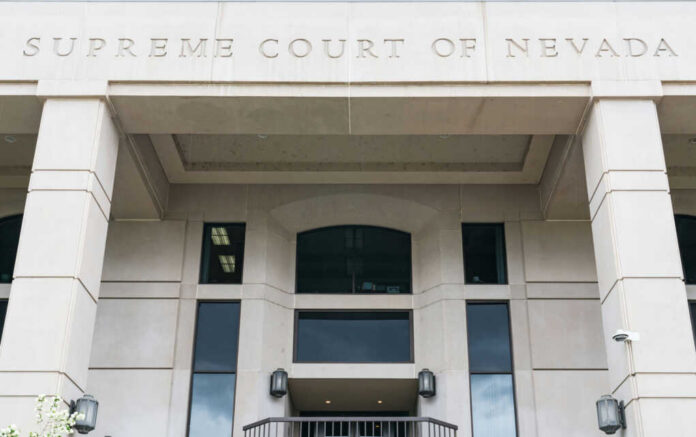
Supreme Court justices signal they may strike down a 1968 federal law stripping Second Amendment rights from habitual marijuana users, even without intoxication, offering a major win for gun owners nationwide.
Story Highlights
- Justices expressed skepticism during March 2, 2026, oral arguments in United States v. Hemani, questioning the Gun Control Act’s ban on gun possession by non-intoxicated drug users.
- The case pits Trump’s DOJ against Second Amendment protections established in the 2022 Bruen decision, which demands historical analogues for restrictions.
- Lower courts dismissed charges against Texas defendant Ali Danial Hemani, citing no proof of intoxication and lack of Founding-era precedents for such broad disarmament.
- A ruling against the ban could end hundreds of annual prosecutions and protect self-defense rights for millions amid state marijuana legalization and Trump’s reclassification order.
Case Origins and FBI Investigation
FBI agents searched Ali Danial Hemani’s Texas home and discovered a Glock pistol alongside 60 grams of marijuana and 4.7 grams of cocaine in his mother’s room. Hemani admitted using marijuana every other day. Federal prosecutors indicted him under 18 U.S.C. §922(g)(3) of the 1968 Gun Control Act, which prohibits firearm possession by unlawful users or those addicted to controlled substances. This statute carries penalties up to 15 years in prison. U.S. District Judge Amos Mazzant dismissed the indictment, ruling the law lacked historical tradition under the Supreme Court’s Bruen framework and Hemani showed no intoxication at arrest.
Lower Court Victories and Supreme Court Appeal
The 5th Circuit Court of Appeals upheld Judge Mazzant’s dismissal, following its precedent in Connelly v. United States, which rejected the ban absent proof of intoxication. The Trump administration petitioned the Supreme Court in June 2025. Justices granted certiorari on October 20, 2025, setting oral arguments for March 2, 2026. Solicitor General D. John Sauer argued the law aligns with Founding-era traditions disarming habitual drunkards, emphasizing public safety risks. Deputy Solicitor General Sarah Harris warned that mixing firearms with controlled substances endangers communities. The case highlights tensions between federal drug policy and constitutional gun rights.
Oral Arguments Reveal Judicial Skepticism
During arguments, Justice Neil Gorsuch labeled the case an odd choice, noting marijuana’s reclassification under Trump’s executive order as a lesser substance reduces perceived dangers compared to harder drugs or alcohol. Justices questioned whether historical bans on drunkards apply to non-intoxicated marijuana users in legalized states. The ACLU, defending Hemani, argued routine home marijuana use plus a firearm for self-defense should not trigger felony charges, protecting millions of Americans. Gun rights advocates and civil libertarians united against government overreach, stressing Bruen’s demand for precise historical analogues, which critics say the 1968 law lacks for habitual but sober users.
Stakes for Gun Owners and Policy Implications
A decision overturning the ban could dismiss around 300 annual prosecutions under this provision, including past cases like Hunter Biden’s conviction for lying about addiction on a gun form. Long-term, it would redefine Second Amendment scope for over 50 million marijuana users, bolstering self-defense rights without violence or intoxication. This aligns with conservative priorities of limited government and individual liberty, countering overbroad federal restrictions post-Bruen. Firearms owners in pro-legalization states stand to gain most, as the ruling tests Trump’s DOJ balance on drugs and guns amid shifting public views.
Expert Views and Potential Outcomes
SCOTUS blog analysis frames the narrow issue as habitual use versus intoxication proof, placing a heavy Bruen burden on the government. The Constitution Center notes insufficient historical analogues for non-intoxicated users under Justice Thomas’s framework. Bipartisan skepticism emerged in arguments, continuing post-Bruen trends challenging categorical disarmament. While the Trump DOJ pushes public safety, justices appeared wary of expansive applications punishing non-violent possession. A pending ruling in the 2025-26 term could reinforce constitutional protections against vague, overreaching statutes eroding core American freedoms.
Sources:
Supreme Court questions denying gun rights to marijuana users in test of 2nd Amendment
Court to hear argument on whether and when drug users may possess firearms
Supreme Court to consider legality of gun bans for marijuana users
Supreme Court ponders law making it a crime for marijuana users to own guns