A major New York utility’s own paperwork admits it can remotely dial back a customer’s air conditioner during a heat wave and does not have to warn them first.
Quick Take
- Con Edison filings describe a residential program that lets the company remotely adjust thermostat settings with “no notification.”
- Older company records show customer complaints that it was “too hot in building” after past curtailments.
- Con Edison says the programs are voluntary, pay customers, and allow opt-out at any time.
- Some program rules include financial penalties if enrolled customers fail to cut usage as promised.
- New York regulators are pushing similar thermostat-control deals statewide, including a proposed $300-a-year offer from National Grid.
What Company Records Actually Show
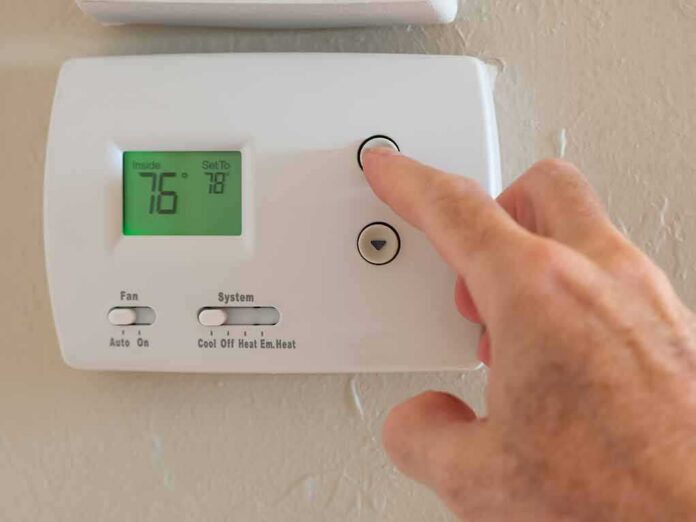
Con Edison runs programs that let the company reach into a customer’s home and change the thermostat during times of high electricity demand. A company presentation filed with New York regulators states plainly that the utility can remotely adjust thermostat settings, and for the residential version of the program, “there is no notification” before that happens.
The company frames this as a tool to protect the power grid, not to punish customers. During a 2021 heat wave, Con Edison said it had “activated its demand response programs” and reduced voltage in some areas to keep the system from failing under strain, warning that every degree lower on a thermostat adds cost to the grid.
Program materials describe the setup as a network of programmable thermostats Con Edison can curtail remotely, specifically to cut electric load from central air-conditioning systems on the hottest days. That means the company, not the homeowner, can decide how cool a house gets when demand peaks.
Voluntary Sign-Up, Limited Control Once Enrolled
Con Edison and outside guides consistently describe enrollment as optional. A Patch report on the utility’s Smart Usage Rewards program said it is “free to join” and that “customers can opt out at any time,” with payments ranging from twenty-five to eighty-five dollars a year for signing up.
But once someone joins, the fine print gets tighter. Con Edison’s own frequently-asked-questions page warns that “some of our programs assess a financial penalty or reduced payments if you cannot reduce your electricity usage to the amount you enrolled”. In other words, agreeing to less air conditioning is not always a one-time choice a customer can quietly walk back during the event itself.
Complaints Buried in Old Filings
Records are not just theoretical. A Con Edison annual report on its Direct Load Control program logged real customer objections during past curtailment events, including entries reading “too hot in building” and general “customer complaints”. Those notes came from a program built specifically to cut central air-conditioning use during peak hours.
Separate tracking of demand-response events shows they are concentrated in July and August and are triggered specifically when temperatures are forecast above 90 degrees and system load is projected to run high. That is exactly when a household most needs its air conditioner working at full strength, not scaled back by a remote signal.
A Statewide Push Keeps Expanding
This is not a one-utility story. New York regulators have ordered other utilities to roll out similar retail demand-response payments, and Governor Kathy Hochul has floated a new deal letting National Grid adjust customer thermostats in exchange for twenty-five dollars off monthly bills, totaling three hundred dollars a year.
Supporters call this a fair trade that keeps the grid running without building costly new power plants and pays people for their cooperation. Critics see a system where a company can quietly turn down someone’s air conditioner during dangerous heat, with no live warning and financial strings attached if a customer tries to back out mid-event.
Zohran Mamdani reveals he has plans to store heat from subway stations and use it to heat buildings across NYC in the winter
“This would be the first thermal energy system of its kind in any American transit system” pic.twitter.com/3NjCvyxuAI
— Interesting AF (@interesting_aIl) August 11, 2026
Both sides agree on the basic facts: these programs exist, they are opt-in, and they pay participants. The dispute is over how much real control a household keeps once it signs up, especially when the utility’s own records show no notification requirement and past complaints about excessive heat inside people’s homes.
Sources:
lifesitenews.com, utilitydive.com, seenra.com, coned.com, documents.dps.ny.gov, assets.ctfassets.net, sustainability.google, grid-mind.com