A unanimous Supreme Court ruling just slapped down a federal gun ban that punished marijuana use instead of real danger.
Quick Take
- The Supreme Court held that prosecuting Ali Hemani under federal marijuana-and-gun law violates the Second Amendment.[3]
- The Court said the government relied on status, not proof of intoxication, danger, or incapacity.[3]
- The ruling rejected the government’s historical analogy to habitual drunkard laws.[1]
- The decision is narrow and does not erase every federal gun restriction.[1]
Federal Gun Ban Meets the Second Amendment
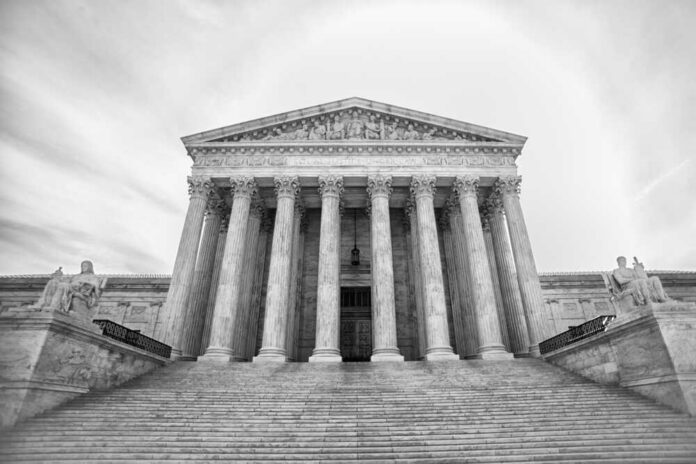
The Supreme Court on June 18, 2026, ruled for Ali Hemani and said the government could not prosecute him under 18 U.S.C. Section 922(g)(3) just because he used marijuana.[3] The case drew national attention because it tested whether Washington can keep disarming peaceful gun owners based on drug use alone. For many readers, the answer matters because it shows whether the Constitution still limits federal overreach when the issue is guns.
The record showed that agents found a pistol in Hemani’s home and tied the case to his admitted marijuana use.[7] The government did not claim he was intoxicated when he had the gun, and the Court said that gap mattered.[7][3] That point goes to the heart of the case. If the state can strip gun rights without showing danger, then status replaces due process. The Court rejected that approach and said the prosecution failed under the Second Amendment.[3]
Why The Court Rejected The Government’s Theory
Justice Neil Gorsuch wrote that the government’s comparison to habitual drunkard laws did not carry the day.[3] The Court said those older laws involved judicial process before liberty was taken away, while Section 922(g)(3) worked as an automatic ban.[3] That difference is not small. A system that skips individualized proof and jumps straight to disarmament fits the modern administrative state, but it does not fit a Constitution that protects personal rights from broad government shortcuts.[1][3]
The Court also said its ruling was narrow and did not wipe out every firearm ban tied to unlawful drug use.[1] The opinion left room for other restrictions, including laws aimed at felons and the mentally ill, which the Court noted have different legal and due process features.[1] That matters because the government will likely try to keep using the statute in other settings. Even so, the decision blocks the broad idea that marijuana use alone makes someone unfit to own a gun.
What The Ruling Means Going Forward
The biggest practical question now is how federal agencies and prosecutors respond.[1][3] The ruling weakens any effort to treat occasional marijuana use as an automatic trigger for firearm disarmament. It also puts pressure on the Department of Justice (DOJ) and the Bureau of Alcohol, Tobacco, Firearms and Explosives to adjust their guidance and paperwork. If they drag their feet, lawful gun owners could stay trapped in a gray area while bureaucrats sort out a loss they should have seen coming.
Hidden in the Hemani Opinions: A concurring opinion from Supreme Court Justice Clarence Thomas is drawing renewed attention to the limits of federal power over firearms after the Court unanimously struck down a federal gun restriction targeting marijuana users. In the Court’s…
— Quark4511 (@quark4511) June 24, 2026
The decision also gives gun owners a fresh warning about how far federal power can go when public safety claims get stretched past the facts.[3] The Court did not say marijuana is harmless, and it did not bless dangerous conduct. It said the government must prove more than a label before taking away a constitutional right.[3] That is a plain and important limit. For conservatives who value the Second Amendment, the ruling is a reminder that rights are not supposed to vanish just because Washington wants an easier case.
Sources:
[1] Web – Supreme Court Ruling Offers Hope to an Iowa Marijuana User Who Got 4 …
[3] Web – US v. Hemani | American Civil Liberties Union
[7] YouTube – SCOTUS Shorts: United States v. Hemani