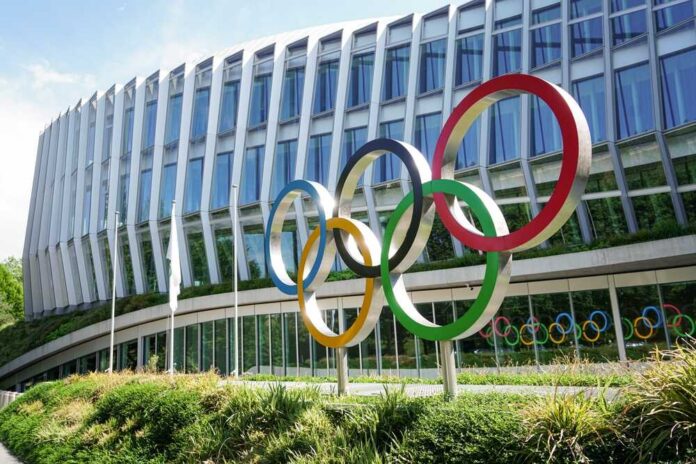
The International Olympic Committee just drew a bright biological line in women’s sports—exposing how quickly “common sense” became a political minefield.
Quick Take
- The IOC announced a new policy restricting the women’s Olympic category to biological females, using a gene-test-based eligibility standard.
- Veteran broadcaster Bob Costas backed the change on CNN, arguing it protects fair competition and aligns with the original purpose of women’s categories.
- The decision lands in a U.S. culture climate already exhausted by institutional overreach, identity politics, and rules that punish ordinary people for stating basic biology.
- Coverage across outlets agrees on the core facts, but uncertainty remains about how many athletes are impacted and how testing is implemented in practice.
IOC’s New Women’s Category Rule: What Changed and When
The International Olympic Committee announced a policy titled “Policy on the Protection of the Female (Women’s) Category in Olympic Sport” on March 26, 2026, and reporting the next day emphasized that women’s Olympic events would be limited to biological females. The new framework is described as requiring a lifetime gene test for eligibility in the female category. The IOC’s stated direction marks a shift away from earlier approaches that relied heavily on hormone-based thresholds.
Available reporting does not provide a full technical breakdown of how the gene testing will be conducted, what documentation standards will apply, or what appeals process will look like. One major open question is scope: outlets citing wire reporting said it was not yet clear how many athletes would be affected. That matters because any system that impacts eligibility without transparent due process can quickly turn into bureaucratic power exercised against athletes with little recourse.
Bob Costas Calls the Policy “Common Sense,” Not a Personal Attack
Bob Costas, a longtime sports broadcaster with mainstream credibility, supported the IOC’s move during a CNN interview with Elex Michaelson on March 27, 2026. Costas framed the policy as a fairness issue rooted in biological differences, arguing that protecting women’s categories is consistent with why those divisions exist. Reports highlighted Costas’s line that “common sense is not transphobic,” alongside his view that transgender people should still be treated with dignity.
Costas’s comments stood out because they attempted to separate two questions that often get blurred on purpose: how to treat people in daily life versus how to structure elite athletic competition. His examples and analogies—such as weight-class comparisons and the argument that post-puberty male physiology brings advantages—were presented as practical ways to explain why sex-separated sports exist at all. Coverage also noted his reference points from recent U.S. controversies that made the debate unavoidable.
Why Lia Thomas, Laurel Hubbard, and Misinformation Fueled the Pressure
The IOC decision arrives after several flashpoints that shaped public opinion. Reporting pointed to Lia Thomas, the University of Pennsylvania swimmer whose results sparked national debate after competing in women’s events following competition in men’s categories. Another precedent frequently cited was Laurel Hubbard, who competed in women’s weightlifting at the Tokyo Olympics in 2021 as the first openly transgender Olympian. These cases became shorthand for the competitive-equity question, not just an abstract moral argument.
Media coverage also referenced the 2024 Paris Olympics dispute involving Algerian boxer Imane Khelif, who was falsely labeled transgender online despite being a biological female. That episode highlighted how quickly misinformation can spread when institutions refuse to speak plainly. For many Americans—especially those tired of being lectured by corporate or government authorities—public trust erodes when officials prioritize reputational risk management over clarity, then demand compliance with rules that no one can honestly explain.
Conservative Stakes: Fair Play, Title IX, and the Limits of Institutional Power
For conservatives, the issue is less about hostility toward individuals and more about defending the integrity of women’s sports and the original intent behind sex-based protections such as Title IX. The women’s category exists because male and female athletic performance diverges substantially after puberty, and the goal of separate categories is to prevent women from being displaced in their own competitions. Costas explicitly connected that history to the current policy debate.
At the same time, the IOC’s embrace of a gene-test gatekeeping model raises legitimate governance questions. Testing regimes can become sprawling systems with opaque standards, uneven enforcement, and limited accountability—especially when global bodies operate beyond the reach of any single nation’s constitution. Conservatives who already distrust unaccountable institutions will likely demand details: who controls the data, what privacy safeguards exist, and whether athletes can challenge errors without being financially ruined by a multi-year process.
What is clear from the available reporting is that the policy’s headline direction is biology-based, while the implementation specifics remain less defined. That gap is where controversy tends to grow: supporters see a needed correction after years of ideological pressure, while critics warn about discrimination and intrusive monitoring. With the policy active for future Olympics and attention turning toward the 2028 Los Angeles Games, transparency will decide whether this becomes a clean fairness standard or another compliance bureaucracy.
"This policy is common sense," Bob Costas tells @CNN of the IOC policy excluding biological males from the women's category in the Olympics. He also emphasizes that there are bad actors who leverage animus against trans people for political gain and that this is bad. https://t.co/P7Qk1oZwol
— Benjamin Ryan (@benryanwriter) March 27, 2026
In 2026, with Americans already polarized and worn down—whether by inflation fatigue, cultural fights, or broader foreign-policy frustration—sports governance seems minor until it becomes a referendum on reality itself. Costas’s “common sense” framing resonated precisely because it tries to return the debate to rules that can be stated plainly. The question now is whether the IOC can enforce a women’s category definition consistently, humanely, and transparently, without rebuilding the very mistrust that forced this change.
Sources:
Legendary Broadcaster Supports IOC’s Decision to Ban Men from Women’s Sports
Bob Costas supports transgender ban: ‘common sense’
Bob Costas Supports Olympic Transgender Ban as ‘Common Sense’