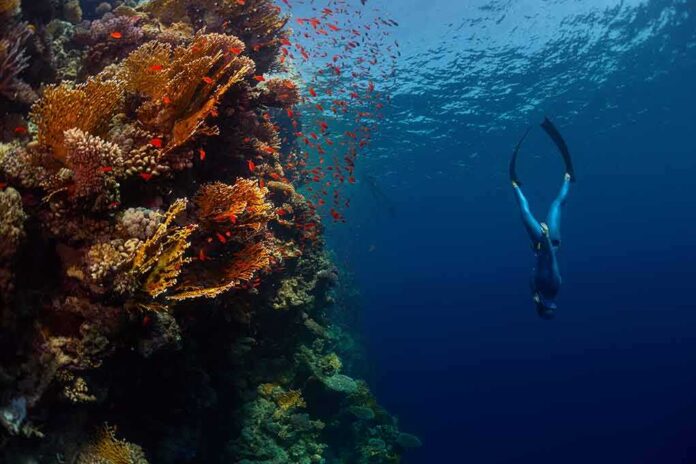
A spearfishing trip in Fiji turned into a near‑fatal lesson on how fast the ocean can punish human overconfidence.
Story Snapshot
- New Zealand diver Henry Gibbs filmed the moment a shark grabbed his leg and dragged him underwater.
- He narrowly kept his leg after four surgeries and a skin graft, and says he feels “incredibly lucky.”
- Gibbs admits he underestimated the shark and now warns others to leave the water when shark behavior shifts.
- The viral clip shows how modern thrill‑seeking, social media, and risky wildlife encounters now collide.
Terrifying Shark Attack Caught on Camera
New Zealand fishing content creator Henry Gibbs was on his first spearfishing dive in Fiji when a grey reef shark suddenly attacked him and nearly took his leg. He had a camera rolling as the shark swam semicircles below him, then surged upward and clamped onto his right calf. The animal dragged him in a brutal “death roll” while he screamed in shock and pain. Gibbs later shared the footage with his more than 100,000 followers, turning a private near‑tragedy into a global warning.
Friends Colby and Dan were in the water and on the boat and moved fast when the shark struck. They hauled Gibbs out of the water, applied first aid to the deep leg wound, and got him to medical care in Fiji before he was flown to New Zealand for more treatment. Hospital photos and video show heavy bandaging around his lower leg and foot. Gibbs says he feels “incredibly lucky” to still have his leg and full use of his foot after the attack.
A Long Road Through Surgery and Recovery
Doctors needed four surgeries and a skin graft to save Gibbs’s right leg. Surgeons worked to repair torn muscle and tissue and protect nerves and blood flow. In his posts from his hospital bed, Gibbs thanked medical teams and said it looks like he will make a full recovery, something he is “hugely grateful for.” He also said the ordeal left him with a deeper appreciation for life and for how quickly a routine dive can turn into a fight to survive.
Gibbs describes the shark as smaller than the “movie monster” people imagine, which is part of why he misjudged the risk. He told followers he never thought a shark of that size was much of a threat, and that this assumption was a serious mistake. Other reports note that blood from spearfishing and noise from the boat and spearguns likely helped attract or agitate the shark. Gibbs now sees the event as “wrong place, wrong time” in the shark’s world, not a targeted attack on him personally.
From Personal Horror to Public Safety Lesson
As Gibbs replayed the video, he focused less on shock and more on what others could learn from the encounter. He says there were several grey reef sharks circling below, and one began making tighter semicircles, acting more agitated, and even sprinting at the boat before the bite. Looking back, he believes that clear change in behavior should have ended the dive. His main advice now is simple: if a shark’s behavior starts to shift, get out of the water and move on.
A Fiji dive went from warning signs to chaos in seconds.
Henry Gibbs survived a grey reef shark bite, four surgeries and one very lucky leg.https://t.co/OnBH1lsBEy #SharkAttack
— It's Not You It's Me Media (@itsnotyouitsme) July 29, 2026
Gibbs also suggests wearing plain black wetsuits in tropical waters, rather than bright or patterned gear that may grab a predator’s attention. He stresses that people entering the ocean are stepping into a wild food chain, not a theme park. That point resonates beyond his story. Many readers already feel that elites sell them “safe thrills” while hiding real risks, whether in finance, technology, or even tourism. Viral clips like Gibbs’s show those risks in raw form and remind viewers that nature does not follow human talking points or political spin.
Media, Risk, and a Distrustful Public
The Gibbs video fits a wider trend where dramatic wildlife injuries reach the world first through social media, then through news sites that repeat the same footage and quotes. The public sees vivid images but gets little deeper context about how common such events are or how risk is changing in crowded oceans. For Americans who already believe government and big media downplay hard truths, these stories feed a sense that ordinary people must trade safety tips directly and protect themselves.
To his credit, Gibbs avoids turning his experience into fear‑mongering or easy blame. He says he has “no hard feelings” toward the shark because he was in its habitat, hunting its food when it struck. That calm view stands out in an online world that often uses fear to drive clicks. It also raises a quiet question that many frustrated citizens ask in other areas of life: if one injured diver can own his part in a bad outcome and share clear lessons, why do powerful institutions so often dodge responsibility when their choices leave others exposed to risk?
Sources:
facebook.com, wmtw.com, shark-diving.com, instagram.com, bbc.com, ndtv.com, rnz.co.nz