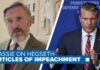
At the Iowa State Fair, Defense Secretary Pete Hegseth said a line that set off a national fight over speech, standards, and politics — all on a campaign stage, not a military base.
Story Snapshot
- Hegseth’s fairground remark drew swift backlash as a “transphobic slur,” with wording variably masked in mainstream outlets.
- The comment came at a fundraiser for Rep. Zach Nunn, blurring political and official roles amid a heated culture debate.
- Hegseth tied his message to training, readiness, and a colorblind, merit-based force.
- Exact-word certainty is limited by redacted transcripts and lack of an official recording, fueling partisan framing.
What Happened On The Fairgrounds
CNN reported that Defense Secretary Pete Hegseth used a transphobic slur while speaking Monday at the Iowa State Fair in support of Representative Zach Nunn’s reelection. Iowa Public Radio transcribed the disputed line as “we do training, not t——-,” with the key word redacted. The Gateway Pundit printed the term explicitly. The event setting was loud and political, with press present and recording. No official transcript from the Pentagon has surfaced in the reporting so far.
Radio Iowa said Hegseth joined Nunn on the fairgrounds to honor veterans and to argue for a large defense budget increase, underscoring that the stop was a campaign-style event. The Des Moines Register called it a “Top Nunn” fundraiser, not a neutral military ceremony. That context matters because it mixes campaign rhetoric with the stature of a cabinet secretary, which raises public expectations for standards in speech.
How Hegseth Framed His Message
Coverage from Yahoo summarized Hegseth’s pitch as a return to core warfighting values. He listed training, lethality, accountability, discipline, and readiness as the department’s focus. He said the force should be colorblind, gender-neutral, and merit-based. Supporters point to those lines to argue the speech opposed diversity-style politics in the ranks, not any one group of people. Critics counter that the slur label fits because the disputed word targets transgender people.
Several outlets highlighted that Hegseth appeared in a personal capacity while campaigning for Nunn. That note does not change what the audience heard, but it explains how his team separated the stop from an official Pentagon event. The mix of roles still fuels concern on both left and right that leaders use public office as a shield during political messaging, then claim personal status when controversy hits.
Why The Wording Dispute Persists
Major outlets used descriptions or dashes, not the full word, which limits exact-word certainty for readers who did not watch clips. CNN labeled it a “transphobic slur” without printing the term, and Iowa Public Radio masked the word; the most explicit quote appeared in a partisan outlet. The lack of a verified, complete recording or official transcript leaves the public relying on outlet framing while the broader fight over transgender policy amplifies reactions.
Democrats and CNN Lose it After Pete Hegseth Utters This So-Called 'Transphobic Slur' at the Iowa State Fair (VIDEO) https://t.co/vWeLsg7eeA #gatewaypundit via @gatewaypundit
— Alan Kopke (@kopkealan) August 22, 2026
The evidentiary gap is narrow but real. Reporters were present, and multiple sources agree on the line’s structure and the crowd setting. Still, without a clear, authoritative audio file, every side can harden its view. That dynamic is common in modern political media, where a single phrase becomes a stand-in for bigger fights over identity, military readiness, and whether elites in Washington live by the same rules as everyone else.
Why This Matters Beyond One Line
Many Americans across parties see a government that talks around core problems. People on the right cite culture fights in the ranks and mission drift. People on the left cite hostility toward minorities and shrinking social support. A cabinet official using charged language, at a fundraiser, validates both worries at once: that power plays to its base rather than solving problems, and that lines of basic respect are treated as optional in pursuit of applause.
What To Watch Next
Watch for any full, unedited video from the event organizers or media pool that settles the wording. Look for an on-record Pentagon comment that separates official policy from fairground rhetoric. Track how Nunn’s campaign handles the fallout in a swing environment. Finally, note whether Congress uses this moment to revisit rules for political activity by cabinet officials, or if it becomes another 48-hour storm that leaves the deeper readiness and recruiting issues untouched.
Sources:
thegatewaypundit.com, cnn.com, wsj.com, iowapublicradio.org, iowacapitaldispatch.com, aol.com, yahoo.com