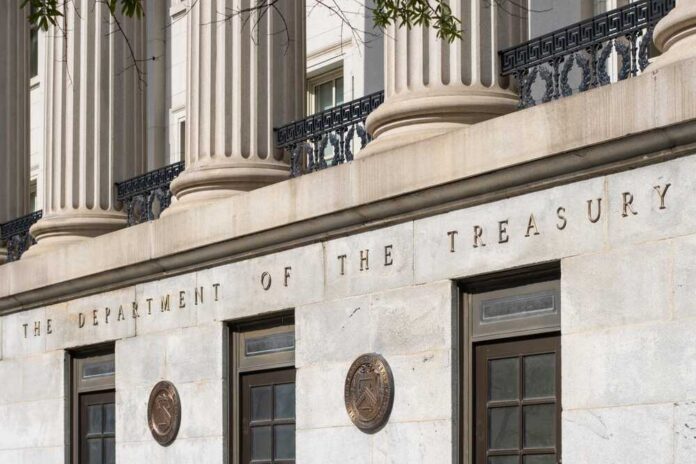
Washington is weighing whether to turn Iran’s own frozen billions into a repair bill for the Gulf — a move that could both hold Tehran accountable and test the legal limits of using blocked assets in wartime.[2][3][4]
Story Snapshot
- The United States Treasury is exploring plans to use frozen Iranian assets to fund reconstruction and repairs in Gulf states hit by Iranian attacks.[2][3][5]
- Treasury Secretary Scott Bessent has reportedly ordered detailed damage assessments from Gulf allies to match Iranian aggression with specific repair costs.[2][4]
- The same frozen funds Iran wants released as part of ceasefire talks could instead be channeled into what amounts to war reparations paid to its neighbors.[1][3][4]
- Key legal questions remain about how far U.S. sanctions and emergency powers can go in redirecting a foreign state’s frozen wealth.[2][4][6]
Reported Treasury Plan: Using Frozen Iranian Money, Not U.S. Taxpayer Dollars
According to multiple reports built on Reuters and United States media sourcing, the United States Treasury Department is examining ways to tap frozen Iranian state assets so Gulf partners can rebuild bases, infrastructure, and civilian areas damaged by Iranian missile and drone strikes.[1][2][3] A source familiar with Treasury Secretary Scott Bessent’s thinking told reporters that the department intends to use “all available authorities” to make Iranian assets accessible for rebuilding and repairs related to future Iranian attacks, and possibly past damage as well.[2][4] For American taxpayers who watched prior administrations spend trillions on Middle East wars and reconstruction, this marks a notable shift: the aggressor, not the U.S. public, would be targeted to shoulder the financial burden, at least in concept.[2][4]
Reports say Bessent has directed Treasury officials to seek comprehensive estimates from Gulf allies of the costs tied to repairing damage inflicted by Iran since the current conflict began in late February.[2][4] Those estimates would help determine how much frozen Iranian wealth could be lawfully redirected toward repairs, turning blocked bank accounts, seized tankers, or other immobilized property into a de facto compensation pool.[2][4] Coverage indicates that these are Iranian assets already frozen under sanctions regimes, not new seizures of private property, which means the debate centers on whether existing legal authorities allow Washington to move from simply freezing funds to actively using them for third-party reconstruction.[2][3][4]
Iranian Attacks, U.S. Strikes, and a Fragile Ceasefire
The reported asset plan comes directly on the heels of fresh escalation between the United States and Iran in and around the Persian Gulf, where regional stability and global energy supplies are perpetually on the line.[1][2][4] Reuters-sourced accounts describe Iran launching intermittent missile and drone attacks on all Gulf states, including Saudi Arabia, the United Arab Emirates, Kuwait, Bahrain, Qatar, and Oman, targeting locations associated with United States forces and regional partners.[2][4] In one highlighted incident, Kuwaiti forces reportedly intercepted seven ballistic missiles that passed over residential areas, causing material damage and sending civilians scrambling for shelter.[1] United States Central Command, meanwhile, released details of strikes on Iranian coastal radar sites in Goruk and Qeshm Island after American forces shot down Iranian drones that they said threatened maritime traffic in the Strait of Hormuz.[1][4] These exchanges unfolded under a tenuous ceasefire that diplomats are still struggling to turn into a durable agreement, meaning every retaliatory strike and every policy leak can sway the perception of who is escalating and who is enforcing accountability.[1][4]
Iran has its own narrative that collides directly with the Treasury concept. Iranian adviser Mohsen Rezaei told CNN that a peace deal hinges on the release of roughly twenty-four billion dollars in frozen Iranian assets, framing sanctions relief and access to blocked funds as the core “price” for de-escalation.[1][4] Regional and international outlets report that Iranian officials estimate more than one hundred billion dollars in national assets remain inaccessible worldwide due to sanctions, banking restrictions, and unresolved legal disputes, with about two billion dollars believed to be frozen inside the United States itself.[4] Negotiators are said to be discussing a smaller package, potentially around twelve billion dollars, that might be unlocked under a preliminary agreement, but the emerging Treasury idea would instead direct at least some of those same funds away from Tehran and toward Gulf capitals that have absorbed the physical cost of Iranian aggression.[3][4] That clash turns what Iran hoped would be a peace dividend into something closer to a war-reparations ledger.[4]
Legal Gray Areas and What Conservatives Should Watch For
For constitution-minded Americans, the key question is not whether Iran should pay for damage it caused, but how the United States government claims authority to repurpose frozen sovereign assets, and whether that authority respects both domestic law and property rights principles.[2][4][6] Public reporting so far is built on anonymous sources describing internal deliberations; there is no released Treasury memorandum, no Office of Foreign Assets Control guidance, and no court order that lays out the precise statutory backbone of this plan.[1][2][5][6] Existing Iran sanctions programs administered by the Office of Foreign Assets Control under various national emergency and terrorism statutes already allow the executive branch to block Iranian property, restrict transactions, and in some cases channel certain assets toward victims through court-supervised mechanisms.[6] However, moving blocked state assets into broad reconstruction funds for foreign governments goes further than simple immobilization, and would likely invite legal challenges from Iran and possibly from private claimants who view frozen pools as potential sources for their own judgments.[4][6] Conservatives should pay close attention to whether Congress is consulted, whether courts are involved, and whether the administration clearly distinguishes between state property, commercial holdings, and any private assets, because the precedents set here could later be cited in other conflicts where a future, less friendly administration might seek sweeping control over foreign or even domestic property under emergency powers.[4][6]
🚨 JUST IN: U.S. is considering using frozen Iranian assets to help fund reconstruction and repairs in Gulf states affected by the conflict.
The proposal could become a major point of contention in ongoing U.S.-Iran negotiations.#Iran #US #Gulf #Breaking #Geopolitics
— Mithu 🇧🇩 (@MithuHassan321) June 7, 2026
The nature of this proposal also highlights how policy, media framing, and diplomacy can all blur together. Reports emphasize that Treasury is “considering” or “examining” options rather than executing a finished plan, yet the story is already shaping public expectations in the region and here at home.[2][3][5] Friendly Gulf governments will see potential relief for their budgets; Iran will present it as economic coercion and leverage in ceasefire talks; and legal scholars will parse whether United States actions stay within the boundaries of targeted sanctions or cross into open-ended expropriation.[3][4][6] For readers who endured years of globalist foreign policy where American blood and treasure were spent with little accountability, the underlying instinct of making aggressors pay instead of writing more checks from Washington aligns with a more muscular, burden-shifting approach.[2][4] But as with any dramatic use of financial power, the details matter: which assets, under what law, with what oversight, and with what safeguards to prevent these tools from being turned someday against American interests or allies who fall out of favor with a future administration.[4][6]
Sources:
[1] YouTube – US eyes Iranian assets for Gulf repairs as ceasefire wobbles | Reuters …
[2] Web – US to use Iranian assets for Gulf damage repairs | The Jerusalem Post
[3] Web – US Plans To Use Iranian Assets To Help Gulf Allies Rebuild War …
[4] Web – Report says US weighing use of frozen Iranian assets for Gulf …
[5] Web – US to make Iranian assets available to Gulf allies to repair damage …
[6] Web – Treasury Department plans to use Iranian assets to help U.S. Gulf …