China’s recent military exercises near Taiwan are a calculated response to the largest US arms sale to Taiwan, signaling a potential threat to regional stability.
Story Highlights
- China initiates “Justice Mission 2025” drills, surrounding Taiwan.
- The US approves a record $11.1 billion arms sale to Taiwan.
- Drills involve live firing, escalating regional tensions.
- Taiwan condemns the exercises as violations of international norms.
China’s Military Exercises: A Strategic Retaliation
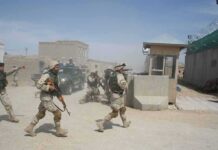
On December 30, 2025, China launched a series of military exercises, dubbed “Justice Mission 2025,” near Taiwan. These drills, which include live firing and a simulated blockade, are seen as a direct response to the US’s recent approval of a record $11.1 billion arms sale to Taiwan. The exercises involve all major branches of the People’s Liberation Army (PLA) and have been framed by Beijing as a serious warning against Taiwan’s independence efforts.
The timing of these drills follows a familiar pattern of military signaling from China, similar to past responses to US-Taiwan interactions. The exercises come just days after the arms deal, underscoring China’s intent to deter any moves toward Taiwan’s independence. The PLA’s show of force is designed to remind Taiwan and the world of China’s stance on Taiwan as a breakaway province that must be reunified with the mainland.
Implications for Taiwan and the United States
The exercises have significant implications for Taiwan and the US. For Taiwan, these military maneuvers increase the risk of miscalculation and accidental conflict, putting civilians on edge and potentially disrupting daily life. The drills also test the resolve of the US, which has long been committed to supporting Taiwan under the Taiwan Relations Act but must balance this support against the risk of escalating tensions with China.
For the United States, the arms sale and China’s response highlight the delicate balance of power in the Indo-Pacific region. The US aims to counter Chinese aggression and support Taiwan’s defense capabilities, but such moves frequently provoke strong reactions from Beijing. This ongoing cycle of action and reaction complicates diplomatic relations and underscores the strategic ambiguity that defines US-Taiwan relations.
Long-term Effects on Regional Stability
In the long term, these exercises could normalize large-scale military drills as China’s default response to US arms sales, eroding any deterrence such sales might provide. This situation could accelerate Taiwan’s military buildup and solidify US regional alliances, such as AUKUS and the Quad, which aim to counterbalance China’s growing influence.
The repeated military exercises and their subsequent fallout further strain US-China relations and affect security dynamics in the broader Indo-Pacific region. As Taiwan continues to bolster its defenses with US support, the potential for miscalculation and unintended escalation remains a constant concern for all parties involved.
Sources:
https://apnews.com/article/china-military-drills-taiwan-us-japan-cd6600c23c206385822c733dc2016217