A New York town hall meant to showcase Republican unity instead exposed how quickly foreign-policy decisions can ignite grassroots anger at home—even inside a party that controls Washington.
Quick Take
- Rep. Mike Lawler (R-NY) was heckled and booed at a town hall while defending President Trump’s military actions against Iran.
- The flashpoint wasn’t only the fighting itself, but the mixed messaging around a ceasefire and the still-stalled Strait of Hormuz.
- Pro-Trump lawmakers are being pressed from both sides: anti-war constituents locally and high-profile MAGA voices nationally.
- Polling discussed in televised commentary suggests most MAGA voters still back Trump, even as influencers attack him publicly.
Lawler’s Town Hall Blowup Shows the War Debate Has Reached the Neighborhood Level
Rep. Mike Lawler’s town hall in New York turned confrontational as constituents loudly challenged his defense of President Donald Trump’s military campaign against Iran. Reports describe sustained boos, heckling, and an exchange in which an attendee demanded he “act like an adult, and stop.” Lawler argued for aggressive pressure on Iran’s leadership, including language framed around ensuring the regime falls, a position that drew immediate backlash in the room.
The moment matters because it undercuts a common assumption in national politics: that voters experience foreign policy mostly as a TV debate. Town halls are where policy meets kitchen-table priorities—gas prices, fear of escalation, and distrust that Washington tells the full story. Lawler represents a politically sensitive district, so the optics of a chaotic public meeting carry real consequences for GOP lawmakers trying to defend Trump’s strategy while keeping local voters from peeling away.
A Ceasefire Announcement Didn’t End the Economic Pressure Point: Hormuz
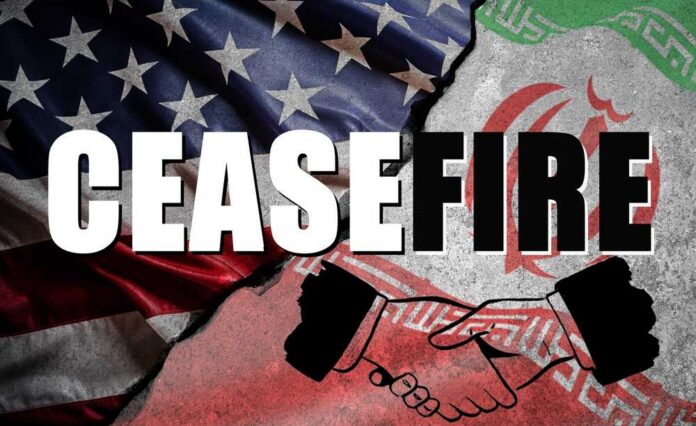
The public anger is unfolding against a complicated backdrop overseas. Trump announced a ceasefire “Tuesday night” with claims it would lead to “COMPLETE, IMMEDIATE” reopening of the Strait of Hormuz, a critical corridor for global oil shipping. Yet reporting cited in the research indicates the strait has remained effectively closed, with oil tanker traffic nearly nonexistent amid uncertain guidance and partial compliance from Iran.
That gap between declarations and on-the-ground conditions is where voters—conservative and liberal alike—start to suspect the federal government is managing headlines more than outcomes. For conservatives, the concern often centers on competence and credibility: if the U.S. is going to use force, the objectives and end-state should be clear, measurable, and communicated consistently. For older liberals, the fear tends to focus on civilian casualties and mission creep. Either way, ambiguity breeds distrust.
MAGA Influencers vs. the White House: A Real Rift, but Not the Whole Base
Nationally, the research describes prominent MAGA media figures and influencers—Alex Jones, Laura Loomer, Megyn Kelly, Tucker Carlson, and Candace Owens—publicly criticizing Trump’s approach, including the ceasefire and shifting rhetoric. Trump, in turn, responded by attacking those critics. The controversy has been framed as a “civil war” inside the coalition, with influencers arguing either that Trump didn’t go far enough or that he moved too quickly to declare victory.
At the same time, televised commentary referenced in the research points to polling suggesting about 93% of MAGA voters still support Trump’s actions, implying the loudest online voices may not represent the median GOP voter. That distinction matters for governance: a party can survive influencer drama, but it struggles when trust erodes at the constituent level, like it appeared to in Lawler’s room. If the White House wants unity, it has to translate strategy into results voters can see.
Why This Flashpoint Resonates in 2026: Trust, Costs, and “Who Really Runs Things?”
Both the right and the left increasingly share one broad belief: the federal government fails regular people while protecting insiders. The Iran episode feeds that belief because it combines high-stakes military decisions with immediate economic exposure—especially energy prices tied to shipping disruptions. Conservatives who already feel burned by years of overspending, inflation, and bureaucratic arrogance are primed to question whether Washington has a coherent plan beyond press releases and political optics.
MAGA rep’s town hall descends into chaos as he tries to defend Trump’s Iran war: ‘Act like an adult, and stop’ https://t.co/DGNSgdrjxg pic.twitter.com/Xdr9VCxHkp
— The Independent (@Independent) April 13, 2026
The available reporting leaves open key factual gaps—such as the town hall’s exact date and the lack of widely cited primary video for the “act like an adult” remark—so readers should treat the viral narrative cautiously. Still, the broader pattern is clear in the sources provided: a tense ceasefire, a critical shipping lane not fully restored, and a domestic coalition arguing in public. In a second Trump term with unified GOP control, voters will judge Republicans less on slogans and more on delivery.
Sources:
Mike Lawler faces constituents angry over Iran war support in town hall