As U.S. Special Operations Command races to bolt cutting-edge artificial intelligence onto the battlefield, the government is again asking Americans to trust a “move fast” strategy with almost no public proof it actually works or is safe.
Story Snapshot
- SOCOM is explicitly seeking next-generation artificial intelligence and autonomy for special operations, from “agentic” systems to advanced targeting and sensor fusion.[2]
- Command leaders say the goal is to free human operators from joystick control so they can focus on combat decisions, not remote piloting.[5]
- SOCOM has a track record of rapid drone and robotics experimentation through events like Thunder Drone and software pilots inside its own acquisition office.[1][6]
- Despite the speed, there is almost no publicly available testing data showing these systems are reliable, secure, or affordable over time.[1][2][3][4][5][6]
SOCOM’s new wish list: aggressive autonomy, modular tech, and “not aircraft carriers”
U.S. Special Operations Command has quietly rewritten part of its technology playbook, amending a broad agency announcement to explicitly prioritize aggressive new forms of autonomy and artificial intelligence.[2] The public summary describes interest in “agentic” artificial intelligence, vision-language-action models that can interpret complex sensor input, neural radiance fields, generative tools, automatic target recognition at the tactical edge, and systems that can retrain themselves in the field with modern machine-learning operations practices.[2] Officials stress “modular, open integration,” signaling a preference for quickly swapping in commercial technology rather than waiting on decade-long, bespoke weapons programs.
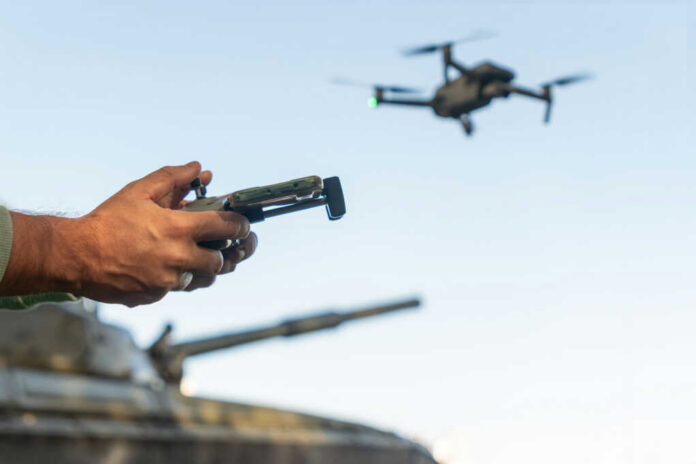
Command leaders frame this shift in terms that resonate with troops on the ground: they want fewer human operators stuck on joysticks and more focused on actual combat tasks.[5] One senior official summarized the goal as getting “the operator off of the Xbox controlling the unmanned system, and back over their rifle sights and doing what they were paid to do.”[5] That vision leans heavily on many sensors—air, ground, maritime, and unattended—working together with data from satellites and cyberspace to give special operations forces a fused picture at the tactical edge.[5] In public messaging, SOCOM emphasizes these systems as decision aids, not fully autonomous trigger-pullers.[1]
From ThunderDrone to autonomy management: a culture of rapid experimentation
SOCOM’s push to “move fast” is not coming out of nowhere; the command has spent years building a culture and infrastructure for accelerated prototyping.[6] The ThunderDrone event, held in partnership with the Army in 2018, brought drones, robotics, and artificial intelligence into a shared space where operators and engineers could see the “realm of the possible” and immediately test concepts.[6] That event and follow-ons at the SOFWERX innovation hub were explicitly designed to shorten the gap between commercial innovation and usable military tools, a gap many in Washington call the “valley of death” for new technology.
The rapid mindset extends beyond combat systems into the bureaucracy that buys them. In 2025, SOCOM’s acquisition chief said the command was piloting artificial intelligence and machine learning tools to accelerate contracting workflows, a notoriously slow part of the defense bureaucracy.[1] On the battlefield side, reporting indicates SOCOM awarded an eighty-six million dollar, three-year contract to Anduril to build an autonomy management layer using the company’s Lattice software, intended to coordinate multiple uncrewed systems and their sensors in real time.[3] Elsewhere in the force, companies like Picogrid have shown that artificial intelligence-enabled integration can tie together five different sensors into a single counter-drone picture for frontline units.[4] All of this supports SOCOM’s belief that modular, software-driven integration can be done quickly if red tape is reduced.
What we still do not know: testing, reliability, and who carries the risk
For citizens watching a federal government that often feels captured by contractors and insulated elites, the missing piece of this story will sound familiar: proof.[1][2][3][4][5][6] Virtually all the public information about SOCOM’s new artificial intelligence and autonomy push comes from announcements, contractor claims, and wish lists, not from independent test reports. There are no publicly released developmental or operational test results showing how these systems perform in contested environments, what their failure rates look like, or whether cybersecurity vulnerabilities have been beaten back to acceptable levels.
DIU just opened a new solicitation: AI fire control to help dismounted troops shoot down small drones.
Engage targets at 7+ m/s. Standard issue small arms.
Counter-UAS is now a small-arms software problem.https://t.co/EUXFg57Ygx#CounterUAS #DefenseTech #OTA #SOCOM #SOFWeek
— Roland Owens (@rolando99) May 13, 2026
That gap matters because the same features that make this technology attractive—automation, data fusion, and self-updating models—also create new ways for things to go wrong. Rapid, modular integration can hide brittle software, confusing interfaces, or maintenance burdens that will fall on small special operations units already stretched thin. Vendor demonstrations like the five-sensor integration at Fort Irwin show promise but do not answer basic questions about long-term reliability, cost, or how easily adversaries might jam, spoof, or hack systems built from many commercial pieces.[4][7] Without transparency, Americans on both the left and right are again asked to accept opaque assurances from a defense establishment that has burned trust before.
Why this matters beyond SOCOM: a test case for a government in a hurry
SOCOM’s approach is part of a larger pattern across the Pentagon: leaders are desperate to keep up with fast-moving threats and commercial technology cycles, so they champion rapid procurement, “other transaction” contracts, and experimental labs to cross the valley between prototypes and fielded gear.[1][2][3][4][5][6][8] Supporters argue that waiting a decade for traditional programs is a luxury the United States no longer has, especially as hostile nations and non-state groups cheaply deploy drones and artificial intelligence tools of their own. Critics counter that speed without accountability simply means more taxpayer money flowing to well-connected firms with little to show when the shooting starts.
For Americans who see a “deep state” culture that protects insiders first and admits failure last, the SOCOM story raises hard questions. If the command truly can “move fast” without sacrificing safety, interoperability, and long-term cost, it should be able to publish, at least in sanitized form, test results that prove it.[1][2][3][4][5][6] If it cannot, then rushing agentic artificial intelligence and battlefield autonomy into the hands of small units looks less like innovation and more like another experiment where the risks are pushed down to operators and taxpayers while the rewards flow up to the usual few. Either way, this fast-tech push deserves far closer scrutiny than a headline about “not building aircraft carriers” can provide.
Sources:
[1] Web – What’s really real with SOCOM’s AI targeting tests right now
[2] Web – SOCOM adds new advanced AI capabilities to tech wish list
[3] Web – Anduril Secures $86M to Help SOCOM Control Its Drones
[4] Web – Picogrid wins $9M Air Force contract for counter-drone software …
[5] Web – Special Operations Command looking to ditch some of its drones …
[6] Web – Army scouts latest drone technology at SOCOM ThunderDrone event
[7] Web – AI-driven drone technology and computer vision for early detection …
[8] Web – Defense Tech and Acquisition News – Substack