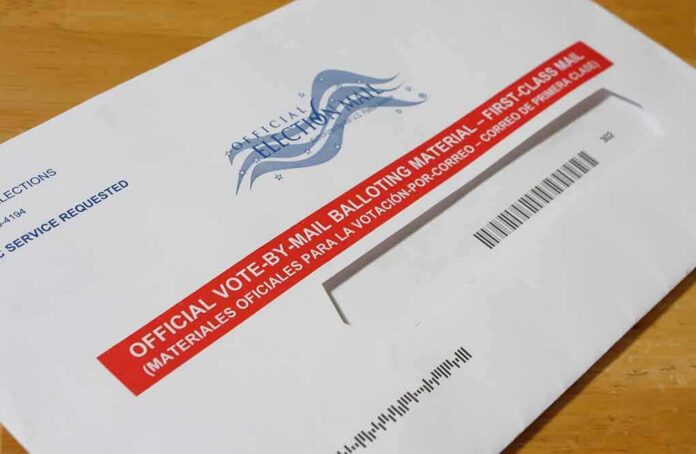
Defense Secretary Pete Hegseth ordered a one-day military stand-down so every service member has time to register, request a ballot, and vote.
Story Highlights
- Hegseth directed commanders to pause operations for one day in October so troops can vote.
- The stand-down must occur by October 15 and will repeat in every election year.
- Hegseth said the effort is apolitical and aims to reduce barriers to voting.
- Research shows military ballots often fail due to late arrival and complex rules.
What Hegseth Ordered and When It Happens
Defense Secretary Pete Hegseth directed all military commands to conduct a one-day stand-down in October so troops can register, request absentee ballots, and vote. Commands must complete the pause by October 15. Hegseth said this new practice will occur in every election year, creating a set time for voting tasks. The order gives commanders clear guidance and a deadline, which should make execution uniform across bases and units that face different training and deployment schedules.
Hegseth posted the directive publicly and said the department will not tell troops how to vote. He framed the move as time to complete voting steps, including mail-in options and in-person voting where possible. He also said the goal is simple: ensure service members have a real chance to cast a ballot that counts. Outlets that reviewed the memo reported the initiative as a voting access push inside the military, not a campaign activity.
Why Troops Struggle to Vote
Uniformed and overseas voters face well-known problems. Rules differ by state. Registration and ballot return deadlines do not always match military life. Many ballots arrive too late to count. Research from the California Institute of Technology and the Massachusetts Institute of Technology found late arrival is the most common reason for rejecting these ballots. Federal studies have also noted confusion about where to register and how to return ballots from abroad or from a new duty station.
Federal research has tracked these gaps for years. Analysts found that a lack of clear information, shifting addresses, and long mail routes raise failure rates for military ballots. Some troops do not know which local office handles their registration. Others miss state deadlines due to training, deployments, or transit delays. These barriers are structural, not rare mistakes, which is why a set day for voting tasks can help reduce avoidable ballot failures.
How the Stand-Down Could Help
A set day gives every unit a shared window to tackle voting steps. Commanders can line up voting assistance officers, walk through state rules, and help with forms, including the Federal Post Card Application, which lets troops request ballots from their home state. Doing this early in October should give mail ballots more time to move, which lowers the risk of late returns and rejected votes for service members far from home.
Hegseth orders Pentagon voting stand-down ahead of midterm elections https://t.co/ZueJU6CiKH
— Lucky Molly (@molly1995_b) October 3, 2026
Making the stand-down an every-election-year event tries to turn one-off fixes into a habit. Regularity matters in large organizations. When leaders block off time, important tasks get done. Here, that means more ballots sent early, fewer missed deadlines, and fewer votes lost to the clock. The plan still depends on execution by local commands, but it sets a clear standard that places voting access alongside other mission-essential tasks.
Why This Move Resonates Beyond Politics
Americans across the spectrum worry that the system ignores everyday people while serving insiders first. Military families feel this when their ballots do not count due to slow mail or confusing rules. This order addresses a basic promise: those who serve should be able to vote. The message is not about picking a side. It is about giving time, tools, and clarity so service members can take part in the democracy they defend.
What to Watch Next
Watch whether units finish the stand-down by mid-October, how many troops complete ballot requests, and how many ballots arrive on time. States still control deadlines and acceptance rules, so timing remains key. If commands front-load help and mail early, late-arrival rejection rates should fall. Data from election offices after November will show whether this stand-down turned access into counted votes for service members across the force.
Sources:
feedpress.me, stripes.com, usatoday.com, democracydocket.com, yahoo.com, washingtonsun.com, washingtonpost.com