Sen. John Cornyn is daring Washington to do what Mexico already does—require real voter ID and proof of citizenship before anyone casts a ballot in a federal election.
Quick Take
- The SAVE America Act would require proof of citizenship for federal voter registration and photo ID for voting in federal elections.
- Cornyn argues ID requirements are routine in daily life and says claims of widespread disenfranchisement are “insulting.”
- The bill is tied to broader election-integrity concerns after years of border chaos and looser rules in some jurisdictions.
- Cornyn’s push is unfolding amid a high-stakes Texas GOP runoff where Trump’s endorsement remains a major factor.
Cornyn’s Senate Floor Case: Citizenship Proof and Photo ID
Sen. John Cornyn (R-TX) used Senate floor remarks on March 18, 2026, to press for the SAVE America Act, legislation that would tighten federal voting rules by requiring proof of citizenship and a photo ID standard tied to casting a ballot. Cornyn compared voting to everyday tasks that already require identification, like driving or flying, and framed the push as basic election security rather than an extraordinary new burden.
Cornyn also rejected the political argument that voter ID is inherently discriminatory, describing the accusation as “insulting” and suggesting it assumes certain Americans cannot meet ordinary civic requirements. The immediate political backdrop matters: Cornyn is navigating a Texas Republican runoff against Attorney General Ken Paxton, and coverage of the debate has highlighted that Paxton has publicly signaled he could reconsider staying in the race if the SAVE America Act advances.
What the SAVE America Act Would Change Nationwide
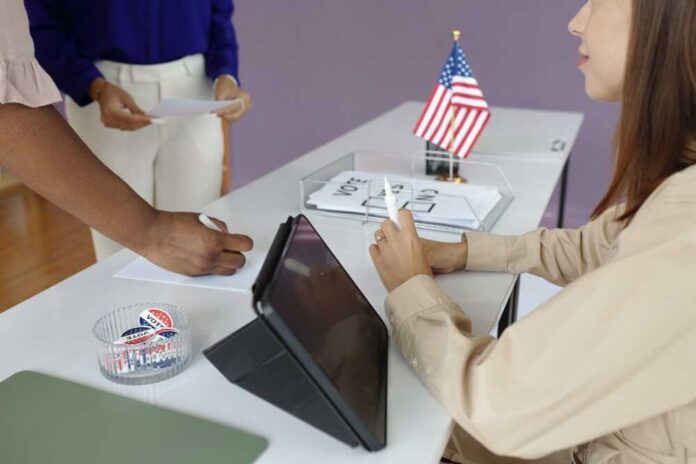
Supporters describe the bill as a nationalized version of the stricter approach already used in states like Texas. Unlike earlier iterations focused mainly on citizenship proof for registration, the SAVE America Act adds a clearer photo ID requirement connected to federal voting. That distinction is central to Cornyn’s pitch, because it targets both the registration pipeline and the point of voting—areas conservatives argue have become inconsistent across states and vulnerable to administrative loopholes.
Existing rules vary widely across the country. Research tied to the current debate indicates that 36 states require some form of voter identification, and 24 of those require photo ID. That leaves a sizeable minority of states operating under looser standards, which becomes a flashpoint when national elections are decided by narrow margins. The bill’s supporters argue the country should not accept a patchwork system that depends on where a voter happens to live.
Border Fallout and the Noncitizen Registration Concern
Backers of the SAVE America Act are explicitly connecting election integrity to the Biden-Harris era border surge, arguing that record illegal entries increased the risk that noncitizens could end up on voter rolls—especially in states where driver’s licenses or other documentation can be obtained without the same citizenship checks conservatives expect. The research provided reflects that this is framed as a “risk” argument: the emphasis is on preventing eligibility mistakes before they happen, not proving a nationwide pattern of illegal voting.
That distinction is important for factual clarity. The sources provided do not establish evidence of widespread noncitizen voting in federal elections; rather, they focus on vulnerabilities in registration systems and the incentive for uniform rules. For voters who watched years of lax border enforcement and soaring inflation under massive federal spending, the political demand is straightforward: tighten the rules, reduce gray areas, and stop treating election security as optional.
Filibuster Pressure, Trump Politics, and the 2026 Stakes
The SAVE America Act fight is also a procedural fight. Reporting indicates Cornyn shifted his posture on the filibuster in order to push forward a version aligned with President Trump’s election-integrity priorities, underscoring how strongly the GOP base now ties election security to broader constitutional confidence. Cornyn’s allies argue that if Democrats can block straightforward standards like citizenship proof and photo ID, voters will reasonably question whether Washington prefers ambiguity over verification.
With Trump back in the White House, the political incentives have changed from the Biden years: Republicans are trying to convert campaign messaging into hard national policy, while Democrats continue to raise concerns about access and turnout. The practical test will be whether Congress can set a clean federal baseline without creating bureaucratic snarls for lawful voters. Supporters point to Texas as proof that strict ID rules can function without widespread disenfranchisement.
As Cornyn’s “Mexico” comparison ricochets through conservative media, it’s functioning less as a foreign-policy comment and more as a blunt benchmark: if a neighboring country can demand voter identification, Americans should not accept excuses for weaker standards at home. The Senate’s next steps will determine whether the SAVE America Act becomes a national guardrail—or another election-integrity proposal stalled by Washington procedure and partisan distrust.
Sources:
Cornyn Makes Case for SAVE Act as Trump Endorsement Pends
Cornyn, Lee, Roy Introduce the SAVE America Act
Cornyn Calls Out Dems for Opposing SAVE America Act, Wanting Illegals to Vote in American Elections
Cornyn reverses filibuster stance to push Trump’s SAVE Act in Senate