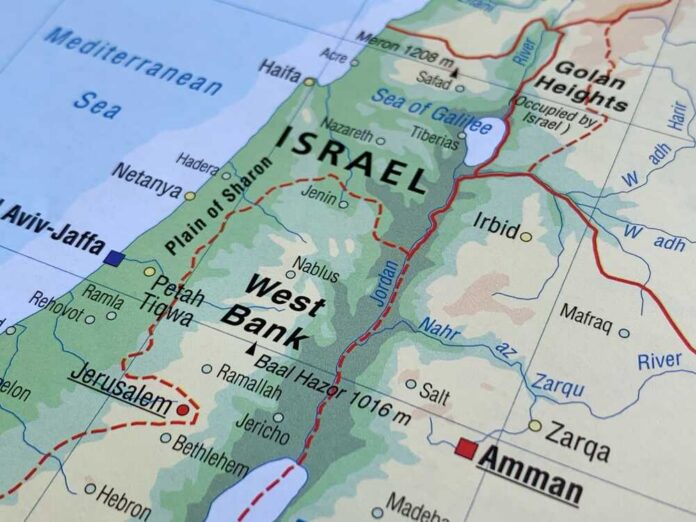
An Israeli cabinet minister’s call to “encourage migration” of Palestinians is colliding with a fast-moving bureaucratic plan that critics say could lock in permanent control of the West Bank.
Quick Take
- Finance Minister Bezalel Smotrich publicly backed “encouraging” Palestinian emigration from Gaza and the West Bank while pledging to nullify the Oslo Accords framework.
- Israel approved technical measures intended to speed settlement growth, expand land purchases, and register West Bank land as Israeli “state property” for the first time since 1967.
- UN officials and a bloc of 85 countries condemned the moves as unlawful and destabilizing; several regional governments issued coordinated warnings.
- Israeli NGO Peace Now warned the policy package could let a small number of settlers drive “facts on the ground” with limited oversight.
Smotrich’s “Migration” Message Meets a Policy Machine
Bezalel Smotrich, Israel’s far-right finance minister and a key figure on settlement policy, used a mid-February party event to promote “encouraging emigration” of Palestinians from Gaza and the West Bank. Smotrich also said his camp intends to formally and practically nullify the Oslo Accords, the 1993 framework that divided the West Bank into Areas A, B, and C with differing levels of Palestinian and Israeli control.
Israel’s government approved a set of administrative measures days earlier, on February 8, designed to accelerate settlement development and tighten control in contested areas. The research describes these steps as technical and legal changes rather than an overt annexation vote, but with the stated purpose of deepening Israel’s presence and making land acquisition and construction easier. The package arrives amid the ongoing regional shocks following the October 7, 2023 Hamas attack and the Gaza war.
What the Settlement Measures Actually Change on the Ground
The most consequential element is a land-registration push that would classify large portions of the West Bank as Israeli “state property,” reportedly for the first time since 1967. The stated target cited in the research is the gradual “settlement” of 15% of Area C by 2030. Alongside that, changes would allow Israeli Jews to purchase land more directly in the West Bank, reducing prior hurdles that required navigating purchases through registered companies and restricted property registries.
The same policy package also reaches into Areas A and B—zones created by Oslo—by enabling administrative interventions framed around archaeology and environmental enforcement. In practice, that creates new levers for restricting Palestinian construction and authorizing demolitions, according to the research summary. The government also moved to strengthen control over religious sites, including steps affecting Bethlehem and Hebron, and to shift local planning authority in Hebron away from the municipality—an issue that carries high emotional and religious stakes.
International Condemnation, Limited Enforcement
UN Secretary-General Antonio Guterres described the land-registration policy as unlawful and destabilizing and urged Israel to reverse course. A joint statement by the UN missions of 85 countries condemned unilateral decisions aimed at expanding what they called Israel’s unlawful presence in the West Bank and demanded an immediate reversal. Regional governments—including Saudi Arabia, Egypt, Turkey, Qatar, Jordan, the UAE, Indonesia, and Pakistan—also issued a joint condemnation focused on annexation and displacement concerns.
What Critics and the Palestinian Authority Say Is at Risk
The Palestinian Authority labeled the measures an unprecedented escalation targeting Palestinian presence and rights and described them as practical implementation of annexation and displacement plans. Peace Now, an Israeli NGO that tracks settlements, warned the changes could give a small number of settlers the ability to determine political facts on the ground without government intervention. Peace Now also highlighted Hebron as a flashpoint, warning that stripping planning powers could enable unilateral changes around sites sacred to Muslims.
Israeli far-right minister to push for ‘migration’ of West Bank, Gaza Palestinians https://t.co/q0XvOLuYTu
— The Straits Times (@straits_times) February 18, 2026
For Americans watching from afar—especially those wary of global institutions—this story still matters because it demonstrates how fast “technical” governance can reshape reality without a single headline-grabbing declaration. The research also shows a familiar pattern: sweeping policy shifts implemented through administrative tools while international bodies issue condemnations with few practical levers. With emotions already running hot worldwide after years of Middle East upheaval, the gap between rhetoric, law, and enforcement is likely to remain the central tension.
Sources:
Israeli far-right minister pushes forced transfer of Palestinians from occupied West Bank and Gaza
Israel takes new step in West Bank settlement expansion
Morning briefing: Feb. 16, 2026