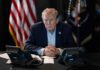
President Trump said he will end all U.S. tariffs and restrictions on whisky imports — including Irish whiskey — tying the move to a high-profile trophy presentation and a royal state visit.
Story Highlights
- Trump pledged to remove all whisky import tariffs, covering Scotch and Irish whiskey.
- United Kingdom officials said the change applies to all whisky, including Irish whiskey.
- Northern Ireland distillers gain immediate access to the U.S. without extra charges, sharpening competition.
- The decision fits a wider pattern where alcohol tariffs swing with larger trade fights.
What Trump Announced and Why It Matters
President Trump told reporters he would remove “all tariffs and restrictions” on whisky imports in honor of King Charles III and Queen Camilla’s state visit. United Kingdom officials said the pledge covers all whisky, including Irish whiskey, not just Scotch. Trump linked the change to goodwill from the visit and to easing trade for producers. The announcement came during public appearances, including a golf tournament trophy presentation, which gave the message unusual showmanship alongside clear policy stakes.
The practical effect is lower costs for whisky and whiskey arriving from the United Kingdom into the United States. Northern Ireland producers, who are within the United Kingdom, would see tariffs drop to zero, improving their prices on American shelves. That could shift orders toward Belfast and Bushmills, and away from suppliers that still face duties. Industry groups in Ireland welcomed movement toward tariff-free trade but warned cross-border differences could arise if rules are uneven at the start.
How Irish Whiskey Fits Into the Pledge
Initial reports focused on Scotch, but United Kingdom officials later told news outlets the promise applies to all whisky categories, including Irish whiskey. That point matters because the island of Ireland has two regimes. Northern Ireland spirits would fall under the United Kingdom terms. Whiskey from the Republic of Ireland is tied to the European Union’s position, which has been in a broader fight with Washington over unrelated goods. Reports stressed the goal is zero tariffs for all whisky; timing and formal steps drive how fast that shows up in customs codes.
Some coverage flagged a risk of “disparity” across the Irish border if Northern Ireland gets zero tariffs before the Republic of Ireland. That could tilt price competition inside the same category. The Irish Whiskey Association said it supports returning to stable, tariff-free trade on both sides of the Atlantic. It also noted that tariff schedules do not change overnight and rely on legal notices and customs updates. That means importers should confirm rates at the time of shipping, not just rely on headlines.
The Bigger Trade Pattern Behind the Headlines
This decision follows years where whiskey was dragged into trade fights that had little to do with spirits. In 2018, Europe hit American whiskey with a 25 percent tariff after U.S. steel and aluminum tariffs. Later, both sides paused some duties and sought a longer truce. Industry groups have warned that tariffs on alcohol bounce up and down as leverage in wider disputes over metals and aircraft subsidies. The latest move tracks that cycle, but now points toward easing, not escalation.
Trade analysts say one lesson repeats: today’s “win” can reverse if a bigger deal breaks down. For that reason, distillers often hedge with diverse markets and flexible contracts. Retailers tend to pass through tariff changes fast on popular labels, but slower on inventory bought at old rates. Consumers may see lower shelf prices on some bottles if importers and stores compete to gain volume once duties fall. Those price effects vary by brand size, distributor terms, and remaining state taxes.
Winners, Losers, and What Comes Next
Northern Ireland distillers stand out as near-term winners because their goods enter under United Kingdom terms. Scotch producers expect a lift in exports to the United States, their top market. U.S. whiskey makers could benefit if this step is part of a broader two-way deal where Europe also lowers or suspends duties on American spirits, something past “zero-for-zero” packages have delivered when politics align on both sides.
Trump just announced he is removing the
USA tariffs of Irish whisky , in Ireland!— Brian Flanagan (@BrainFlana49911) September 13, 2026
Small importers in the United States may feel relief after years of tariff whiplash. Large distributors can move faster to lock in supply and claim early gains. Consumers could see more choice and promo pricing for the holidays if implementation lands before peak shipping windows. The core caution is procedural: announcements need matching proclamations and customs notices. Agencies publish those steps publicly. Until then, businesses should plan but verify the rate that applies on the day the goods clear the port.
Sources:
facebook.com, bbc.com, farmersjournal.ie, borderlex.net, apnews.com, businessplus.ie, ttb.gov