A federal judge blocked Montgomery County’s gun-free buffer around synagogues, letting a Maryland rabbi and volunteer guards carry during services.
Story Snapshot
- A preliminary injunction allows carry inside the Silver Spring Jewish Center during the lawsuit.
- The county law banned guns in or within 100 yards of houses of worship, with narrow exemptions.
- The synagogue and its rabbi argue the ban violates the Second Amendment and religious freedom.
- The case sits in a wider fight over “sensitive places” after the Supreme Court’s Bruen ruling.
What The Judge Allowed And Why It Matters
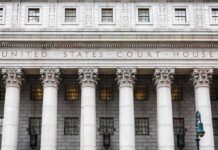
The United States District Court for the District of Maryland issued a preliminary injunction that lets the Silver Spring Jewish Center and Rabbi J. Menashe Shapiro allow licensed congregants to carry firearms during prayer while the case moves forward. The ruling targets Montgomery County’s new ordinance that barred guns at or near places of worship. The order does not end the case. It pauses enforcement as to the synagogue, signaling the court sees a serious constitutional question worth full review.
The synagogue and its rabbi say the county’s ban stops them from protecting worshipers during rising threats. Their complaint claims the measure violates the right to keep and bear arms and burdens free exercise of religion by singling out worship settings for special limits. They argue a synagogue must be free to set lawful security rules on its own property, including arming trained volunteers who know the building, the people, and the risks.
What The County’s Law Says
Montgomery County’s expedited bill makes it illegal to sell, transfer, possess, or transport certain firearms in or within 100 yards of a “place of public assembly.” The law lists houses of worship in that category and extends the rule to associated property like parking lots. The county carved out exemptions for law enforcement and licensed hired security, but not for volunteer security teams from the congregation. Supporters describe these locations as “sensitive places” that justify tighter rules.
County leaders say the ordinance preserves a longstanding ban near many public sites while adjusting parts that other courts said states must regulate. They frame the rule as a safety measure across schools, parks, libraries, polling sites, and houses of worship, not a law aimed at a single faith or group. The county’s public descriptions link the buffer to keeping guns away from crowds, where panic and confusion can turn deadly.
Why This Fits A National Legal Battle
Courts across the country are testing where the government can limit carry after the Supreme Court’s Bruen decision changed how judges assess gun laws. The core test now asks if a modern limit has a close match in historical practice. Some courts have blocked church carry bans that lack strong historical support, while others have upheld rules in certain settings. A recent Second Circuit case found church bans likely unconstitutional under this standard.
These disputes are not only about guns. They also raise questions about who decides safety on private property. Many faith groups, especially those facing threats, want control over their own security. Governments claim a duty to protect the public in crowded places. The clash highlights an old tension: safety and liberty, both important, often push against each other when fear is high and trust in institutions is low.
Security, Self-Defense, And Equal Treatment
The synagogue says the county’s rule favors money and status by allowing hired guards but denying trained volunteers. They argue this makes worship safety a pay-to-play system, which many small congregations cannot afford. They also say the ban disarms worshipers on their walk to and from services, when the risk of attack may be highest. Those points resonated with the judge enough to pause enforcement for now.
County officials counter that limits near crowded sites are common and reasonable, and that trained, licensed professionals reduce risk. But even people on opposite sides of gun policy see a shared problem here: top-down rules can miss local needs. Many Americans feel distant lawmakers pass broad laws without listening. This case will test if local leaders can override a congregation’s plan to protect its members on its own grounds.
What Comes Next
The case will continue in federal court with more evidence and legal briefs. The preliminary injunction could change as the record develops, or it could become permanent. The ruling may ripple into other counties with similar buffers. For now, the message is simple: when safety, faith, and rights collide, judges will ask for clear history, narrow tailoring, and respect for private property choices in sacred spaces.
Sources:
reason.com, washingtonexaminer.com, churchlawandtax.com, texasattorneygeneral.gov