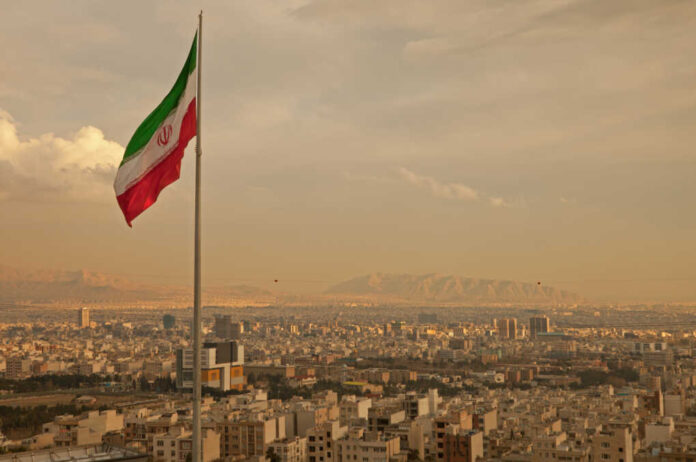
A brutal theocratic regime is shooting its own people in the streets while blaming “foreign plots” — and the way Washington responds will reveal whether we still stand for freedom or just for business as usual.
Story Snapshot
- Iran’s latest uprising has exploded from pocketbook anger into a nationwide anti-regime revolt across more than 100 cities.
- Security forces are using tear gas, live ammunition, and mass arrests, with verified deaths that include minors.
- Reports indicate the regime is importing Iraqi Shia militias to help crush its own citizens.
- Protesters reject both the Islamic Republic’s repression and foreign interference, demanding an Iran‑first future.
Iran’s Protest Wave Turns from Prices to Open Revolt
Protests that ignited on December 28, 2025, in Tehran’s Grand Bazaar over crushing prices and a collapsing currency have rapidly transformed into an open challenge to Iran’s clerical regime. Merchants, workers, and shoppers first demanded relief from inflation and economic mismanagement, but within days, chants shifted toward freedom, justice, and calls for the downfall of the Islamic Republic itself. Demonstrations quickly spread from the capital to major cities like Isfahan, Shiraz, Mashhad, and Qom, turning localized anger into a national uprising.
As the unrest grew, security forces responded with a familiar playbook of fear. Police, Islamic Revolutionary Guard Corps units, and Basij paramilitaries deployed tear gas, batons, and then live ammunition against crowds. Human rights monitors describe at least dozens killed and roughly 1,000 people arrested in the first days alone, including minors caught in crossfire or targeted at close range. Funerals for slain protesters became fresh rallying points, as mourners turned grief into defiance with chants directly targeting Supreme Leader Ali Khamenei.
Foreign Interference: Protesters Reject It, Regime Relies on It
On Iranian streets, chants like “Neither Gaza nor Lebanon, my life for Iran” reveal a pointed rejection of the regime’s decades-long obsession with exporting revolution and funding proxy wars while ordinary Iranians struggle to buy food. Demonstrators are not calling for American intervention; they are demanding their own leaders stop pouring resources into foreign adventures and start putting Iran first. Their message resonates with Americans who are tired of seeing globalist priorities put ahead of citizens at home.
Even as protesters insist on an Iran-first future, reports indicate the regime is quietly importing help from abroad to keep its grip on power. Roughly 800 Iraqi Shia militia members, aligned with Iran’s Revolutionary Guard Quds Force, are reportedly redeployed into Iran to reinforce domestic security forces. That means a regime accusing its own citizens of being Western puppets is allegedly relying on foreign gunmen to shoot Iranians in Iranian streets—a bitter irony that underscores how far it will go to preserve the ruling clerics’ control.
A Nationwide Movement with Deep Historical Roots
This isn’t Iran’s first wave of unrest, and each round has grown broader and more political. From the 1999 student protests to the 2009 Green Movement and the 2017–2019 economic demonstrations, Iranians have repeatedly challenged corruption, rigged elections, and authoritarian rule. The 2022 “Woman, Life, Freedom” protests after Mahsa Amini’s death broke a major taboo by openly questioning clerical authority. The current uprising pulls these threads together, blending economic desperation with explicit demands for systemic change.
What makes this moment different is its scale and social reach. Human rights networks report protests at hundreds of sites in more than 110 cities, including at least 45 universities. Merchants, industrial workers, students, women’s activists, and marginalized ethnic communities like Kurds and Baluch are all represented. Bazaar strikes and market shutdowns hit the regime where it hurts economically, while campus protests challenge its ideological legitimacy. This cross-class, nationwide character raises both the stakes and the risks of an even bloodier crackdown.
Regime Violence, Regional Shockwaves, and America’s Role
Tehran’s rulers appear committed to repression over reform. Security forces have intensified deployments in the capital and key provincial cities, raiding student leaders’ homes, intimidating shopkeepers, and tightening internet controls to slow the spread of videos and organizing messages. In peripheral regions like Sistan and Baluchestan, violence is already escalating, with at least one militant group claiming responsibility for killing a police chief. Each new killing widens the gulf between the regime and a population that increasingly sees no future under clerical rule.
For Americans watching under a new Trump administration, the stakes go far beyond Iran’s borders. A regime willing to fire on its own people and lean on foreign militias will not suddenly become a responsible partner on nuclear issues or regional security. At the same time, Iranians in the streets are clearly rejecting outside manipulation, whether from Washington or Tehran’s own proxies abroad. A constitutional, America-first approach demands moral clarity—calling out atrocities, resisting globalist deals that enrich tyrants, and ensuring U.S. policy never subsidizes regimes that crush basic human rights.
🇮🇷 IRAN'S PROTESTS JUST WENT NATIONWIDE: 50+ CITIES DEFY THE REGIME
It’s not just one angry crowd anymore.
Now it’s over 50 cities rising up at once, and the regime can’t keep up.
Cops and soldiers are being stretched so thin they might as well be taking attendance, not… pic.twitter.com/NplU8xUvI6
— Mario Nawfal (@MarioNawfal) January 1, 2026
Events in Iran also carry lessons for those at home who worry about government overreach and the erosion of individual liberty. When power concentrates in unaccountable hands, when security services are elevated above citizens, and when dissent is treated as treason, the slide into a permanent security state accelerates. Iranians are risking their lives to resist that slide. For Americans, the right response is vigilance—demanding limited government, defending free speech, and refusing to let any administration, left or right, drift toward the heavy-handed tactics now on display in Tehran.
Sources:
Iran shaken by series of protests over past 50 years
2025–2026 Iranian protests
Iran Update, January 6, 2026
Iran News in Brief – January 7, 2026
Iran Update, January 7, 2026
2026 Iranian Protests
In Iran, protests’ information spreads faster than organization
Iran’s protests and economy: the latest