Virginia’s bid to force federal immigration agents to unmask is colliding with federal supremacy and officer safety, and the Department of Homeland Security says it will not comply.
Story Snapshot
- Department of Homeland Security rejects Virginia’s push to unmask federal immigration officers, citing safety and federal authority [3][4].
- A West Virginia judge criticized masked civil arrests under the Fourth Amendment, fueling advocates for unmasking [10].
- Senators Mark Warner and Tim Kaine pressed the agency to limit masks and disclose policies on identification rules [1][12].
- A federal judge blocked California’s similar mask ban law, highlighting likely preemption of state efforts [13].
Federal Authority Meets State Mandates
Department of Homeland Security leaders argue that states cannot control how federal immigration officers carry out missions. Federal preemption typically blocks state rules that burden federal operations. Legal analysis of recent “No Secret Police” bills says those state efforts are likely invalid when they target federal agents on duty [4]. A federal court already blocked California’s mask ban on discrimination and supremacy grounds. That ruling points to Virginia facing the same legal wall if it tries to bind federal officers [13].
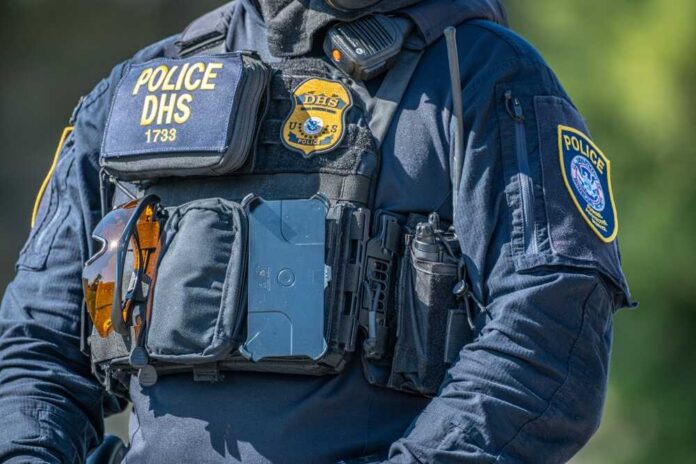
Immigration and Customs Enforcement practice has included face coverings during public arrests. Acting Director Todd Lyons defended masks as a way to protect officers from doxxing and targeted threats. He said masking shields identities during tense, public moments that can quickly spread online [3]. Supporters say these steps reduce the chance that a mob follows an officer home. They view masking as a basic safety tool, not a dodge of accountability, during civil enforcement where emotions run hot [3].
Safety Claims Versus Accountability Demands
Critics of masking point to a federal judge in West Virginia who found masked, unidentifiable agents conducting civil arrests violated the Fourth Amendment. The judge wrote that masks “hide the face” and remove the accountability that a lawful seizure assumes. He rejected broad safety claims and said masks offer no real physical protection. That ruling gives unmasking advocates a constitutional frame, even as other courts lean toward federal preemption of state mandates [10].
Senators Mark Warner and Tim Kaine urged the Department of Homeland Security and Immigration and Customs Enforcement to tighten identification rules and release internal guidance. Their letter cites existing policy that officers should identify themselves when practical and safe. They asked for policies, training materials, and legal advice on mask use and identification. Their push signals that even in Washington, some leaders want clearer lines on when the public can know who is making an arrest [1][12].
What Virginia Can Do—and What It Cannot
Virginia’s unmasking push appears aimed at transparency and at limiting secret-style operations within the state’s borders. But states have lost when they try to control federal agents directly. California’s law was blocked, and scholarship warns that similar efforts will likely fail under the Supremacy Clause. Virginia can adjust its own cooperation with federal immigration enforcement. Yet it will struggle to make unmasking a binding rule on federal personnel in the field [4][13].
The state’s supporters argue that visible identification builds trust and deters abuse. They say if an arrest is lawful, then officers should show badges and faces like any other police. But the federal side answers that civil immigration work is targeted by activists, and that doxxing and threats are real. Immigration and Customs Enforcement leaders argue that agents deserve the same privacy protections many judges use for sensitive cases—only at the scene, in real time [3][4].
Conservative Lens: Law, Order, and Common Sense
Conservatives back the rule of law and expect clear, firm immigration enforcement. Federal agents track violent felons, gang members, and repeat border crossers. Those targets draw crowds and cameras. The Department of Homeland Security position aligns with keeping agents safe and operations steady. Courts have signaled that states cannot put handcuffs on federal officers. The California decision underscores that message, even if debates over masks continue in other courtrooms [13][4].
Still, transparency matters. The senators’ request for internal policies is fair. The Department of Homeland Security should show when and why masks are used, and how agents identify themselves when safe. Clear policy protects liberty and officer safety. The bottom line is simple: let federal officers do their job without state roadblocks, demand real oversight from Washington, and keep Americans safe from both lawless actors and doxxing mobs [1][12][3].
Sources:
[1] Web – DHS Says That It Won’t Follow Virginia’s Dangerous Unmasking Policy …
[3] YouTube – Judge Rejects California’s ICE Mask Ban; What It Means
[4] Web – ICE personnel regularly mask their faces during enforcement …
[10] Web – What is going on here? An “ICE” arrest in a Virginia courthouse after …
[12] YouTube – DHS incorrectly claims Spanberger banned all Virginia …
[13] Web – Unmasking ICE’s Collusion with Law Enforcement in Virginia