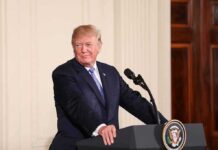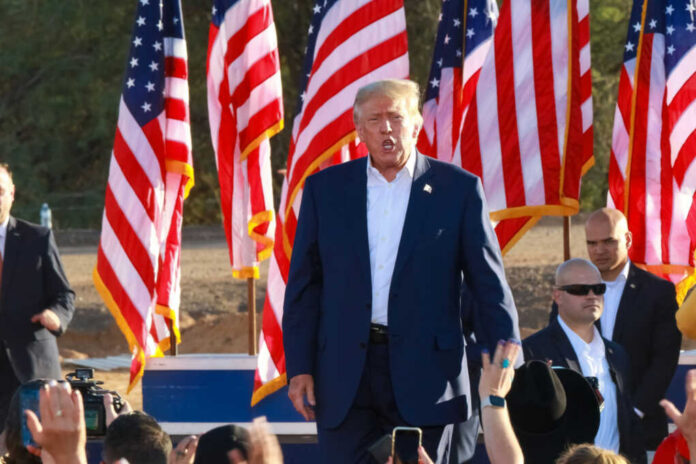
At Mount Rushmore, President Trump used America’s 250th birthday to demand that newcomers and citizens alike embrace core American values, while warning that communism remains a mortal threat to freedom.
Story Highlights
- Trump called the United States “the most just and exceptional nation,” tying unity to shared civic values.
- He revived themes from his 2020 speech, including a plan for a National Garden of American Heroes.
- He cited Reverend Martin Luther King Jr.’s “promissory note” to argue ideals must guide each generation.
- Critics challenged several boasts as unsupported, fueling another polarized debate over national identity.
What Trump Said About American Identity and Belonging
President Trump told the Mount Rushmore crowd that anyone who comes to America should embrace the nation’s values. He described the United States as “the most just and exceptional nation ever to exist on Earth,” and tied strength to culture, character, and the rule of law. He argued that freedom lasts when people protect it in daily life, not only on paper. He positioned communism as a deadly force that attacks faith, family, and free speech.
Trump connected these points to a simple promise. He said America asks for loyalty to its ideals, not to any tribe or class. He emphasized equal rights under law and pride in national symbols. He framed this as an answer to division and doubt. He urged citizens to reject stories that paint the country as defined by shame. He said the American story is about struggle, reform, and renewal, and that national unity comes from shared civic duty.
Historical References and Policy Symbols He Used
Trump used Reverend Martin Luther King Jr.’s “promissory note” metaphor to argue that each generation must cash the check of liberty and justice by living up to the founding ideals. He also highlighted his move to establish a National Garden of American Heroes as a symbol of gratitude to builders, thinkers, and patriots across backgrounds. He said the garden would honor achievement, not party or ideology, and would teach children that courage and hard work can lift a nation.
He paired rhetoric with statistics and warnings. He pointed to huge investment numbers during his earlier term to claim economic strength as proof of American exceptionalism, though those figures have been contested by opponents. He said communist systems produced mass death in the last century, and he urged vigilance at home and abroad. He argued that free people must guard speech, faith practice, and due process every day, or risk losing them to creeping control and elite capture.
Why the Speech Drew Applause—and Fire
Supporters heard a defense of shared values and a call for national confidence. They liked the focus on equal rights under law and the push to celebrate heroes, not tear them down. They also agreed with the warning that authoritarian ideas can spread fast when people are scared or divided. For many, the setting at Mount Rushmore underlined the message that the country’s story belongs to everyone willing to protect it.
Critics argued that some boasts lacked evidence and that the framing deepened divisions. They disputed sweeping claims about foreign policy wins and respect from world leaders, and they challenged broad attacks on communism that did not include careful data or context. The New York Times called Trump’s earlier Mount Rushmore message a polarizing culture-war speech, and described it as a clash over the nation’s story and symbols. These critiques focused less on patriotism and more on proof and tone.
What Matters for Americans Across the Aisle
The fight over this speech taps into wider anger at a government many see as unresponsive to real needs. People on the right blame globalism, waste, and rising costs. People on the left blame a tilted economy, shrinking safety nets, and unequal treatment. Both sides worry about powerful insiders who play by different rules. Trump’s call for shared civic values speaks to that distrust, but the policy test is whether leaders can lower costs, raise wages, and protect rights in daily life.
I can’t recall the last time I heard that a communist won an election.
But I *can* state with quite a lot of confirmation that an idiot did.Trump uses Mount Rushmore speech to warn of a “mortal threat” from communism – South Dakota Searchlight https://t.co/VuxbI7pgUh
— A Giant Sequoia (@TheSierraTree) July 4, 2026
Readers should separate three things. First, the ideals: equal rights, free speech, and fair courts. Second, the symbols: monuments and gardens that honor builders from every background. Third, the facts: claims about money, foreign policy, or ideology that must be backed by clear records. The ideals unite most Americans. The symbols inspire or divide, based on taste and trust. The facts need proof that anyone can check. That is how a free people keeps power honest.
Sources:
facebook.com, rev.com, youtube.com, trumpwhitehouse.archives.gov