
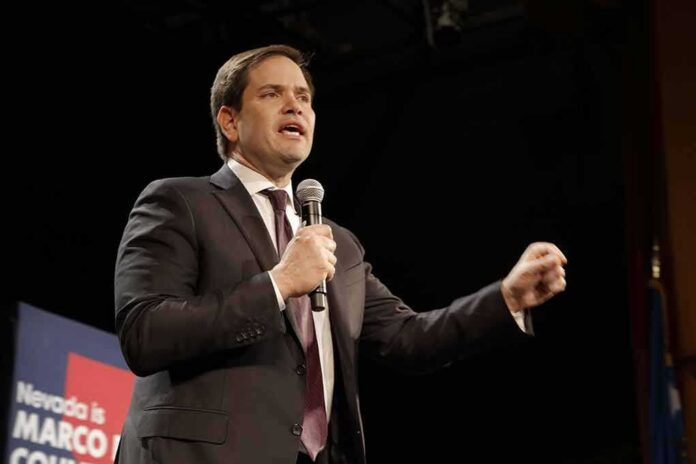
Republican insiders and new polls are elevating Secretary of State Marco Rubio as a leading 2028 successor while Vice President JD Vance’s edge appears to narrow.
Story Snapshot
- Party figures and reports place Rubio among the most-mentioned Trump successors.
- Polling shows strong Republican voter interest in Rubio’s potential 2028 bid.
- An advocacy-sponsored early-state poll shows Rubio ahead of Vance in four states.
- Trump has not endorsed a successor, keeping the field fluid and competitive.
What Is Happening Inside the GOP
Republican donors, operatives, and media are testing who could carry Trump’s agenda in 2028. Reporting says many in the party now mention Secretary of State Marco Rubio as a leading name, even as Vice President JD Vance retains clear visibility from his office. This early coordination phase matters because attention, staff, and money tend to follow perceived momentum. But it is not a formal race yet. President Trump has not endorsed a successor, and several possible candidates remain in the mix.
Recent articles describe how this talk is growing. CNN cited former House Speaker Newt Gingrich saying Rubio is the name he hears most from Republicans, reflecting Rubio’s rising profile. The Hill reported that Rubio’s buzz is building while Vance’s standing has slipped from earlier expectations, though Vance keeps ties to Trump’s base. The Associated Press covered moments when Trump put both men in public view, signaling interest in multiple options without making a pick.
What the Polls Actually Show
Polling gives Rubio real but early signs of strength. A Reuters/Ipsos poll found 45 percent of Republicans called Rubio an “excellent” presidential candidate, compared with 43 percent for Vance on the same measure. The Washington Examiner reported an Emerson survey placing Rubio first on both open and closed lists of potential nominees, suggesting appeal across question types. These numbers show interest, not a lock. Different polls ask different questions and can point to shifting preferences.
An early-state survey conducted by OnMessage Inc. for CAM Action USA showed Rubio ahead of Vance in Iowa, New Hampshire, Nevada, and South Carolina, with double-digit gaps in several states. The sponsor is an advocacy group’s political arm, which can raise questions about method and framing. That said, the findings support the broader story that Rubio has gained traction in key early states. Vance still benefits from serving as vice president and ties to parts of the Trump coalition.
Why This Matters to Voters
Power in Washington often shifts before voters see it. Early buzz can shape who hires top staff, books prime media slots, and locks down donors. That process can decide which ideas rise and which are sidelined. Many Americans on the right and left believe the political class protects itself first. Watching donors and insiders test Rubio versus Vance will feel familiar: access and influence can move faster than open debate, even when the stakes are national leadership.
ANN COULTER JUST THREW A CURVEBALL INTO THE 2028 GOP RACE.
Forget JD Vance. Forget Marco Rubio.
Coulter says it's time to get behind STEPHEN MILLER for president in 2028.
She called him “The People's Choice.”
Yes, Stephen Miller. The architect of Trump's hardline immigration…
— J (@jasonllevin) November 23, 2026
The direction of policy is on the line. Conservatives who worry about border security, energy costs, crime, and spending want a successor who will push hard on those fronts. Liberals who fear cuts to social programs, tougher immigration enforcement, and more fossil fuel use see a different risk. Both groups agree on one thing: the government has failed to solve core problems for working families. The early 2028 maneuvering will help decide whose priorities set the agenda next.
What to Watch Next
First, look for public endorsements from current House members or governors. Named support is stronger than whispers. Second, watch the money trail: new committees, staff hires, and travel that look like a campaign. Third, track whether Trump changes his signals. An endorsement or even a pointed compliment can reshape donor and media interest fast. Finally, compare more independent polls in early states to see if the OnMessage results hold up across methods.
Sources:
facebook.com, alternet.org, apnews.com, thehill.com, reuters.com, yahoo.com