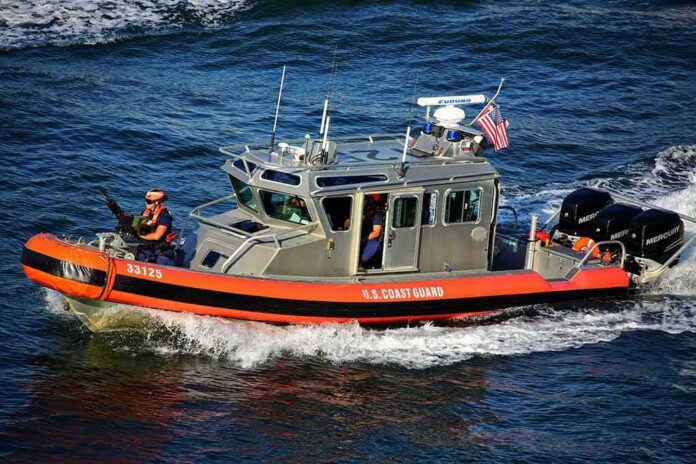
Shots fired at U.S. personnel from across the Rio Grande forced Coast Guard members to shoot back near Garceno, Texas, without injuries or damage reported.
Story Snapshot
- Coast Guard crews returned fire after shots came from the Mexican side near Garceno on Sept. 26.
- No injuries or damage were reported, and the incident is under investigation.
- Officials tied the encounter to stepped-up border security moves and troop repositioning.
- Reports describe a joint federal operation on the river during the exchange.
What Happened Near Garceno, Texas
On September 26, near Garceno in Starr County, Texas, Coast Guard personnel took gunfire from the Mexican side of the Rio Grande during a joint interdiction operation. Service officials said Coast Guard members returned fire. The Coast Guard reported no injuries to its personnel and no damage to its boats or gear. The service said the circumstances remain under investigation. Multiple outlets reported the same core facts and timeline based on Coast Guard statements released that week.
The incident took place as Coast Guard teams worked with other federal partners on the river. Reports describe a coordinated mission rather than a solo patrol. Officials did not name the partner agencies in public summaries. The accounts did not identify the shooters on the Mexican side. Outlets repeated the key sequence: incoming shots first, then a measured response by the Coast Guard to stop the threat and protect the crew during the operation.
Reported Outcomes and Immediate Response
Coast Guard statements said there were no injuries to American personnel and no reported damage to Coast Guard assets. Those details were echoed across coverage that cited the service. Officials noted the active investigation, which signals standard procedure after any use of force. The absence of injuries or damage helped prevent a larger crisis on scene, but it did not lessen the seriousness of shots being fired across an international border at U.S. forces.
Federal leaders and media outlets linked the episode to a broader security posture shift along the Rio Grande. Coverage described hundreds of U.S. troops and equipment being repositioned to the Rio Grande Valley in the days that followed. These reports framed the move as a response to increased illegal activity, with the Garceno exchange as a recent example. While specific unit names were not listed, the message was clear: reinforce the area and deter more armed encounters on the water.
Why This Matters Beyond One Gunfight
Border flashpoints like this shape public views on safety, migration, and cartel violence. They also pressure leaders to show control and protect frontline officers. This case fits a pattern where a confirmed incident quickly becomes a touchstone in the policy fight over the border. People on the right and left often differ on causes and cures, yet both worry that government responses lag the threat and that bureaucratic systems protect themselves more than the public interest.
The exchange also highlights the complex day-to-day work of joint federal teams. Crews on the river face fast risks, shifting terrain, and split-second choices. Clear rules, good gear, and tight coordination matter when bullets fly across a narrow waterway. When an operation spans agencies, the follow-up needs clean records, shared logs, and fast lessons learned. That cycle helps crews handle the next contact better, and it helps the public see that policymakers are doing their jobs.
What We Know—and Do Not Know Yet
The date, place, and sequence are consistent across reports: September 26, near Garceno; shots from the Mexican side; Coast Guard returned fire; no injuries; no damage; investigation ongoing. The partner agencies on the mission were not named. The shooters were not identified in public reporting. Those gaps are common early on and often fill in later through incident reviews or court cases. For now, officials are treating the event as a serious operational matter.
Coast Guard exchanged gunfire with shooters on the Mexican side near Garceno, Texas.
No U.S. injuries. Hundreds of American troops now surging into the Rio Grande Valley — Mexico deploying 500 of its own.
The border isn’t a slogan. It’s a front line. pic.twitter.com/t099ksGQlG
— Nikolay Remizov (@Nikolrem) October 5, 2026
For citizens, the stakes are real. A firefight on the border is not an abstract debate. It is a test of whether leaders can align security, law, and accountability at the same time. Many Americans feel that elites talk tough but deliver slow fixes. This incident underscores why trust is thin. People want the government to protect crews on the line, be honest about risks, and move resources where they are needed—without spin and without delay.
Sources:
thegatewaypundit.com, foxnews.com, ntd.com