As America marks 250 years, Hillary Clinton is using a Netflix spotlight to renew a fierce fight over whether the Electoral College is cheating millions of voters out of a real voice in choosing the president.
Story Snapshot
- Hillary Clinton calls the Electoral College an “abomination” in a new Netflix docuseries about America’s founding.
- She lost the 2016 race despite winning the popular vote by almost 3 million ballots, fueling her long‑running criticism.
- Polling shows about 63% of Americans now say they want the presidency decided by the national popular vote, not electors.
- Defenders say the Electoral College is a constitutional safeguard that forces broad, state‑based support and protects smaller states.
Clinton’s harsh attack on the Electoral College in a high-profile Netflix series
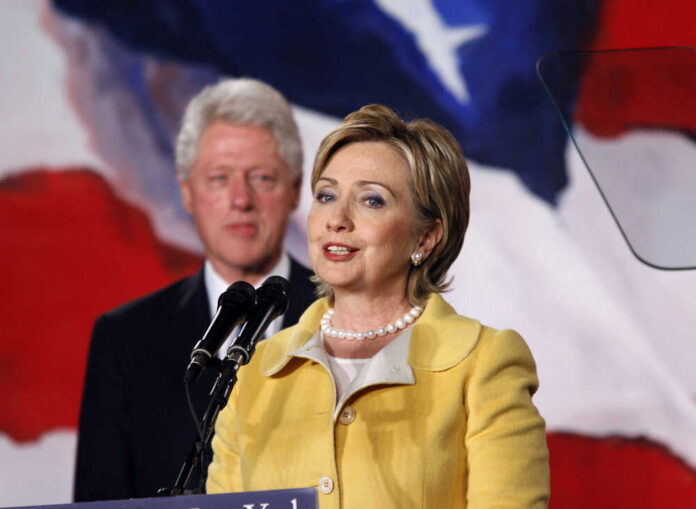
In the new Netflix docuseries “The American Experiment,” released for the country’s 250th birthday, Hillary Clinton looks straight at the camera and calls the Electoral College “an abomination… for obvious reasons.” She ties that blunt phrase to her 2016 experience, when she won the national popular vote but still lost the White House to Donald Trump. The series is heavily promoted and produced by Tom Hanks, which ensures her comments reach millions of viewers.
Clinton’s segment sits inside a broader look at the nation’s founding and the design of its government. She argues that a system that can hand power to the candidate with fewer votes is broken and outdated. This is not the first time she has used sharp language. In her 2017 memoir, she called it the “god‑forsaken Electoral College,” and in a 2024 interview she labeled it “an anachronism… designed for another time.” The Netflix series gives those long‑held views a fresh, big stage.
Why the Electoral College keeps clashing with the popular vote
Clinton’s anger rests on a clear pattern. She won the 2016 popular vote by nearly 3 million ballots but lost the Electoral College count 304 to 227. That mismatch is rare, but not new. Scholars note that the popular vote winner has lost the presidency five times in American history, including 1824, 1876, 1888, 2000, and 2016. Each time, anger at the system spiked, and talk of reform or abolition returned to the national debate.
Many Americans now share Clinton’s practical worry even if they do not share her politics. A Pew Research survey cited in coverage of the Netflix series found roughly 63% of adults want the presidency decided by the national popular vote instead of the Electoral College. Critics say the current setup makes millions feel like their vote “doesn’t count” if they live in a state that is safely red or blue. They argue it encourages campaigns to chase a few swing states while largely ignoring everyone else.
What the Constitution actually says about choosing presidents
The United States Constitution takes a very different starting point than Clinton’s national vote focus. Article II gives each state legislature the power to decide how to appoint electors who then vote for president and vice president. This design treats the presidency as a choice made by the states, not by a single, direct national tally. Over time, almost all states chose to use statewide popular elections to pick their electors, but that was a policy choice, not a constitutional requirement.
Today, 48 states award all their electoral votes to whichever candidate wins the statewide popular vote, a method often called “winner‑take‑all.” Maine and Nebraska split some of their electors by congressional district. Supporters say this setup forces candidates to build geographic coalitions and keeps huge states like California and New York from overwhelming rural regions. Conservative commentators featured around the docuseries call the Electoral College a “constitutional safeguard” against pure majority rule that could ride roughshod over smaller communities.
Clashing views, shared distrust, and a government many feel is failing
The Netflix series drops Clinton’s comments into a country already deeply split and deeply tired. Many conservatives remember years of “woke” policies, global trade deals, high energy costs, and waves of illegal immigration, and they see efforts to scrap the Electoral College as one more push to lock in coastal liberal power. Many liberals look at “America First” politics, cuts to social programs, and aggressive deportations and view the Electoral College as a shield for a system that favors the wealthy and well‑connected over ordinary voters.
Hillary Clinton still fuming over Electoral College, calls it an 'abomination' in new Netflix series | Peter Pinedo, Fox News
Failed presidential candidate Hillary Clinton is still railing against the Electoral College, which cost her the presidency in 2016, calling it an… pic.twitter.com/3y9Z3VxbtB
— Owen Gregorian (@OwenGregorian) June 26, 2026
Yet underneath those divides, frustration now runs in both directions. People across the spectrum increasingly believe the federal government serves elites first and citizens last. Clinton’s “abomination” line hits that nerve for many viewers because it points at the basic question: does every vote really matter when a candidate can win millions more ballots and still lose? Defenders answer that the system works as designed and protects small states. Critics respond that any system that regularly feeds doubt about fairness is one more crack in already shaky trust.
Sources:
twitchy.com, variety.com, netflix.com, usatoday.com, rottentomatoes.com, imdb.com, law.justia.com, constitutioncenter.org, ncsl.org, safeguard.film