Iran’s sudden suspension of indirect talks with the United States over Israeli strikes in Lebanon is the latest warning sign that Middle East chaos can still drag American troops and taxpayers back into someone else’s war.[1][2][3][4][5]
Story Snapshot
- Iranian outlets say Tehran halted indirect contacts with Washington through mediators, citing continued Israeli strikes in Lebanon.[2][3][4][5]
- Reports tie any resumption of talks to a halt in Israeli military operations in both Gaza and Lebanon, effectively giving Tehran a new pressure lever over U.S. diplomacy.[2][3]
- Pakistan and other intermediaries were carrying messages and draft texts between Tehran and Washington when the pause was announced, showing the channel was active, not theoretical.[1][3][5]
- Conflicting media narratives and missing ceasefire documents leave Americans with an incomplete picture, underscoring how easily secret diplomacy can bypass congressional oversight and public debate.[1][2][3][4][5]
Iran Links Talks to Israeli Strikes, Raising Stakes for U.S. Policy
Iranian media aligned with the Islamic Revolutionary Guard Corps reported that Tehran has suspended “indirect exchanges and text-sharing” with the United States through mediators, explicitly in protest of ongoing Israeli attacks in Lebanon.[2][3][5] These reports state that Iran will not resume such contacts until Israeli military operations in Gaza and Lebanon stop, effectively tying American diplomatic access to Israel’s battlefield decisions.[2] For conservatives who favor clear red lines and strong alliances, this linkage raises serious concerns about how Washington’s commitments are being communicated and defended.
Coverage from regional outlets describes a concrete process, not vague back-channel gossip: Pakistan’s interior minister Syed Mohsin Naqvi has reportedly been shuttling between Tehran and Washington, carrying messages and draft texts as part of “intense mediation” while Israel continued to strike targets in southern Lebanon.[1] During this same period, Israel was reported to be “pounding” southern Lebanon “overnight, morning, and well into the afternoon,” with at least ten people killed in one stretch of bombardment.[1] This timing allows Iran to frame its pause as a direct reaction to events on the ground, reinforcing its narrative that negotiations were proceeding alongside unacceptable escalation.
Civilian Targets, Ceasefire Dispute, and Competing Narratives
Regional reporting asserts that Israeli strikes during the mediation period were not limited to isolated military positions, pointing to an attack that reportedly hit Tebnine Hospital, described as the last fully functioning hospital in southern Lebanon.[1] For Tehran, such incidents are used to argue that the conflict has crossed humanitarian red lines, justifying diplomatic retaliation in the form of suspended talks.[1][2] However, key pieces of evidence are missing from the public record, including the full text of the April 8 ceasefire arrangement that Iran says was violated, leaving outside observers unable to confirm whether specific strikes breached a binding agreement or an informal understanding.[1][2][3]
Israeli and American officials, through their typical channels, maintain that operations in southern Lebanon are defensive responses against Hezbollah, not violations that justify Iran walking away from the table.[4][5] Available reporting does not include operational orders, legal reviews, or detailed after-action reports that would clarify whether each strike fell inside or outside whatever deconfliction rules were in place.[1][4][5] This information gap allows each side to tell its own story: Iran portrays the strikes as proof that negotiations lacked real safeguards, while Israel and the United States can argue that Tehran is using a crisis it helped fuel as a pretext to extract more concessions or stall nuclear constraints.
How Opaque Mediation Sidelines Congress and American Voters
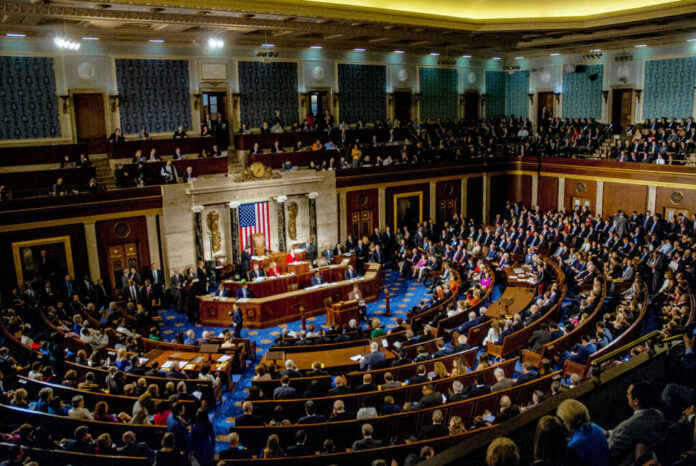
The talks in question are described as indirect, text-based exchanges handled by mediators such as Pakistan, rather than formal, public negotiations subject to open scrutiny.[1][2][3] According to these reports, messages and draft documents move quietly through intermediaries while airstrikes and rocket fire continue, giving all sides plausible deniability and room to recalibrate without ever facing a direct up-or-down vote in legislatures.[1] For Americans who believe foreign policy should be accountable to the Constitution and to taxpayers, this kind of diplomacy by proxy is a red flag, because it can shift U.S. commitments without clear congressional authorization or transparent debate.
Even on the basic question of whether negotiations have truly stopped, reporting is murky and sometimes contradictory: some outlets present a sweeping “suspension of indirect exchanges,” whereas other commentary suggests that only one channel may be paused while broader diplomatic and intelligence contacts remain open.[2][3][4][5] State-aligned Iranian outlets have every incentive to dramatize a suspension to pressure Washington, while American and Israeli officials may downplay it to preserve leverage or avoid admitting that battlefield actions have diplomatic costs.[2][4][5] The result is an environment where headlines claim a definitive break, yet the underlying evidence remains fragmentary, leaving citizens to sort through competing narratives with limited documentation.
Sources:
[1] Web – JUST IN: Iran Suspends Negotiations with US Over Israeli Strikes in …
[2] Web – ‘Intense mediation’ between US and Iran, Israel strikes Lebanon
[3] Web – Iran suspends indirect exchanges with US over Israeli attacks in …
[4] Web – Israeli attacks in Lebanon prompt Iran to suspend indirect US talks
[5] Web – Iran halts US talks over IDF strikes in Lebanon, demands ceasefire