A sweeping Florida grand jury probe is dragging James Comey back into the spotlight—testing whether “lawfare” cuts both ways in Washington.
Story Snapshot
- Former FBI Director James Comey was subpoenaed to testify in a Florida-based federal grand jury investigation centered on the 2017 intelligence assessment about Russian election interference.
- The investigation is being led in the Southern District of Florida under U.S. Attorney Reding Quiñones, with U.S. District Judge Aileen Cannon overseeing the grand jury process.
- Reporting indicates the probe has issued more than 130 subpoenas since 2025, reaching a wide circle of former Obama- and Biden-era officials connected to the Russia investigation period.
- The inquiry’s stated focus includes how the January 2017 Intelligence Community Assessment incorporated the Steele dossier, which later faced significant credibility criticism.
Comey subpoena escalates Florida grand jury investigation
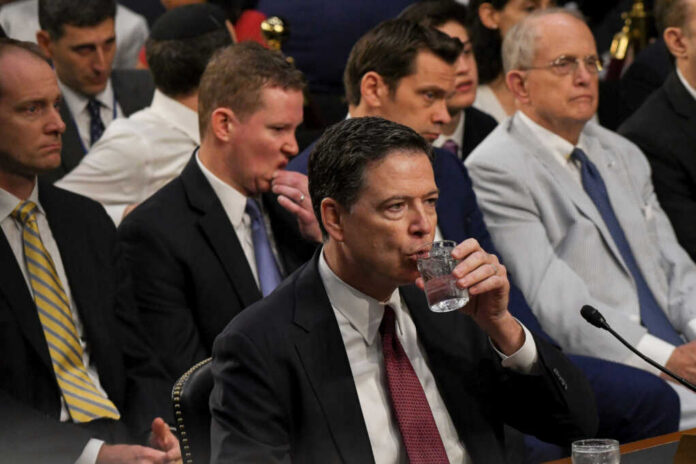
James Comey was subpoenaed last week to appear before a federal grand jury in Fort Pierce, Florida, in an investigation described as examining an alleged “grand conspiracy” against Donald Trump. Reporting identifies U.S. Attorney Reding Quiñones in the Southern District of Florida as leading the effort, with Judge Aileen Cannon presiding over the grand jury process. The probe has reportedly issued more than 130 subpoenas since 2025, signaling an unusually broad fact-gathering operation.
Axios and other reporting describe investigators’ interest in the January 2017 Intelligence Community Assessment on Russian election interference, including how it referenced or incorporated the Steele dossier. That dossier became controversial and widely disputed, and later reviews criticized aspects of tradecraft and sourcing. The immediate legal significance is still unclear: a subpoena is not a charge, and no indictments have been reported so far. Even so, the scope alone ensures the story stays front-page.
The 2017 intelligence assessment and the Steele dossier dispute
The timeline matters because the grand jury inquiry is rooted in decisions made at the start of Trump’s first term. The January 7, 2017, Intelligence Community Assessment became a foundational document in the public narrative about Russian interference and the broader Russia investigation era. At the same time, multiple official inquiries over the years concluded Russia interfered in the 2016 election, even as the Mueller investigation did not establish a criminal conspiracy between Trump’s campaign and Russia.
Reporting also points to a 2025 CIA Tradecraft Review under CIA Director John Ratcliffe that criticized how the intelligence assessment was produced and how credibility was handled, including the dossier’s role. That review is cited as a catalyst for renewed pressure to investigate senior officials involved in the assessment and subsequent investigative decisions. For constitutional-minded voters, the core issue is not partisan payback—it is whether powerful agencies followed proper rules and whether officials made accurate representations to Congress and the public.
Why Florida venue and grand jury mechanics are drawing scrutiny
WLRN reporting emphasized the strategic and political significance of moving activity into the Southern District of Florida, including Fort Pierce. The venue shift is notable because it affects jury selection and prosecutorial control, and it arrives after earlier investigative efforts elsewhere reportedly stalled or failed. Legal observers cited in reporting have warned that aggressive “indict first, investigate second” tactics can backfire, especially if prosecutors cannot meet a high evidentiary bar for intent and coordination across multiple actors.
From a conservative perspective, the process questions are not trivial. If prior years taught Americans anything, it is that politicized enforcement—real or perceived—erodes trust in institutions. This is why transparency and due process matter: if investigators can show clear, documentable false statements or deliberate misconduct, accountability strengthens the rule of law. If they cannot, another high-profile collapse would deepen cynicism and confirm fears that federal power is being used as a political weapon.
Who else is in the crosshairs—and what remains unproven
Multiple reports indicate the investigation’s orbit extends beyond Comey to other former officials, including John Brennan, James Clapper, Peter Strzok, and Lisa Page, and it even floats a potential link to the later Trump indictments era involving Special Counsel Jack Smith. One reported theory involves possible false statements to Congress, which can be time-limited by statutes of limitation. Public reporting underscores a key limitation: the Justice Department has not publicly confirmed the probe’s full details, and the “conspiracy” framing has not been validated in court.
NEW @cbsnews: Comey subpoenaed in conspiracy case against ex-officials who investigated Trump https://t.co/Sp84dLCxSu
— jake rosen (@JakeMRosen) March 19, 2026
Separately, House Oversight activity involving subpoenas related to Jeffrey Epstein has included some overlapping names, but that is a different track than the Florida grand jury matter. The takeaway for readers is simple: there are multiple subpoena campaigns happening in parallel, and not all of them are connected. For a public exhausted by years of politicized investigations, the deciding factor will be evidence, not slogans—who said what, under oath, backed by documents, timelines, and corroboration.
Sources:
Comey subpoenaed in conspiracy case against ex-officials who investigated Trump
Chairman Comer: DOJ Complying With Epstein Records Subpoena
New subpoenas issued in inquiry on response to 2016 Russian election interference, AP sources say
Trump loyalists push “grand conspiracy” as new subpoenas land
List of individuals, including Lisa Cook, targeted by Trump administration
House Oversight Chair Threatens Clintons With Contempt in Epstein Subpoena Feud