

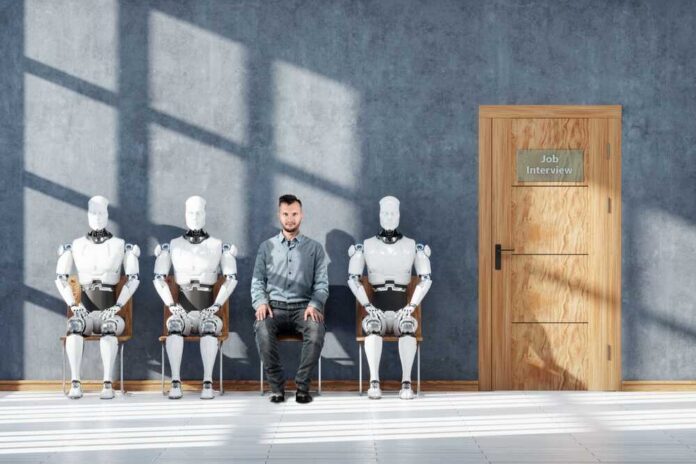
Europe’s first humanoid robot application center has quietly opened in a Dutch port city, turning a global technology arms race into a very real question about who controls the future of work.
Story Snapshot
- The Netherlands has opened Europe’s first dedicated Humanoid Application Center in Schiedam, focused on real-world robot deployments.
- European companies are rolling out work-ready humanoid robots for factories and healthcare, aiming to narrow the gap with China and the United States.
- China is pushing a state-driven plan to deploy 10,000 humanoid robots by 2026, raising fears of a new tech dependency shock for the West.
- Experts warn that humanoid robots could reshape blue-collar jobs and deepen inequality if governments stay captured by elites and slow to act.
Dutch center puts humanoid robots into everyday work
The Humanoid Application Center in Schiedam markets itself as the first European hub where companies can “start working with humanoids” instead of just watching lab demos. The center’s team says construction is complete and doors are now open, making it a real test site for robots in logistics, manufacturing, and service work. The facility gives European firms a place to trial humanoid robots on shop floors, not just in research labs, and positions the Netherlands inside a fast-moving global race.
For many workers, this race is not abstract. The center exists to help companies figure out how humanoid robots can take on tasks like lifting, packing, and inspection in real warehouses and factories. Supporters say this could ease labor shortages and reduce injuries. Skeptics see something else: another way big employers cut staff while governments look the other way. With little public debate or voting, decisions about automation increasingly happen in elite boardrooms instead of town halls.
Europe’s quiet push to catch up with China and the U.S.
Europe already leads the world in robot density, with Western European plants using more industrial robots per worker than factories in Asia or North America. Yet analysts note a growing gap in “AI-driven” and humanoid robotics, where China and the United States move faster from prototype to mass deployment. Recent videos and industry reports show European startups unveiling deployment-ready humanoids for factory integration, hospital support, and research partners in early 2026. These machines are meant to be tools, not science projects, closing part of that gap.
While Europe focuses on safety and reliability, China is racing to scale. A directive from China’s Ministry of Industry and Information Technology sets a target of 10,000 humanoid robots in commercial use by the end of 2026, across manufacturing, healthcare, and logistics. That is a top-down push using state power, subsidies, and government orders. By contrast, Europe builds “sovereign tech” hubs and centers like Schiedam, hoping private companies and fragmented investors will do the rest. Many Europeans worry this slower, elite-driven model will again leave them dependent on foreign technology.
Humanoid robots move from theory to job disruption
Investment research now says humanoid robotics has shifted from a “science project” into a serious investment thesis, backed by real deployments and big market forecasts. A United States business outlet reports humanoid robots already handling warehouse tasks and factory work as companies test how far they can go with automation. European trials, like a United Kingdom-built humanoid completing a two-week stint on a German electronics line, show that robots are starting to take on steady, repetitive labor. These early examples hint at what scaled deployment might look like.
That raises hard questions about work and fairness. A British report on the robot “Destiny” asks whether humanoids will take human jobs, especially in blue-collar roles that involve physical labor and routine tasks. A think tank paper bluntly says, “this time, we are the horses,” warning that workers could be pushed aside like animals were during the first industrial revolution. If governments stay more focused on elections than on worker protections and retraining, the gains from humanoid robots may flow mainly to corporate and political elites, widening the divide between those who own the machines and those who are replaced by them.
Shared worries about elites steering the robot future
Across Europe, robotics reports talk about “sovereign robotics” and urge governments to use public procurement power to favor homegrown robot makers over foreign suppliers. The idea is simple: avoid another solar-panel-style shock where China dominates hardware and Europe becomes a buyer, not a builder. But this push relies on the same institutions many citizens no longer trust. Critics on the left see robots used to weaken unions and social protections. Critics on the right see another globalist gambit that risks local jobs while enriching a narrow tech class.
Humanoid robots amplify fears on both sides because they do more than bolt parts or stack boxes. They move like humans, work in human spaces, and can be networked, tracked, and updated remotely. That makes them powerful tools for productivity, but also for control. If policy choices keep favoring cost-cutting and centralization, Americans and Europeans alike may feel the future of work is being coded by and for elites. The Dutch center in Schiedam is a small building, but it sits at the center of a huge question: will robots serve people, or will people serve the systems that own the robots?
Sources:
insiderpaper.com, linkedin.com, youtube.com, kraneshares.eu, instagram.com, finance.yahoo.com, humanoidcenter.nl, bbc.com, pmc.ncbi.nlm.nih.gov, wsj.com, edge-ai-vision.com, ifr.org, publications.jrc.ec.europa.eu