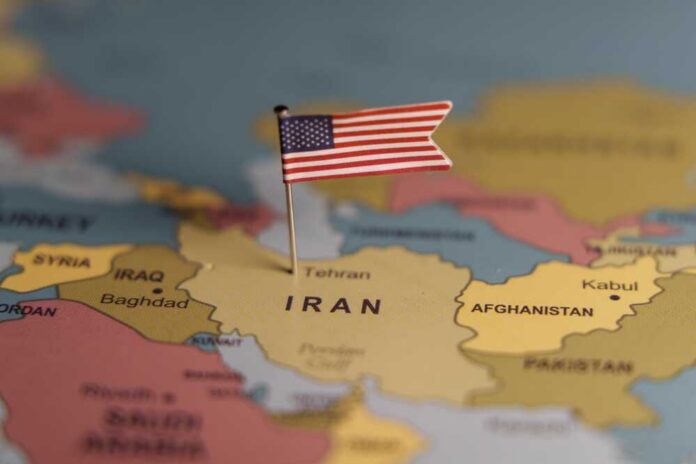
Trump’s claim that Iran was nearly locked into a deal before U.S. strikes were canceled puts Washington’s crisis diplomacy on a knife edge.
Quick Take
- Trump said he canceled planned strikes because talks with Iran were close to a deal.[1][2]
- He claimed the discussions had reached the highest level of Iranian leadership.[1][2]
- Iranian officials reportedly said no final agreement had been reached.[3][5]
- Reports described a draft, memorandum of understanding, or final papers still being worked on.[1][2][3][5]
Trump Says Talks Were Close Enough to Pause the Strikes
President Donald Trump said he canceled scheduled strikes on Iran after talks moved fast enough to justify a pause.[1][2] He said the discussions had reached the highest level of Iranian leadership and were approved there.[1][2] Trump also said the deal could be signed soon and that the military option remained ready if talks failed.[1][2]
That is the kind of sudden shift that keeps voters on edge. One day brings threats of force. The next brings talk of a deal in Europe and final papers due within days.[1][2] For many readers, the key question is simple: was this real progress, or just another round of crisis messaging before the facts were settled?
Iran’s Public Response Did Not Match the White House Tone
The public record does not show Iran confirming that a final deal had been approved.[3][5] Reporting said Iranian officials denied that a final decision had been made and said their red lines would not change.[3] That matters because a real agreement needs both sides to say yes. Without that, Trump’s claim remains a U.S. assertion, not a verified finished deal.[3][5]
News coverage also described the agreement in loose terms, not as a signed contract.[1][2][3] Some reports used phrases like memorandum of understanding or finalization of documents, which points to a work in progress.[1][2][3] That leaves room for the usual Washington spin cycle, where leaders talk like a win is done before the ink is dry.
Why the Mixed Signals Matter to Conservatives
This episode shows how fast foreign policy can swing when the public gets threats first and details later.[1][2][5] Trump’s team appeared to keep military pressure on the table while pushing diplomacy at the same time.[1][5] That may be smart leverage, but it also makes the story harder to trust when the reports rely on quick television summaries instead of hard documents.[2][3][5]
For conservatives, the deeper issue is accountability. The public deserves clear proof before the country is told a deal is done or war is off the table. The record here shows strong claims, mixed reporting, and no public Iranian confirmation.[1][3][5] Until the actual text, signatures, or official statements appear, the safest reading is that Trump paused action while talks were still unfolding.
“Based on the fact that discussions… have been brought to the highest level of Iranian leadership and approved, I have… cancelled the scheduled strikes and bombings.”
In a stunning geopolitical pivot that reportedly blindsided Jerusalem, U.S. President Donald Trump suddenly… pic.twitter.com/2Qt30tUOqy
— All Israel News (@all_israel_news) June 12, 2026
The broader lesson is plain. Big foreign policy claims can race ahead of proof, especially when conflict and diplomacy happen at the same time.[1][2][5] That leaves citizens to sort out whether they are seeing real progress or just another high-stakes political announcement built for the news cycle.
Sources:
[1] Web – CANCELS IRAN STRIKES…
[2] Web – Trump Cancels Planned Attack on Iran, Citing ‘Serious …
[3] YouTube – Trump cancels plans for ‘very hard’ strikes on Iran
[5] YouTube – Donald Trump cancels scheduled airstrikes against Iran …