Iran’s Foreign Minister accuses Israel and U.S. proxies of lying to sabotage his Davos speech, shielding a brutal regime crackdown that demands President Trump’s firm response.
Story Snapshot
- World Economic Forum cancels Iran FM Abbas Araghchi’s appearance citing civilian deaths from the regime’s violent protest suppression.
- Araghchi blames “lies and political pressure” from Israel and U.S.-based groups, defending the crackdown as fighting against Mossad-backed terrorists.
- U.S. leaders like President Trump and Sen. Lindsey Graham pressured WEF, boosting Iranian protesters’ morale amid ongoing unrest.
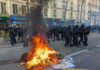
- Protests, sparked by economic woes, mark the regime’s biggest challenge, with thousands reportedly dead per rights groups.
Timeline of the Davos Snub
Last fall 2025, WEF invited Araghchi to its January 20-24, 2026 Davos summit. Late December 2025, nationwide protests erupted in Iran over economic strain from sanctions and internal pressures on Supreme Leader Ayatollah Ali Khamenei. By January 16, 2026, United Against Nuclear Iran urged WEF to rescind the invite. Protests hit day 22 on January 18, with Human Rights Activists News Agency reporting thousands dead amid an internet blackout. WEF announced the cancellation January 19, hours before his planned speech.
Watch:
Araghchi’s Defiant Response
On January 19, 2026, Araghchi posted on X that WEF bowed to “lies and political pressure from Israel and its United States-based proxies and apologists.” He portrayed Iran’s crackdown as essential against “armed terrorists and ISIS-style killings openly backed by Mossad.” This reframing ignores rights groups’ massacre claims and echoes Iran’s history of violent responses, like the 2022 Mahsa Amini unrest. President Trump’s threats of military aid to protesters and 25% tariffs on Iran’s partners amplified global scrutiny.
Watch;
WEF’s Stance and U.S. Pressure
WEF Managing Director Mirek Dušek stated the “tragic loss of lives of civilians in Iran over the past few weeks” made government representation inappropriate. U.S. Senator Lindsey Graham called the original invite a morale-killer for protesters, comparing it to inviting Hitler post-Kristallnacht. UANI CEO Mark Wallace praised the decision, citing regime crimes and terrorism support. Iranian President Masoud Pezeshkian warned attacks on Khamenei equal war, as protests persist beyond 22 days.
President Trump’s administration isolates the regime through rhetoric and policy, prioritizing national security over globalist forums that once platformed tyrants. This snub signals WEF’s event optics yielding to human rights concerns, a win for accountability.
Impacts on Iran and Global Forums
Short-term, the cancellation heightens Iran’s isolation and boosts protester morale with a symbolic rebuff. Long-term, it strains WEF neutrality, deterring future invites during crises and empowering advocacy groups. Economically, Trump’s tariffs worsen sanctions strain fueling unrest. Politically, U.S.-Israel alignment pressures elites, countering Iran’s legitimacy bids. Protesters gain amid uncertainty over U.S. intervention, while casualty figures remain obscured by blackouts.
Sources:
https://www.euronews.com/2026/01/19/iranian-foreign-minister-will-not-attend-davos-wef-confirms
https://www.foxnews.com/world/world-economic-forum-boots-iranian-foreign-minister-from-davos-summit-amid-deadly-crackdown-protesters
https://www.iranintl.com/en/202601194365
https://www.timesofisrael.com/liveblog_entry/irans-araghchi-blames-israel-after-davos-speech-scrapped-over-deadly-crackdown/
https://www.arabnews.com/node/2629958/middle-east