Federal officials are telling West Texas ranch families to sign away access for the border wall or risk losing their land in court.
Story Snapshot
- Customs and Border Protection is pressing West Texas landowners to sign right-of-entry deals that open the door to wall construction on private land.
- Packets warn that if owners refuse, the government can sue to condemn their property under federal eminent domain laws.
- Past border projects show Washington has broad legal power but a long record of survey errors, weak safeguards, and long-running compensation fights.
- Texas blocked state use of eminent domain for its own wall, but that protection does not stop federal seizures on the same ranches.
Federal Wall Push Collides With Texas Private Property Rights
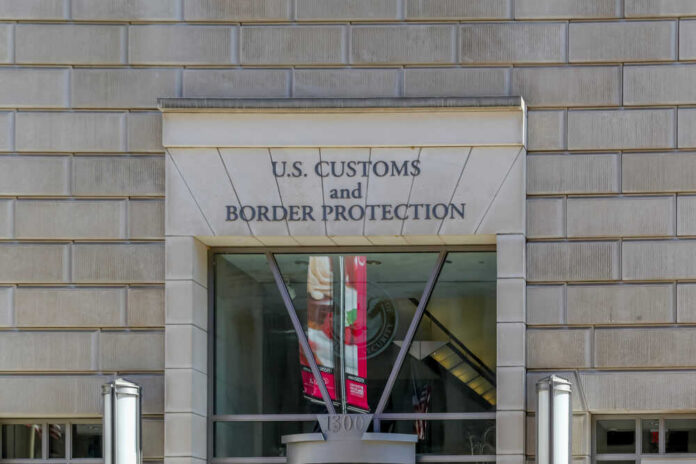
Along the remote canyons and ranches of West Texas, federal agents are back on people’s doorsteps with new paperwork in hand. These “right-of-entry” and right-of-entry-for-construction letters tell landowners that Customs and Border Protection wants access to survey and build new stretches of border wall, often on land that has been in the same family for generations.[2] The letters dangle signing bonuses of up to $5,000, but they also warn that if owners refuse, the government may condemn the land through court.
Federal law gives the Department of Homeland Security and Customs and Border Protection real leverage in those threats. Under the Illegal Immigration Reform and Immigrant Responsibility Act and later laws, Congress ordered more fencing, roads, and sensors on the southern border and allowed the government to “contract for or buy any interest in land” needed to control and guard the border, including through eminent domain.[1][3] That means Washington can go to federal court and ask a judge to transfer title so wall work can move forward, with compensation decided later.
How Eminent Domain Lets Washington Force the Issue
For many conservative readers, the key legal tool at the center of this fight is eminent domain. Eminent domain is the power the federal government uses to take private land for public use, as long as it pays “just compensation” under the Fifth Amendment.[4] For border walls, that can mean permanent strips of land for the barrier, plus extra temporary easements for roads, equipment, and staging areas.[6] If a rancher will not sell or sign an easement, officials can tell the Justice Department to file a condemnation case to seize what they say they need.[6]
Once a condemnation case starts, the deck is stacked in Washington’s favor. Courts have held that as long as Congress has approved the project and the land has some tie to that project, judges almost never block the taking.[6] The only real defense is to prove the government has no legal authority at all, which one legal analysis calls a “very high standard” that rarely succeeds.[6] In many cases, the government can also file a declaration of taking, allowing it to gain title and move onto the land while the fight over how much money is owed drags on.[4][6]
History of Border Takings Fuels Deep Trust Problems
West Texas families are not starting from a blank slate; they have seen how past wall projects went for their neighbors. A University of Texas Human Rights Clinic briefing describes how homeland security officials used condemnation when landowners would not sell, sometimes paying only a few thousand dollars for strips of land and filing lawsuits when owners refused.[3] A separate fact sheet notes that after the Secure Fence Act, the government filed more than 360 eminent-domain cases in South Texas, and 60 to 70 were still unresolved a decade later because of disagreements over fair payment.[4]
Investigations into earlier rounds of fencing also exposed sloppy and one-sided practices. A ProPublica and Texas Tribune review found the government secretly waived some safeguards meant to protect landowners, raised the dollar threshold for formal appraisals so many tracts were never fully valued, and even paid the wrong people in some cases, forcing real owners to spend time and money to fix mistakes.[4][9] Those stories spread through border communities and left many ranchers convinced that once Washington files in court, their best hope is not to stop the wall, but to fight hard just to get fair value and basic access.
Texas Limits State Seizures, But Federal Power Still Looms
State leaders in Austin have learned their own lessons from those abuses. When Texas launched its separate state-funded wall program, lawmakers passed a rule that bars the state from using eminent domain for that project.[4][5] Instead, the state has to ask border ranchers to sign voluntary easement contracts for a one-time fee, and many have flatly refused.[4][5] Reports say at least a third of landowners approached turned the state down, forcing wall segments into remote patches and leaving gaps where families will not cooperate.[4][5]
No there's a long way to go.
There is currently about 700 miles (I believe it stands at 741 miles complete) of primary physical barriers (fencing and walls) covering the 1,954-mile U.S.-Mexico border. Not even halfway. Physical walls are not suitable or necessary for all…— LA (@johnyla1) June 16, 2026
Those state protections, however, do not shield families from federal power. Washington’s eminent domain authority does not depend on Texas law and has already been used hundreds of times along the Rio Grande.[4][12] Legal commentators warn that, once Congress funds a border project, organized political pushback and narrow lawsuits are the main tools landowners have left; in court, challenges to the taking itself are usually “unsuccessful and, in any event, costly.”[6] For many conservative landowners, that leaves a bitter choice: surrender access now and try to shape where the wall goes, or dig in and brace for a long, expensive fight with Uncle Sam over both principle and price.
Sources:
[1] Web – Texas Landowners Face a Difficult Decision: Allow Border Wall or Lose …
[2] Web – DHS waives certain legal regulations to expedite border wall …
[3] Web – Lawsuit Challenges Big Bend Border Wall Construction
[4] Web – [PDF] obstructing human rights: the texas-mexico border wall
[5] Web – [PDF] Eminent Domain Along the Southern Border: Government Seizures …
[6] Web – Official Border Wall plans have been released for the Big Bend. If …
[9] Web – As landowners resist, Texas’ border wall is fragmented and built in …
[12] Web – Zapata County landowners say border wall contractors … – TPR