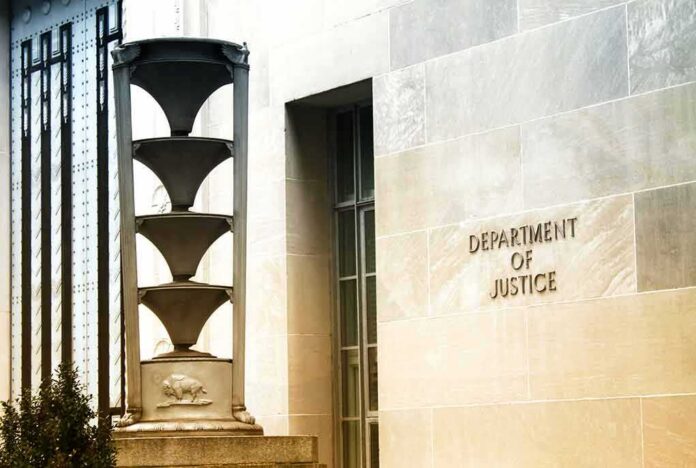
The Justice Department opened an antitrust probe into five major TV networks after they briefly halted pooled White House coverage when CNN was barred from the building.
Story Snapshot
- Justice Department is investigating ABC, CBS, CNN, NBC, and Fox News over a brief suspension of pooled coverage.
- Officials requested network communications tied to the White House television pool.
- A Justice Department spokesperson cited potential “group boycott” concerns under the Sherman Act.
- Networks say they acted after the White House blocked CNN from its assigned pool role.
What triggered the federal antitrust probe
Reuters reported that the Justice Department launched an antitrust investigation into ABC, CBS, CNN, NBC, and Fox News after they paused pooled White House television coverage following CNN’s exclusion from the building. The New York Times said officials contacted networks and sought documents and messages tied to the pool’s operations and the suspension. The Justice Department spokesperson said group boycotts among competitors can violate the Sherman Act, framing the legal lens for the review.
The pool is a long-standing system. TV networks rotate costs and duties to film the president and share footage with other outlets that lack space or access at events. That shared structure helps the press cover the White House while limiting duplication of crews and equipment. The same cooperation also creates legal questions if competitors jointly refuse to provide a service. That is why the Department’s focus is on whether the networks coordinated a boycott-like action rather than parallel decisions.
How the networks explain the pause
The networks said the suspension followed the White House move that blocked CNN from doing its assigned pool job that day. Their joint public statement said the public needs accurate and independent information, and that no administration should restrict a news outlet because it dislikes its reporting. Time later reported the pool resumed coverage, while networks still made their own choices on any open-press events during the pause.
CNN reported that the pool chair announced there would be no replacement crew after CNN was barred, which meant no one would take over its rotation slot. That message signaled the action was limited to the shared pool system, not all reporting on the president. The move lasted a short time, and the pool returned to normal operations within days. That short duration may affect how investigators assess harm and intent.
What antitrust law is testing here
The Justice Department framed the issue as a potential concerted refusal to deal by competitors in a shared arrangement. Antitrust law treats some group boycotts as illegal, but the facts matter. Investigators would look for proof of an actual agreement, the aims of the pause, and any meaningful harm to competition or access. Reporters described a targeted document request to see if the networks coordinated beyond public statements and routine pool logistics.
The DoJ has opened an investigation into major TV networks in the White House press pool over potential violations of the Sherman Antitrust Act, which prohibits anticompetitive business practices and monopolization.https://t.co/UuB8NePVJA
— Katie Liane (@TheKaterPotater) October 11, 2026
At the same time, the Department is defending the administration’s view in court that White House access is a privilege, which raises separate constitutional and policy debates. That clash fuels public doubt about motives on all sides. For many Americans, it also reinforces a broader concern: powerful institutions often fight turf wars while the public is left with less clarity and trust. The key facts to watch now are the produced communications, the pool’s contracts, and any decision on charges.
Why this matters for readers who feel caught in the middle
When the government investigates the press, people on the right and left worry about power being used to punish critics. When major media companies act together, people also worry that insiders can bend rules to suit themselves. This story sits in that tense middle. The evidence so far shows a brief, stated protest tied to access rules, and a stated legal theory tied to group boycotts. The public deserves a transparent record so trust does not lose again.
Sources:
mediaite.com, nytimes.com, x.com, en.wikipedia.org, ap.org, bbc.com