Germany’s chancellor landed in a city under attack and pledged more than €1.3 billion for Ukraine, with a plan to build drones together in the war zone.
Story Snapshot
- Chancellor Friedrich Merz announced about €1 billion in military aid during a Kyiv visit.
- Germany earmarked €350 million to repair Ukraine’s energy grid before winter.
- Berlin and Kyiv moved to finalize joint production of interceptor and long-range drones.
- Air-raid sirens and strikes formed the backdrop as leaders outlined the package.
What Germany Announced In Kyiv
Chancellor Friedrich Merz traveled to Kyiv on October 4 and unveiled a support package topping €1.3 billion, pairing weapons funding with energy repairs. Merz said about €1 billion of the package is military aid, including long-range strike weapons, combat drones, and satellite technology. German officials said €350 million will go to fix Ukraine’s energy grid ahead of winter. Ukraine’s president also cited the same topline: €1 billion for defense and €350 million for energy repairs.
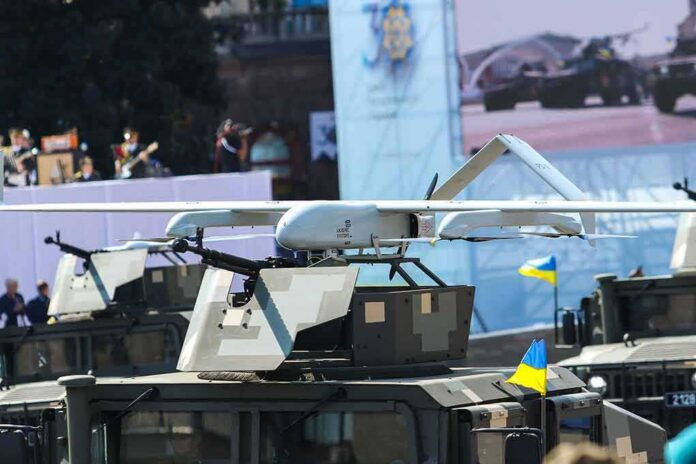
German and Ukrainian officials said the visit aimed to nail down a joint drone effort. Reports described plans to co-produce interceptor drones and expand long-range systems. The cooperation would include thousands of drones designed to counter fast Russian aircraft and drones, a shift from one-off deliveries to steady production. Public details on the legal form and cost share remain limited, but officials framed the move as a step toward sustained defense output inside Ukraine.
Why The Drone Plan Matters Now
The visit happened as sirens sounded in Kyiv and strikes hit infrastructure, underscoring the urgency of air defense and rapid repair capacity. Interceptor drones can help protect cities and power sites from repeated attacks. Long-range systems can push Russian launch platforms back. Building drones together can also speed deliveries, cut costs, and tie Ukraine’s defense industry to European suppliers. That model has become more common across Europe during the war.
For Ukraine, the energy funds are a lifeline before freezing weather returns. Repairs to substations, lines, and generation sites can keep homes heated and factories running. For Germany, the package signals staying power. Berlin has been among Europe’s biggest backers of Ukraine, and co-production fits a broader move toward shared manufacturing rather than only writing checks or sending from stockpiles. This approach also helps Germany refill its own stocks over time.
How This Fits A Larger Pattern
European governments often pair a headline figure with industrial steps that build capacity over months, not days. The Kyiv package follows that arc: immediate funds, plus a plan to make and field more drones at scale. Earlier announcements this year described joint ventures aimed at supplying thousands of systems. Those efforts show why numbers alone do not tell the full story. Production pipelines, training, and sustainment decide how fast aid becomes real capability.
Merz unveils fresh military aid in Kyiv, says Germany won't be intimidated https://t.co/Tsh4L9Rysv https://t.co/Tsh4L9Rysv
— Reuters (@Reuters) October 4, 2026
One caution applies. Early reports differ slightly on terms and totals, and not all contract documents are public yet. Outlets agree on the core facts: about €1 billion in military aid, €350 million for energy, and a joint drone push. In war, governments often release broad outlines first and fill in procurement details later. The bottom line remains clear: Germany tied fresh money to a deeper plan to build what Ukraine needs to defend its skies and grid.
Sources:
youtube.com, reuters.com, apnews.com, aljazeera.com, dw.com, euronews.com