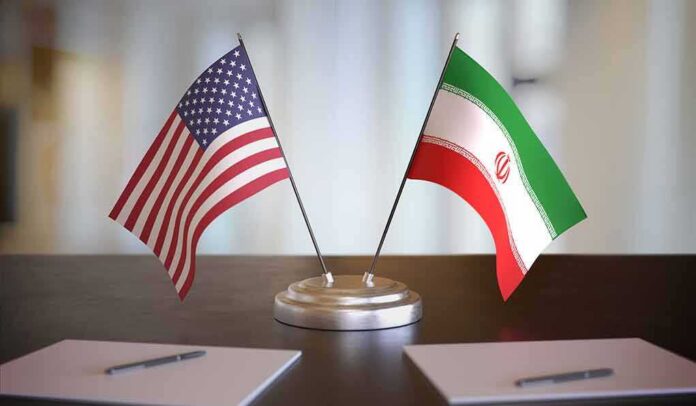
President Trump has turned Iran’s own compensation demand back on Tehran, raising the stakes in already tense talks over war damage, sanctions, and the Strait of Hormuz.
Quick Take
- Trump said Iran should pay compensation for people it has “killed and gravely wounded.”
- He tied his demand to U.S. deaths, the USS Cole attack, and anti-government protests in Iran.
- Iran has also sought compensation in the wider dispute over war damage and shipping access.
- The fight shows how “compensation” has become a bargaining tool, not just a legal claim.
Trump Links Compensation to Future Talks
Reuters reported that Trump said he would demand compensation from Iran after Tehran pushed its own claim for damage from U.S. and Israeli attacks. He wrote on Truth Social that he was “likewise demanding compensation from Iran” for people killed and wounded in conflicts tied to Iran-backed violence. The statement folded a broad list of grievances into one message and put money on the table as part of any future deal.
Trump’s post also named the October 2000 bombing of the USS Cole, which killed 17 sailors and wounded more than three dozen others. Reuters noted that the Federal Bureau of Investigation attributed that attack to al Qaeda, not Iran, even though Trump cited it as part of his argument. He also said Iran should pay the families of people killed during anti-government protests, expanding the demand beyond battlefield losses and into domestic unrest.
Iran’s Claims Set the Stage
The exchange comes after Iran said it wanted compensation for war damage and other conditions before reopening shipping lanes near the Strait of Hormuz. Reuters reported that Tehran’s demands also included an end to sanctions and military threats. That made compensation one piece of a larger negotiation over access, pressure, and security in one of the world’s most important waterways.
Al Jazeera reported earlier that Trump had also pressed Gulf states to pay for security tied to Iranian threats in the region. Together, those moves show a pattern in which Trump treats regional conflict costs as a bill to be paid by someone else. In this case, the dispute is no longer only about weapons or diplomacy. It is also about who pays for the damage left behind.
Why the Demand Matters
This fight goes beyond one social media post. It reflects a broader shift in how states use compensation language during conflict. Instead of narrow courtroom claims, the term now works as leverage in talks over sanctions, troop presence, shipping lanes, and peace terms. Reuters, CNN, and other outlets have described compensation as one of the main sticking points in the Iran talks, not a side issue.
President Trump on Monday demanded from Iran compensation for those who have died amid the conflict, after Tehran called for compensation for damages.
The president said that, moving forward, the compensation requirement will be added to negotiations.https://t.co/uriCxPp7bf
— Ⓜ️Ⓜ️ Lauren Ashley Davis -OG Meidas Mighty 🦅 (@Meidas_LaurenA) August 10, 2026
The political meaning is clear on both sides of the aisle. Supporters of Trump see a president trying to force a hostile government to answer for decades of bloodshed. Critics see more evidence that foreign policy is being driven by hard bargaining and public pressure rather than a stable strategy. Either way, the new demand adds another layer of risk to talks that are already fragile and deeply loaded with history.
What Comes Next
Trump said he has instructed his representatives to include the compensation demand in future negotiations with Iran. That means the issue is now part of the formal bargaining list, not just a rhetorical attack. The key question is whether Tehran treats the demand as a serious term for talks or as another reason to harden its position.
For now, the dispute shows how quickly a peace push can turn into a fight over old wounds, money, and blame. It also shows why many Americans, across party lines, feel that major foreign policy decisions are being shaped by elites in Washington and abroad while ordinary people pay the cost. In this case, the bill is being written in public, and both sides are trying to send it to the other.
Sources:
facebook.com, reuters.com, aljazeera.com, youtube.com