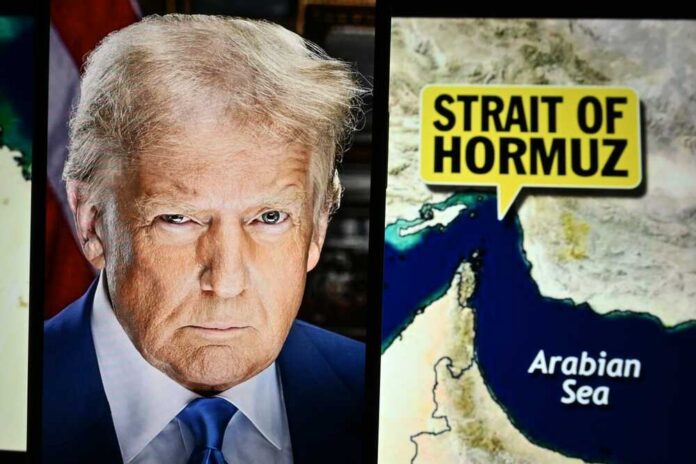
A fragile U.S.–Iran understanding that could reopen the Strait of Hormuz and claim to block an Iranian bomb is being sold as a “done deal” even as Iran itself says nothing is final.
Story Snapshot
- Trump says a U.S.–Iran deal will be signed tomorrow and the Strait of Hormuz will be “open to all” right after.
- The White House calls it a strong memorandum of understanding that it says blocks Iran from ever getting a nuclear weapon.
- Iranian officials insist the text is not final and speak of a 60‑day negotiation period after signing, not a finished peace.
- The plan would extend the ceasefire and start talks on nuclear limits, sanctions, and $24 billion in frozen assets.
Trump’s Big Promise: Strait Open and No Nuclear Weapon
President Donald Trump is telling Americans that a major deal with Iran is set to be signed tomorrow and that, the moment it is, the Strait of Hormuz will be “open to all.”[1] In a long Truth Social post and follow‑up TV hits, he says the agreement will end the naval blockade, restore oil shipping, and make gas prices “drop like a rock.”[2] He also claims Iran has agreed it will never buy or develop a nuclear weapon “in any way, shape, or form.”[2]
The president calls this understanding “a very strong memorandum of understanding” and says it meets every United States demand on Iran’s nuclear program. He contrasts it with Barack Obama’s Joint Comprehensive Plan of Action, which he tore up in 2018 for being too easy on Tehran’s nuclear ambitions.[4][5] Now he argues his version is the opposite: a wall, not a pathway, to a bomb, and he insists that Iran “no longer wants a nuclear weapon” at all.[2]
What the Deal Really Looks Like: A 60‑Day Clock, Not Full Peace
Behind the bold talk, reporting from Axios, CBS, and other outlets paints a more cautious picture. They describe a memorandum of understanding that triggers a 60‑day ceasefire extension and technical talks, not a final peace treaty.[1] During those 60 days, negotiators would work through the hard parts: detailed nuclear limits, inspection rules, sanctions relief, and a step‑by‑step plan to reopen and manage the Strait of Hormuz over time rather than with one stroke of a pen.[1][3]
The text as described would reopen the Strait and lift the United States naval blockade, with a goal of restoring pre‑war shipping levels within about a month, but with “new terms” still to be hammered out.[1][3] Nuclear issues are not fully settled up front. Instead, the memorandum outlines future talks on enriched uranium, stockpiles, and “nuclear dust,” with the United States military possibly needing to remove some material from Iran later under separate arrangements.[3] This is closer to a framework than a permanent, detailed nuclear accord.
Iran Pushes Its Own Version, Says Nothing Is Final Yet
Iranian leaders are telling a different story to their people and to the world. State media, quoting top officials, say the Islamabad memorandum of understanding “will not” be signed on the date Trump is advertising, and that the proposal still “requires review and finalization.”[2] The foreign minister has said changes to the document are still possible, stressing that Tehran must be cautious because of what it calls hesitation on the other side.[2]
Officials in Tehran also push for their own conditions on the Strait and on money. Reports say Iran wants to reopen Hormuz under Iranian management and collect transit fees from passing ships, not simply throw the gates open on United States terms.[3] At the same time, Iranian negotiators are pressing for the immediate release of about $24 billion in frozen assets, while United States officials insist any funds would only move after Iran meets its duties. That deep gap is a major reason many analysts see this as a fragile outline, not a settled win.[3]
Allies, Critics, and the Risk of a Hollow Victory
Key partners like Israel appear to have been left out of the loop on timing and details, according to multiple reports, which say Prime Minister Benjamin Netanyahu first learned key points through media coverage.[7] That kind of surprise leaves room for anger in Jerusalem and even for separate Israeli action that could shake any ceasefire. Commentators warn that if regional allies feel blindsided, they may doubt whether Washington’s promises and red lines will hold over the full 60‑day period and beyond.[7]
🚨 BREAKING
US President Donald Trump says the US–Iran deal is set to be signed on June 14.
“Strait of Hormuz will remain open for all,” Trump added.
Positive for global markets as geopolitical tensions ease. Crude oil may remain under pressure, a key positive for… pic.twitter.com/TDcFi90jAc
— Shubham Rajput (@shubhamrajbtg) June 13, 2026
Analysts on both the right and left note a familiar pattern: leaders race to announce “historic” deals while the actual text still has blank spaces.[1] For conservative Americans, the stakes are clear. A strong, enforceable deal that truly blocks Iran’s path to a bomb, frees up global shipping, and avoids secret cash giveaways would be a victory for peace through strength. A vague, easily twisted framework, sold as final when it is not, could repeat the worst parts of past globalist deals and expose the United States, Israel, and our soldiers to new danger if it falls apart in 60 days.[4][6]
Sources:
[1] Web – BREAKING: Trump says a deal with Iran is scheduled to be signed …
[2] Web – 2025–2026 Iran–United States negotiations – Wikipedia
[3] Web – Exclusive: What’s inside the Iran deal Trump is close to signing – …
[4] YouTube – What’s in the US-announced Iran deal, and what Iran says
[5] Web – President Donald J. Trump is Ending United States Participation in …
[6] Web – United States withdrawal from the Iran nuclear deal – Wikipedia
[7] YouTube – Trump Announces ‘End of Iran War’ | Mojtaba Accepts Deal?