A young Penn State student is dead after what his family says was a street robbery over a cell phone in South Philadelphia, and once again an American city is struggling to keep its own neighborhoods safe.
Story Snapshot
- A 22-year-old Penn State senior, Billy Schmidt, was shot and killed just steps from his South Philadelphia home after a confrontation involving his cell phone.
- Surveillance video reportedly shows Schmidt chasing two young men and demanding his phone back moments before the gunman turns and fires.
- Police have not announced a motive or arrests, leaving the case officially unresolved even as media frame it as a robbery killing.
- The story highlights how failed city policies and soft-on-crime governance leave families unprotected while criminals roam free.
Late-night walk home turns deadly on a South Philadelphia block
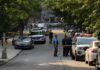
Family and neighbors in South Philadelphia are mourning 22-year-old Penn State University student Billy Schmidt, who was shot and killed early Saturday morning near 20th and Durfor Streets, just yards from his family’s home.[1][2] Police said the shooting happened around 1:30 a.m., as Schmidt walked back from a nearby bar where he had been watching the National Basketball Association Finals with friends.[2] He never made it to his front door. He was rushed to a hospital and pronounced dead shortly afterward.[1]
Local reports say the deadly encounter unfolded in seconds on the 1900 block of Durfor Street, a typically quiet residential stretch.[2] Video obtained by reporters from a neighbor’s porch camera shows Schmidt following two young men down the street.[1] According to that footage, he can be heard saying, “Give me back my phone,” before gunshots cut through the night.[1][3] Neighbors later described the killing as “abhorrent” and “unbelievable,” shocked that anyone would take a life “over a phone.”[1][4]
Surveillance footage and a disputed phone point to a robbery-style confrontation
Surveillance video from multiple cameras appears to capture the moments leading up to the shooting, giving the public a partial window into what happened.[2][3] In one clip described by reporters, a man can be seen throwing a cell phone into the street.[2] Seconds later, another man sprints around a corner with Schmidt chasing him, before the gunman turns and fires a single shot into Schmidt’s chest.[2] Another video reportedly shows two men walking, one turning to speak with Schmidt, and Schmidt then following him down the block.[2]
Schmidt’s family believes the killing was tied directly to that phone.[3][4][5] In interviews with local outlets, relatives said the confrontation was “over a cell phone” and that Schmidt could be heard on camera demanding, “Give me back my phone,” right before the shot.[1][3] His father later found a phone under a parked car and turned it over to police, consistent with accounts that the device was part of the struggle.[2] NBC10 and radio partner Audacy reported that the family viewed the incident as an attempted robbery, calling the crime “abhorrent” and “unbelievable.”[1][4]
Police silence on motive leaves families and neighbors in limbo
Despite the emotional statements and vivid video descriptions, investigators have not publicly released a motive or identified a suspect in Schmidt’s killing.[2][3][5] Philadelphia police acknowledged the existence of surveillance footage and have asked for help from the public, but no arrest has been announced in the days since the shooting.[2][5] Reports so far rest on incident reconstruction: who ran where, when the phone was thrown, and when the shot was fired.[2][3] None of the available sources includes a charging document or affidavit that would formally state intent.[2]
This gap has created a familiar pattern in urban crime coverage, where early media framing hardens long before the full investigative file is public.[5] Outlets repeat phrases like “appears to have been an attempted robbery,” borrowing language from grieving relatives and partial clips.[2][3] The more this framing is echoed, the more it feels like settled fact, even though police have not officially declared why the gunman opened fire.[2][3][5] For Schmidt’s family, that distinction may feel academic; their son is gone, and the person who pulled the trigger remains unidentified and at large.[1][3]
Crime, accountability, and the cost of weak city governance
For many Americans watching from outside Philadelphia, Schmidt’s death hits a nerve because it reflects broader concerns about law and order in big cities. A young man walking home on his own block is gunned down in what his family believes was a robbery over a phone, yet even with video in hand, there is no suspect in custody and no clear official explanation.[1][2][3] Neighbors’ pleas for justice underscore a sense that ordinary people are left to fend for themselves while violent offenders exploit a system that struggles to hold them accountable.[1][4][5]
Billy Schmidt was shot early Saturday morning in South Philadelphia, and the shooting was captured on surveillance camera. No one has been arrested yet. pic.twitter.com/l8qatGHMlw
— JKash 🍊MAGA Queen (@JKash000) June 7, 2026
The Schmidt case also exposes how public trust erodes when basic safety breaks down and information comes in fragments. Families hear that their loved one was killed “over a phone”; viewers hear anchors describe a “suspected robbery”; police remain cautious and noncommittal.[1][2][3][4] In that confusion, the simple, painful reality is clear: a 22-year-old who should have been preparing for his senior year of college and planning his future is dead on a city sidewalk, and a community is left asking why this keeps happening in American streets.[1][2]
Sources:
[1] Web – A Penn State Student Was Murdered Over a Cell-Phone In A South …
[2] Web – A Penn State student was shot to death in South Philadelphia, police …
[3] Web – Penn State student fatally shot near South Philadelphia home
[4] Web – Penn State senior Billy Schmidt fatally shot near his South …
[5] Web – Penn State student shot, killed near South Philadelphia home in …