The Trump administration’s push to redefine birthright citizenship faced an uphill battle at the Supreme Court, exposing deep frustrations among supporters who backed this president to end constitutional overreach—not expand federal power to reinterpret the 14th Amendment in ways that could set dangerous precedents.
Story Snapshot
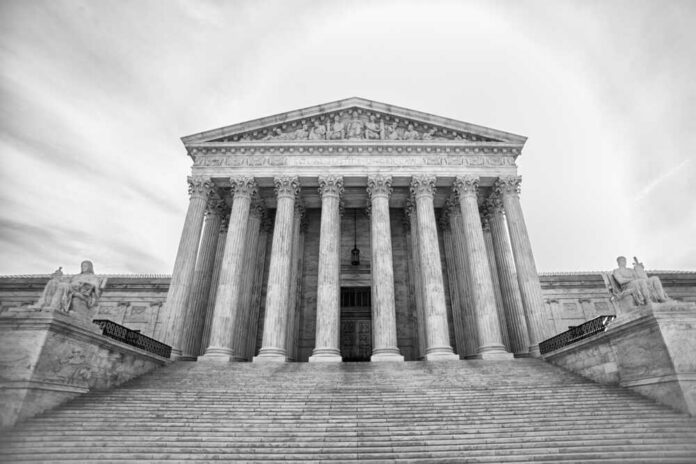
- Solicitor General John Sauer defended Trump’s challenge to automatic citizenship for children born to illegal immigrants during April 1, 2026 oral arguments
- Justice Elena Kagan questioned Sauer’s narrow reading of the 14th Amendment’s “subject to the jurisdiction thereof” clause, citing sweeping precedents from United States v. Wong Kim Ark
- Legal experts predict the administration faces difficulty overturning 150 years of birthright citizenship interpretation, with even conservative justices expressing skepticism
- The case threatens to redefine citizenship for millions while supporters question whether this constitutional battle serves America First priorities or distracts from border enforcement
Sauer Defends Restrictive Citizenship Interpretation
Solicitor General D. John Sauer argued before the Supreme Court that the 14th Amendment’s citizenship clause excludes children born to parents who are “subject to any foreign power,” drawing distinctions between the Amendment’s original text and later statutory expansions like the 1952 Immigration and Nationality Act. Sauer countered Justice Kagan’s emphasis on United States v. Wong Kim Ark, the 1898 case affirming citizenship for children of legal immigrants, by noting no Supreme Court precedent has ever addressed children of illegal immigrants specifically. He cited historical cases like Lynch v. Clarke and Hintopoulos v. Shaughnessy to argue narrower readings existed, though legal scholars widely dispute these interpretations as outliers that fail to override Wong Kim Ark’s broad jus soli embrace.
Constitutional Concerns Over Executive Reinterpretation
The Trump administration’s attempt to redefine “subject to the jurisdiction thereof” raises red flags for constitutional conservatives wary of executive overreach. The 14th Amendment was ratified in 1868 to overturn Dred Scott v. Sandford and establish that all persons born on U.S. soil—except children of diplomats or invading armies—are citizens, a principle rooted in common law dating back centuries. Allowing a president to unilaterally reinterpret this bedrock constitutional guarantee through executive action threatens the separation of powers and individual liberties that MAGA supporters claim to defend. If this administration can redefine citizenship by fiat, what prevents future leftist presidents from weaponizing similar tactics to erode gun rights or religious freedoms under strained constitutional readings?
Justices Signal Skepticism Toward Trump’s Position
Oral arguments revealed significant doubt among justices about limiting birthright citizenship, with even members of the court’s conservative majority probing weaknesses in Sauer’s historical and textual arguments. Justice Kagan highlighted that Wong Kim Ark embraced jus soli broadly, noting Lincoln-era precedents and post-1898 cases like Hintopoulos that treated children of undocumented parents as citizens without challenge. Sauer struggled to reconcile his position with the reality that Chicago, Detroit, and federal agencies have granted citizenship to U.S.-born children of illegal immigrants for decades without legal objection. SCOTUSblog’s moot court analysis in March 2026 predicted this outcome, emphasizing the 14th Amendment sets a constitutional “floor” that statutes cannot override, leaving Sauer with an argument legal experts describe as facing an uphill climb at best.
The case’s broader implications expose the risks of pursuing symbolic immigration victories that may backfire constitutionally. Overturning expansive birthright citizenship could affect millions of U.S.-born children annually, creating a legal underclass and straining naturalization systems already overwhelmed by bureaucratic backlogs. Proponents argue restricting automatic citizenship would curb “birth tourism” from countries like China and reduce welfare costs, but critics note this does nothing to secure the border or deport criminal aliens—priorities Trump promised in 2016 and 2024. Instead, this legal battle diverts resources and political capital toward reinterpreting a constitutional amendment that has stood for over 150 years, raising questions about whether the administration is focused on practical solutions or ideological crusades that energize opponents while alienating supporters tired of government complexity.
MAGA Base Questions Priorities Amid Immigration Crisis
Many Trump supporters who demanded strict border enforcement and mass deportations are frustrated that the administration is bogged down in a Supreme Court fight over birthright citizenship rather than executing tangible immigration reforms. The 14th Amendment challenge does nothing to stop the flood of illegal crossings, dismantle cartel operations, or remove the millions already here unlawfully—issues voters expected action on immediately. While curbing birth tourism sounds appealing, the constitutional gamble risks a Supreme Court loss that could entrench expansive citizenship interpretations permanently, handing immigration advocates a legal victory while Trump’s base watches border communities suffer under continued chaos. This case underscores a growing tension within MAGA ranks: supporters want results, not risky constitutional experiments that could expand federal power in ways future administrations exploit against conservative interests.
Sources:
Birthright citizenship: Hard questions, and the best answers, for Trump’s challengers – SCOTUSblog