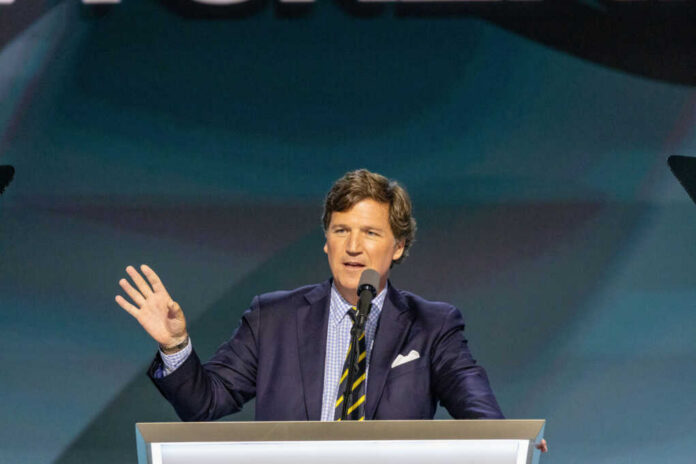
Two of the loudest pro-Trump voices just walked away from the Republican Party, citing leaders who serve foreign interests before Americans.
Story Snapshot
- Tucker Carlson says he is “out” on the Republican Party after decades of support [1][2].
- Marjorie Taylor Greene echoes the move, blasting an “America LAST” party on social media [10][15][16].
- Both reject joining Democrats, framing their exit as a protest over foreign policy, especially Israel and Iran [1][2][10][16].
- The split fits a long pattern of right-wing realignments driven by foreign policy rifts [17][21][23].
What Carlson Said And Why It Landed
Tucker Carlson said on the “Can’t Be Censored” podcast that he will no longer support the Republican Party. He argued party leaders put a foreign country’s priorities over American citizens, and he called that stance “immoral.” He said he is not joining the Democratic Party either and does not yet know his next step. He suggested others will follow his lead. His comments pushed a simmering debate on the right into public view [1][2].
Carlson tied his break to Republican support for Israel and policy toward Iran under President Trump. He framed the issue as loyalty to American voters versus catering to outside interests. That framing resonates with people who feel elites in both parties ignore working families, spend beyond means, and keep the country in constant conflict. The message also challenges party leaders who defend long-standing security ties and a strong role overseas [1][2].
Greene’s Parallel Break And Online Echoes
Former Representative Marjorie Taylor Greene posted that she is “DONE with the America LAST Republican Party.” She said many are fed up and will not back a party that “betrays its voters and country.” Like Carlson, she said she is not turning Democrat. Her statements added fuel to a wave of social posts and clips that amplified the split across outlets on both the left and the right [10][15][16].
Coverage across outlets highlighted two claims: that Republican leaders serve foreign interests and that a wider shift may be coming. Supporters of Carlson and Greene say this is a moral line about putting Americans first. Critics argue both figures swing with the media cycle and will return to the fold by election time. The disagreement shows how online media can turn a faction fight into a larger identity test for voters [3][16].
How This Fits The Bigger Conservative Realignment
Conservative factions have split over foreign policy many times since the 1980s. The movement has cycled between internationalists, nationalists, and non-interventionists. The Trump era deepened this divide by questioning wars and long alliances while keeping a tough posture. Experts describe an ongoing struggle inside the right over how much America should engage abroad and at what cost to taxpayers and energy prices [17][21][23].
Former U.S. Congresswoman from Georgia and former ally of Donald Trump, Marjorie Taylor Greene, announced that she has stopped supporting the Republican Party, joining host Tucker Carlson who recently broke with the party just a few months before the midterm elections.
During a… pic.twitter.com/bYxZfmIkya
— S p r i n t e r (@SprinterPress) June 25, 2026
Think tanks note many Republican voters still back Trump’s approach, yet the coalition is not uniform. Schisms often grow during conflicts that hit wallets and fuel anxiety about federal focus. When people see leaders favor donors, global projects, or defense deals over border security, wages, and debt, they tune out or bolt. That is the space Carlson and Greene are trying to claim—speaking for people who feel the parties protect the powerful and not them [17][21].
What It Could Mean For 2026 And Beyond
Near term, this split pressures Republican leaders to defend aid and alliance choices, while calming voters who want energy independence, lower prices, and fewer wars. Democrats may try to peel off disaffected voters, but Carlson and Greene say they will not cross over. If more voices copy them, primary races could see outsider challenges, and general elections could hinge on turnout from voters who feel politically homeless [1][2][10][16].
Limits And What We Still Do Not Know
Current reports confirm their public breaks but do not quantify how many voters will follow. Polling on specific foreign policy questions varies by wording and timing, and not all outlets share methods. Some sources are opinion or social posts, which carry bias. What is clear is that frustration with Washington runs across party lines. Many believe leaders protect their careers and patrons first. That distrust is the fuel behind this story [1][2][10][17][21][23].
Sources:
[1] Web – Tucker Carlson Isn’t the Only Prominent Former MAGA Supporter Leaving …
[2] Web – Tucker Carlson Says He’s Leaving the GOP: ‘I’m Out’ – NOTUS
[3] Web – Tucker Carlson says he’s no longer supporting the Republican Party
[10] Web – Marjorie Taylor Greene and Tucker Carlson Declare They’re ‘Done’ with …
[15] Web – Marjorie Taylor Greene joins Tucker Carlson in breaking with …
[16] Web – MTG joins Tucker Carlson and ditches Republican party: ‘America Last’
[17] Web – The Future of Conservative Foreign Policy
[21] Web – Republican Party Foreign Policy: 2016 and Beyond
[23] Web – Will Trumpism change Republican foreign policy permanently?