A new accusation of fascism against President Trump sparks heated debate in U.S. politics.
Story Snapshot
- President Trump and New York Mayor Zohran Mamdani clash publicly over fascism accusations.
- Trump’s casual response to the label raises concerns about political rhetoric.
- The confrontation highlights the polarized political climate in America.
- Media coverage amplifies the exchange, influencing public discourse.
Trump and Mamdani’s Public Clash
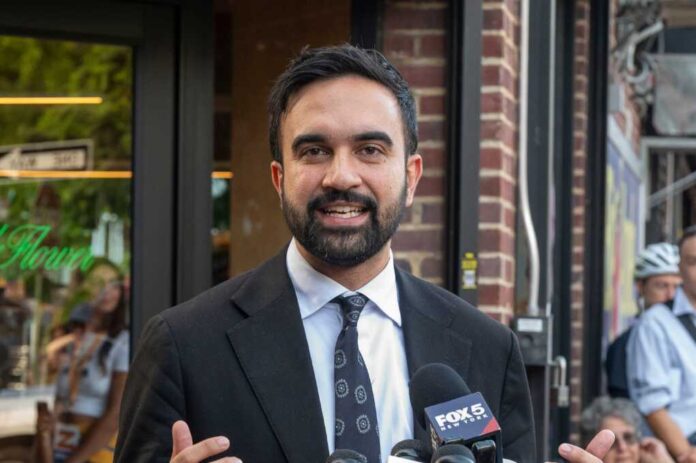
During a joint press conference in New York City, President Trump faced a direct accusation from the newly elected Mayor, Zohran Mamdani. Mamdani labeled Trump a fascist, sparking an intense exchange that captured national attention. Trump responded with what seemed to be a nonchalant acceptance, stating, “You can just say yes,” which further fueled the media frenzy and public debate over the implications of such rhetoric in political discourse.
The event unfolded against the backdrop of discussions on housing, cost of living, and Middle East policies, subjects that have long been contentious in New York’s political arena. Mamdani, known for progressive activism, used the platform to challenge Trump’s policies, accusing them of authoritarian tendencies. This confrontation underscores the deep divisions within American politics and the extent to which political leaders are willing to go to make their points.
Trump to Mamdani on being a fascist: ‘You can just say yes’https://t.co/YxcXvLFy85
— The Hill (@thehill) November 21, 2025
Reaction and Media Amplification
The media quickly picked up on the exchange, with outlets across the political spectrum offering varied interpretations. Conservative voices argue that Mamdani’s accusation was exaggerated and politically motivated, while progressive commentators praised him for calling out what they see as dangerous authoritarianism. The incident has since become a focal point for discussions on political rhetoric and the boundaries of acceptable discourse in American politics.
The exchange has not only heightened scrutiny on Trump and Mamdani’s political agendas but has also brought to the forefront the broader issue of how extreme labels are becoming normalized in political rhetoric. While some experts warn against the trivialization of terms like fascism, others argue it is a necessary confrontation in light of perceived authoritarian actions.
Implications for Political Discourse
In the short term, this incident has intensified media attention and public debate, potentially shifting public opinion on both Trump and Mamdani. In the long term, it may contribute to the normalization of extreme labels, influencing future political discourse and campaigns. The media’s role in amplifying such exchanges cannot be understated, as it shapes narratives and public perceptions, impacting how political figures are viewed by the electorate.
As the political landscape continues to evolve, the Trump-Mamdani exchange serves as a reminder of the polarized nature of American politics. It highlights the power of rhetoric and the media in shaping political narratives and underscores the ongoing battle for ideological dominance in the U.S.