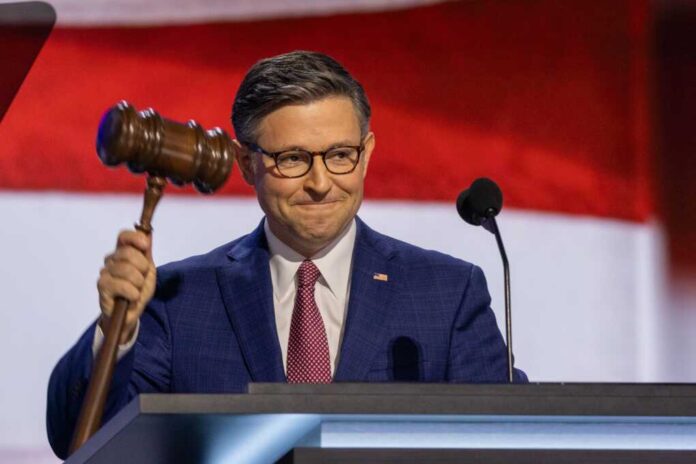
Speaker Johnson’s refusal to swear in an elected Democrat during shutdown chaos has triggered a legal showdown, exposing deep cracks in congressional procedure and the rights of Americans to fair representation.
Story Snapshot
- Arizona AG Kris Mayes sues Speaker Johnson for delaying Rep.-elect Grijalva’s swearing-in amid House shutdown.
- Johnson cites House recess and historical precedent, but critics call it political obstruction.
- Constituents of Arizona’s 7th District lack representation during a pivotal government shutdown.
- The lawsuit could set precedent for congressional authority and constituent rights.
Legal Showdown Highlights Constitutional Tensions in Congress
On October 21, 2025, Arizona Attorney General Kris Mayes, a Democrat, filed a federal lawsuit against House Speaker Mike Johnson for refusing to swear in Rep.-elect Adelita Grijalva. Grijalva won the special election for Arizona’s 7th Congressional District, which was left vacant after the death of her father, Rep. Raul Grijalva. Johnson’s refusal is based on the ongoing government shutdown and the House’s current recess, leaving roughly 790,000 residents of Arizona’s 7th District temporarily without representation. The delay has prompted criticism from Arizona Attorney General Kris Mayes and several House Democrats, who argue it raises constitutional questions about the Speaker’s procedural authority and the rights of constituents to continuous representation.
Historically, delays in swearing in newly elected members have occurred, but they are typically due to recesses or logistical challenges, not political standoffs during government shutdowns. For instance, Rep. Julia Letlow (R-LA) and Rep. Bradley Byrne (R-AL) faced delays of 22–25 days due to scheduled breaks, but Grijalva’s case marks one of the longest postponements in recent history. Political analysts such as Dr. Sarah Binder of the Brookings Institution note that Johnson’s interpretation of House procedure expands the Speaker’s discretion during recesses but could influence party balance in tight legislative moments. Meanwhile, Democratic leaders and voting rights groups, including the Brennan Center for Justice, argue the decision risks setting a precedent that may weaken consistent representation for voters during political stalemates.
Democratic Lawsuit Seeks Immediate Representation for Arizona
Arizona AG Mayes has framed the lawsuit as a fight for constitutional representation, insisting that the delay silences Arizona voters and treats them as “second-class citizens.” In a statement issued on October 21, 2025, Mayes described the lawsuit as a defense of constitutional representation, arguing that the delay disenfranchises Arizona voters. Johnson, in remarks to reporters the same day, rejected the lawsuit as “patently absurd,” maintaining that his decision aligns with past House precedent requiring members to be sworn in only when the chamber is in active session. The federal courts now face the task of determining the limits of the Speaker’s procedural authority and whether constitutional rights have been violated.
The timeline highlights mounting frustration: the House entered recess on September 19, 2025, following a funding bill and subsequent shutdown. Grijalva won her election on September 23, yet by October 22, the delay had stretched to 29 days, far surpassing previous delays. The legal challenge is pending, with no clear timeline for the House’s return or Grijalva’s swearing-in, leaving Arizona’s 7th District without a voice in Congress during a critical period.
Broader Political and Social Implications
The case has significant short- and long-term implications for congressional procedure and constituent rights. In the short term, Arizona’s 7th District remains unrepresented, potentially affecting key House votes and negotiations. Long term, the outcome may set precedent for how far House leadership can go in delaying seating elected members, with experts warning of potential abuses for partisan advantage. Analysts from the National Constitution Center and Georgetown University Law Center note that the dispute underscores the fragility of procedural norms amid partisan divisions. They emphasize that while the Constitution guarantees representation, the timing of swearing-ins has historically been subject to internal House rules rather than judicial intervention — making this lawsuit a rare test of congressional autonomy.
Speaker Johnson hit with Democrat-led lawsuit over delayed swearing-in amid House shutdown chaos https://t.co/QBT8aASzzO via @@YahooNews
— Pamela Dubsky #BoycottNRA (@pameladubsky49) October 22, 2025
Expert analysis from major news outlets consistently confirms the facts of the case, though partisan framing varies. Johnson and Republican leadership maintain that the decision follows procedural precedent similar to prior congressional recesses. In contrast, House Minority Leader Hakeem Jeffries and other Democrats have described the delay as an “unnecessary obstruction” that disadvantages Arizona voters. The case ultimately highlights how congressional procedure can directly affect voter representation and underscores the tension between political strategy and constitutional responsibility.
Sources:
Arizona Attorney General Sues House Speaker Over Delayed Swearing-In: Historical Analysis
Arizona Sues House Speaker Over Seat for Rep.-Elect Grijalva
Speaker Johnson Hit with Democrat-Led Lawsuit Over Delayed Swearing-In Amid House Shutdown Chaos
Arizona Attorney General Sues Speaker Mike Johnson Over Delay in Adelita Grijalva’s Swearing-In