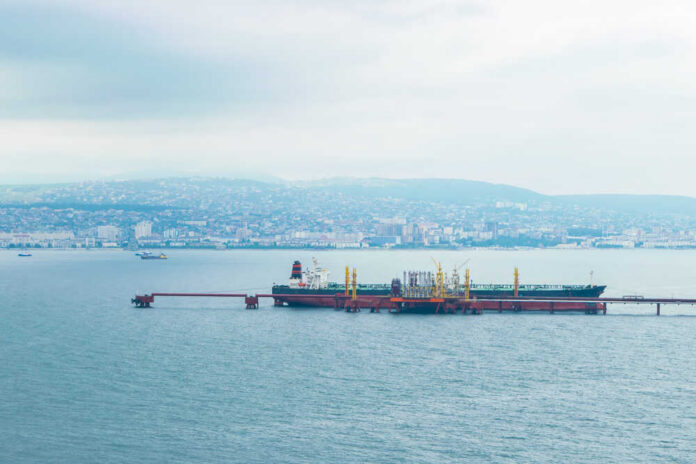
As the Strait of Hormuz disruption squeezes global supply, empty supertankers rushing to U.S. ports signal America’s energy leverage is suddenly back at center stage.
Story Snapshot
- President Trump says “massive numbers” of empty tankers are heading to the U.S. to load American oil and natural gas for export.
- The surge follows Iran’s closure of the Strait of Hormuz, a chokepoint that previously carried roughly one-fifth of the world’s traded oil.
- Brent crude traded near $97 after rising more than 30% since the late-February conflict began, reflecting tighter global supply.
- Reports cite “at least 100” tankers with roughly 2 million barrels capacity each moving toward the U.S. Gulf Coast, though exact counts remain fluid.
Trump’s tanker claim highlights a fast-moving export moment
President Donald Trump said on Truth Social that “massive numbers” of completely empty oil tankers—described as among the largest in the world—are heading to the United States to load crude oil and natural gas. The posts landed early Saturday, as Vice President JD Vance traveled overseas for high-level peace talks tied to the same regional crisis. Trump also emphasized quick turnaround for loading and unloading, implying a rapid export cycle.
The key factual question is scale: the president described large volumes, and separate reporting and analysis have circulated estimates. Some accounts say at least 100 empty tankers with roughly 2 million barrels of capacity each are moving toward the U.S. Gulf Coast, a figure that would represent enormous potential throughput if fully utilized. Those numbers are plausible in the abstract but remain difficult to confirm in real time while ships reposition.
Hormuz chokepoint shock is driving demand for U.S. barrels
The shipping pivot traces back to Iran’s closure of the Strait of Hormuz after a conflict that began in late February. Before the disruption, the narrow route handled roughly one-fifth of the world’s traded oil, with more than 100 ships passing through daily and many headed to Asian markets. After the closure, commercial vessels largely avoided the area, snarling flows of oil, gas, and fertilizer across global lanes.
A ceasefire has reportedly taken hold, but shipping has not fully normalized. Associated Press reporting cited only about a dozen vessels transiting after the ceasefire, far below typical levels. Markets responded to the reduced flow: Brent crude, the international benchmark, traded around $97 on Friday, up more than 30% since the conflict began. That price jump captures what consumers feel at home—tight global supply quickly translates into higher costs.
What “empty tankers” really means for U.S. ports and producers
Empty tankers heading toward the Gulf Coast generally signals ships repositioning to load cargo where supply is available and legally shippable. Analysts tied to the story describe vessels staged around the Cape of Good Hope and in the Atlantic, effectively re-routing away from Persian Gulf loading points. The operational story matters because it suggests global buyers are willing to pay for longer voyages to access reliable barrels, even at higher freight costs.
Reports also suggest at least some cargo could include a mix of American crude, Venezuelan crude processed through Gulf Coast systems, and potentially American natural gas. While that blend raises technical and policy questions—especially around what exactly is loaded, refined, or re-exported—the broader theme is straightforward: the U.S. Gulf Coast remains one of the world’s most capable energy hubs. The scale of that infrastructure can turn geopolitical disruptions into commercial demand.
The political stakes: energy security at home, influence abroad
For American households, the near-term upside of higher export demand is not automatically lower prices at the pump, because U.S. prices still track global crude. Still, additional supply into the world market can help stabilize prices over time, which is one reason Trump framed efforts to clear Hormuz as a “favor” to other countries. If more U.S. barrels replace disrupted Middle East supply, the shock could be softened.
The longer-term consequence is geopolitical: energy dependence is power, and chokepoints reward whoever can supply alternatives. A sustained shift toward U.S. sourcing would reduce leverage held by hostile actors who can threaten shipping lanes. It also collides with a frustration shared by voters across the spectrum—Washington often seems more interested in narratives than outcomes. Here, the outcome that matters is whether policy keeps U.S. production and port capacity strong enough to respond.
Important uncertainties remain. Trump’s statement confirms a rush of tankers, and multiple reports tie the move to the Hormuz disruption and price spike, but the exact ship count, loading schedule, and ultimate destinations can change quickly with insurance rates, naval risk, and diplomacy. Even so, the episode underscores a concrete reality: when globalism breaks down under conflict, nations with real production—and the freedom to develop it—set the terms.
Sources:
Completely Empty Tankers Heading to US to Load Up with Oil & Gas