
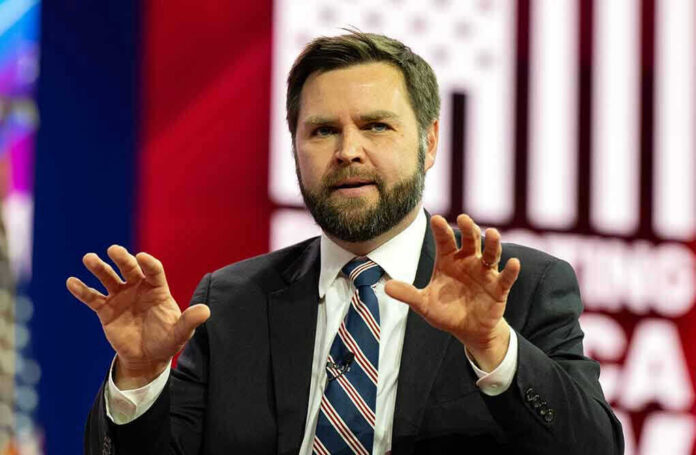
Vice President JD Vance says U.S. strikes left Iran’s nuclear program and conventional forces “destroyed,” a claim that now anchors the White House’s leverage talk.
Quick Take
- Vance said Iran’s nuclear program was “completely destroyed” and “gone.”
- He also said Iran’s conventional military was still destroyed and could not quickly rebuild.
- The White House is using that message to argue the United States negotiates from strength.
- Some reporting notes Vance has also used softer language, such as “set back substantially.”
Vance’s Message on Iran
Vance made the case during a White House briefing and in later interviews. He said the United States had destroyed Iran’s nuclear program and that Iran’s capacity for enrichment was still gone. He also said Iran’s conventional military was still destroyed. The same message appeared in separate appearances, where he argued that the United States had maximum leverage and that Iran could not quickly restore what it lost.
That framing matters because it turns military action into a bargaining message. Vance said the Trump administration had removed Iran’s ability to threaten neighbors and rebuild a bomb-making path. He added that if Tehran refused a deal, the situation still left the United States in a stronger position. In plain terms, the White House is telling both allies and rivals that the strikes changed the balance, not just the headlines.
Why the Language Matters
The dispute is not over whether strikes happened. It is over how far the damage went. Vance has used absolute words like “destroyed” and “gone,” but some of his own public comments have been more measured, saying Iran’s program was “substantially” or “significantly” delayed. That difference is important because total destruction means something very different from a major setback, especially in a fast-moving national security crisis.
This pattern fits a familiar Washington problem. Officials often speak in strong terms right after strikes, while the full damage picture comes later. Reporters and analysts then compare the public claims with intelligence and battlefield assessments. In this case, the available record shows both confident victory language and more cautious wording from the same senior official, which explains why the argument is still being debated in public.
What Comes Next for U.S. Policy
For now, Vance is presenting the strikes as proof that President Trump holds the upper hand. He says Iran has fewer tools, fewer options, and less room to resist pressure. That message is meant to support diplomacy, but it also keeps military force on the table if Iran tries to rebuild. The result is a hard-line policy posture wrapped in a peace-talks message.
General Dan Caine, Chairman of the Joint Chiefs of Staff, has privately urged senior officials including CIA Director John Ratcliffe, Secretary of State Marco Rubio, and VP JD Vance to pursue de escalation with Iran, per a CNN report citing three sources.
Caine reportedly… pic.twitter.com/QPJFi26TJA
— Pak Asia Youth Forum (@payf_official) August 8, 2026
The broader political effect is clear. Supporters will hear a story of strength and deterrence. Critics will hear another example of Washington declaring success before the full facts are settled. Both reactions reflect a deeper public frustration: Americans want clear results, not vague assurances. On Iran, Vance is betting that bold claims will make the United States look stronger. The public record shows those claims are now part of the fight itself.
Sources:
facebook.com, theguardian.com, republicworld.com, scrippsnews.com, nbcnews.com, timesofisrael.com, youtube.com, washingtonexaminer.com, abcnews.com, newsweek.com, nytimes.com, fortune.com