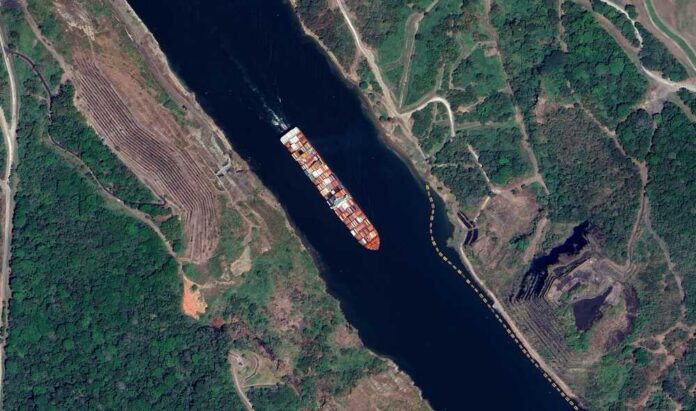
Iran’s near-closure of the Strait of Hormuz has turned a narrow waterway into a choke point that can spike your gas and grocery bill—and it’s happening after U.S.-Israeli strikes pulled Washington deeper into another Middle East conflict.
Story Snapshot
- Maritime data analysis found most commodity shipments still crossing Hormuz are linked to Iran, even as overall traffic collapses.
- Ship transits reportedly fell about 94% from peacetime levels, underscoring how quickly energy markets can be squeezed.
- Disruptions extend beyond crude oil into fertilizers, chemicals, and industrial inputs that feed global inflation.
- Sanctioned vessels make up a large share of remaining traffic, complicating enforcement and raising risk for shippers.
Hormuz traffic collapses as Iran controls the remaining lanes
Iran’s restrictions on the Strait of Hormuz have reshaped shipping patterns since the late-February escalation tied to U.S.-Israeli strikes and Iranian retaliation. An AFP analysis using Kpler maritime data covering March 1 through April 3 found that 60% of commodity-bearing ships crossing the strait originated from or were headed to Iran, rising to 64% for cargo vessels. Overall crossings dropped sharply versus peacetime levels.
The numbers indicate more than “higher risk” headlines. The reported count of crossings—about 240 by 221 ships over the period—works out to a trickle compared with the roughly 120 daily transits often cited for normal conditions. In recent days before April 3, reports described only about seven vessels making the passage on consecutive days. This is the practical meaning of a “near closure,” even without an announced full blockade.
Energy isn’t the only exposure: fertilizers, chemicals, and industrial inputs
The Strait of Hormuz is usually discussed as an oil story because around a fifth of global oil and LNG flows through in peacetime. The newer reporting emphasizes that the economic blast radius is broader. The World Economic Forum highlighted exposure across fertilizers (including urea and ammonia), sulfur used in refining and industry, methanol feeding plastics, and other cargoes like aluminum and glycols. Those are inflation-sensitive inputs that hit households indirectly.
For conservative voters already weary of fiscal mismanagement and cost-of-living pressure, this is the kind of disruption that can make “inflation” feel like a policy choice even when it’s driven by supply shocks. Fertilizer and chemical constraints can filter into food prices and manufacturing costs, while refinery disruptions can tighten fuel markets. The research does not quantify U.S.-only impacts, but it lays out the global channels that typically feed higher prices at home.
Sanctioned fleets and “unknown destinations” complicate enforcement
Another hard reality in the reporting is how much of the remaining flow is tied to sanctioned shipping. Recent updates put sanctioned vessels at roughly the mid-40% range of crossings, with an even higher share among oil and gas tankers. The analysis also notes that some oil cargo destinations are listed as “unknown,” while other reporting points to continued eastbound flows from the Gulf, including demand centers in Asia.
This matters because sanctions are often presented as clean, decisive tools. The data suggests enforcement collides with maritime workarounds and a constrained shipping environment where fewer actors take the risk, leaving a larger role for those already operating on the margins. The research does not prove violations in specific cases, but it does show why sanctions alone may not stabilize markets once a chokepoint becomes politically weaponized.
Trump’s second-term squeeze: avoid escalation, protect Americans, stabilize prices
The political tension for the Trump administration is visible in the timeline: strikes helped trigger a war environment, and the economic penalty shows up quickly through shipping disruption. That reality is fueling debate inside the MAGA coalition, with many supporters skeptical of new foreign entanglements and questioning open-ended commitments that can morph into regime-change logic. The reporting here focuses on shipping and commodities, not domestic political polling.
From a constitutional and limited-government perspective, the pressure point is decision-making transparency and war powers discipline when costs land back on working families through energy and food. The research does not describe any new domestic legal authorities or restrictions on civil liberties. What it does document is the economic leverage Iran gains from geography, and the way a single chokepoint can punish Americans at the pump—regardless of slogans about “stability” abroad.
Limited data is available on the administration’s next steps beyond the reported strikes and the ongoing shipping disruption described in these sources. What is clear is that Hormuz is functioning as a strategic throttle: traffic remains far below normal, Iran-linked voyages dominate what gets through, and non-oil commodities are part of the shock. Any durable solution will have to weigh deterrence, de-escalation, and the basic duty to shield Americans from another drawn-out conflict and its predictable price spikes.
Sources:
Majority of commodities crossing Hormuz linked to Iran: AFP analysis
Beyond oil and LNG: commodities impacted by closure of Hormuz Strait
Facts about Strait of Hormuz shipping blockade
Strait of Hormuz updates: Most crossings follow Iran-approved routes