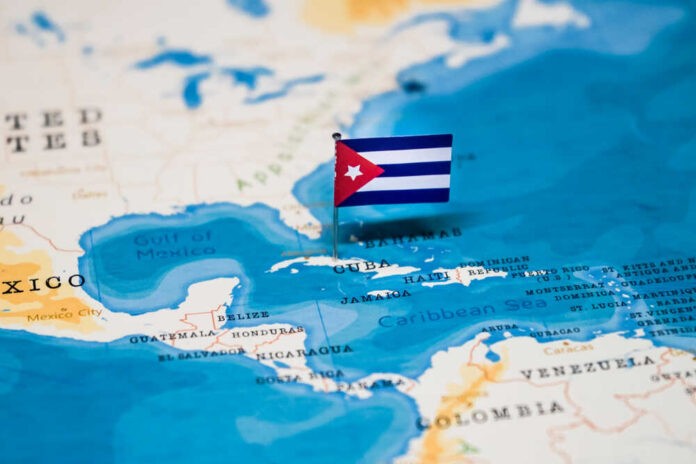
After nearly 70 years of crushing socialist rule, Cuba’s communist regime has announced it will allow Cuban exiles to invest in private businesses on the island—a desperate move that signals the dictatorship’s economic collapse is forcing ideological surrender.
Story Snapshot
- Cuba published Decree-Law 114/2025 allowing public-private partnerships, reversing decades of socialist policy that banned private enterprise
- Deputy Prime Minister confirmed Cuban-Americans and descendants can now invest in and own businesses on the island for the first time since the 1959 revolution
- Policy shift comes amid deepening economic crisis, energy blackouts, and ongoing anti-government protests demanding freedom and relief from hunger
- Experts warn regime maintains bureaucratic control through Ministry approval requirements, seeking to exploit private capital while retaining centralized power
- Cuban-American community divided between economic opportunity and concerns about providing lifeline to failing dictatorship
Regime Acknowledges Economic Failure After Decades of Denial
Cuba’s Official Gazette published Decree-Law 114/2025 on March 5, 2026, establishing legal framework for associations between state and non-state business entities. President Miguel Díaz-Canel called for urgent economic transformation during a Council of Ministers meeting, emphasizing partnerships between state and private sectors and promoting business with Cubans residing abroad. This represents the first formal recognition of public-private enterprises since the 1959 revolution established state ownership as the foundation of Cuba’s economy.
Socialist Principles Crumble Under Crisis Pressure
For decades, Cuba’s government maintained that “the socialist state-owned enterprise must remain the central actor in the national economy,” refusing to acknowledge private property even during the Special Period crisis of the 1990s. The July 11, 2021 protests forced change when citizens flooded streets shouting “hunger” and “freedom,” exposing the regime’s economic failure. By 2025, approximately 9,900 private companies employed more than 30 percent of the population, becoming the only actors capable of supplying essential goods in a country where basic items remain largely unavailable through state channels.
Bureaucratic Control Masks Continued State Dominance
Deputy Prime Minister Oscar Pérez-Oliva Fraga confirmed in a March 16, 2026 NBC News interview that Cuba is “open to having a fluid commercial relationship with U.S. companies” and with Cubans residing in the United States and their descendants. However, economist Ricardo Torres, former researcher at the Center for the Study of the Cuban Economy, warns the new measure operates within a “framework of centralization and bureaucracy” requiring Ministry of Economy approval for all partnerships. Torres identifies “a clear intention on the part of the government to continue dictating the timeline for these processes.”
Diaspora Faces Moral Dilemma Over Investment
The announcement creates political and economic tensions within the Cuban-American community, particularly in South Florida. While some view diaspora investment as economic opportunity, activists organized by Movimiento Democracia express concern that investment would provide “a lifeline” to a regime they believe “is so close to falling.” The Trump administration has explicitly pressured Cuba to implement economic transformation, with officials insisting that change in Cuba will begin with economic reform rather than political concessions to the failing dictatorship.
Control Mechanisms Reveal Regime’s True Intentions
The decree establishes mixed Limited Liability Company structures allowing state-owned enterprises and private entities to jointly operate bank accounts and make export-import decisions. Despite promises of greater management autonomy, the Ministry of Economy and Planning must approve each partnership individually. Torres assesses the regime’s strategy bluntly: “They want to take advantage of the private sector, but without relinquishing their position within the economy.” This approach raises fundamental questions about whether Cuban exiles would invest capital only to see operations controlled by the same bureaucrats who destroyed the island’s economy over six decades of socialist mismanagement.
The policy shift reveals desperation rather than genuine reform. Cuba’s communist regime faces economic stagnation, energy shortages, and basic goods scarcity that have driven more than 30 percent of the workforce into private enterprises despite government restrictions. While the regime has amended the Constitution to mention “private property” for the first time, implementation details remain deliberately vague, leaving the diaspora community questioning whether investments would face confiscation or bureaucratic strangulation once capital enters the island.
Sources:
Cuba opens up to public–private enterprises for the first time in nearly 70 years
Cuba says Cuban Americans and descendants can invest in businesses on the island